
In this article
- How we ranked fruits by fiber
- What fruit has the most fiber? The per serving leaderboard
- What fruits are high in fiber and easy to find
- Count by calories and the order shuffles
- Dried fruit looks dense, but check the scoop
- Does fruit have fiber worth relying on next to beans and grains?
- A fruit day that adds up to almost 19 grams
- What people also ask about high fiber fruit
- Sources
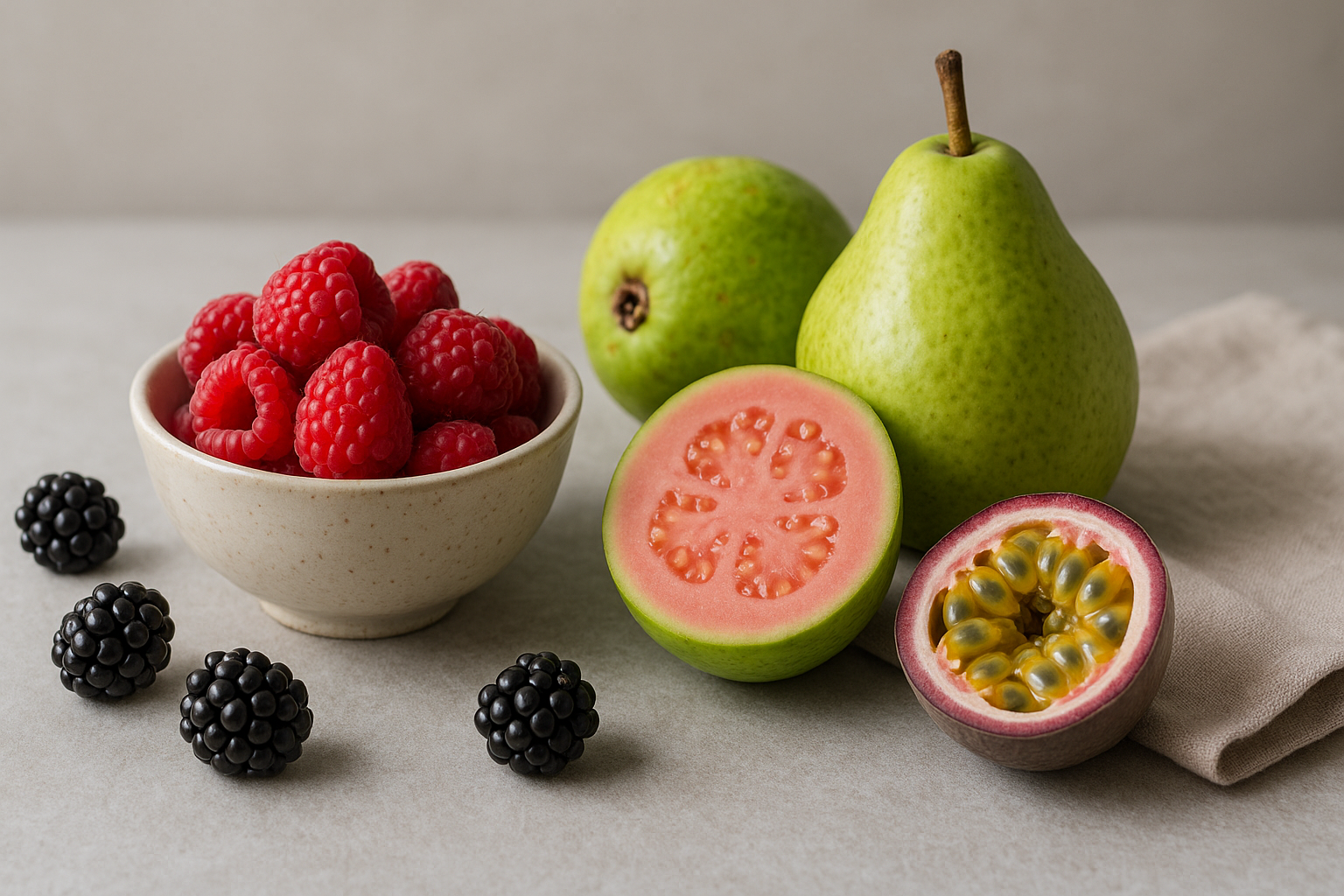
The fruit with the most fiber on the USDA’s official list is one most shoppers have never bought: sapote, at 9.5 grams per cup. If you want to know what fruit has the most fiber among the ones in a normal grocery store, the answer is raspberries, with 8 grams per cup for only 64 calories.
Behind them sit a cluster of berries, guava, pears and a few tropical picks. The familiar lunchbox fruits, like bananas and oranges, land much further down than most people expect.
How we ranked fruits by fiber
Every number below comes from the Food Sources of Dietary Fiber table published with the Dietary Guidelines for Americans. It uses USDA FoodData Central values and lists each food in a standard portion, the amount a person typically eats in one sitting.
That choice matters. A quarter cup of prunes and a full cup of berries are both “one serving” in that table, so the ranking reflects real eating rather than a lab sample of identical weights.
We looked at three things for each fruit:
- Fiber per standard portion, the main ranking.
- Fiber per 100 calories, which rewards light, watery fruit and penalizes dense ones.
- How easy it is to buy in a typical U.S. supermarket, fresh or frozen.
One quirk to know up front: the USDA files avocado under vegetables, even though botanically it’s a fruit. We’ve included it anyway because most people shop for it next to the limes.
What fruit has the most fiber? The per serving leaderboard
Here are the top fresh fruits by fiber per standard portion, with a few everyday favorites added at the bottom for scale. The % Daily Value column uses the 28 gram figure printed on U.S. nutrition labels.
| Fruit | Portion | Fiber | % DV | Calories |
|---|---|---|---|---|
| Sapote (sapodilla) | 1 cup | 9.5g | 34% | 217 |
| Guava | 1 cup | 8.9g | 32% | 112 |
| Nance | 1 cup | 8.4g | 30% | 82 |
| Raspberries | 1 cup | 8.0g | 29% | 64 |
| Loganberries | 1 cup | 7.8g | 28% | 81 |
| Blackberries | 1 cup | 7.6g | 27% | 62 |
| Soursop | 1 cup | 7.4g | 26% | 148 |
| Boysenberries | 1 cup | 7.0g | 25% | 66 |
| Asian pear | 1 medium | 6.5g | 23% | 75 |
| Wild blueberries | 1 cup | 6.2g | 22% | 80 |
| Passion fruit | 1/4 cup | 6.1g | 22% | 57 |
| Persimmon | 1 fruit | 6.0g | 21% | 118 |
| Pear | 1 medium | 5.5g | 20% | 103 |
| Kiwifruit | 1 cup | 5.4g | 19% | 110 |
| Avocado | 1/2 cup | 5.0g | 18% | 120 |
| Apple, with skin | 1 medium | 4.8g | 17% | 104 |
| Orange | 1 medium | 3.7g | 13% | 73 |
| Blueberries (cultivated) | 1 cup | 3.6g | 13% | 84 |
| Banana | 1 medium | 3.2g | 11% | 112 |
| Strawberries | 1 cup | 3.0g | 11% | 49 |
Notice a pattern near the top: raspberries, blackberries, guava, passion fruit and kiwi are all eaten seeds and all, often with the skin too. Fruits you peel or core, like bananas and oranges, sit lower.
Durian technically beats everything at 9.2 grams per cup, but that cup also costs 357 calories. We left it off the main board for that reason.
What fruits are high in fiber and easy to find
Sapote, nance and soursop are worth trying if you see them at a Latin or Asian market. For most kitchens, though, these eight are the realistic high fiber picks.
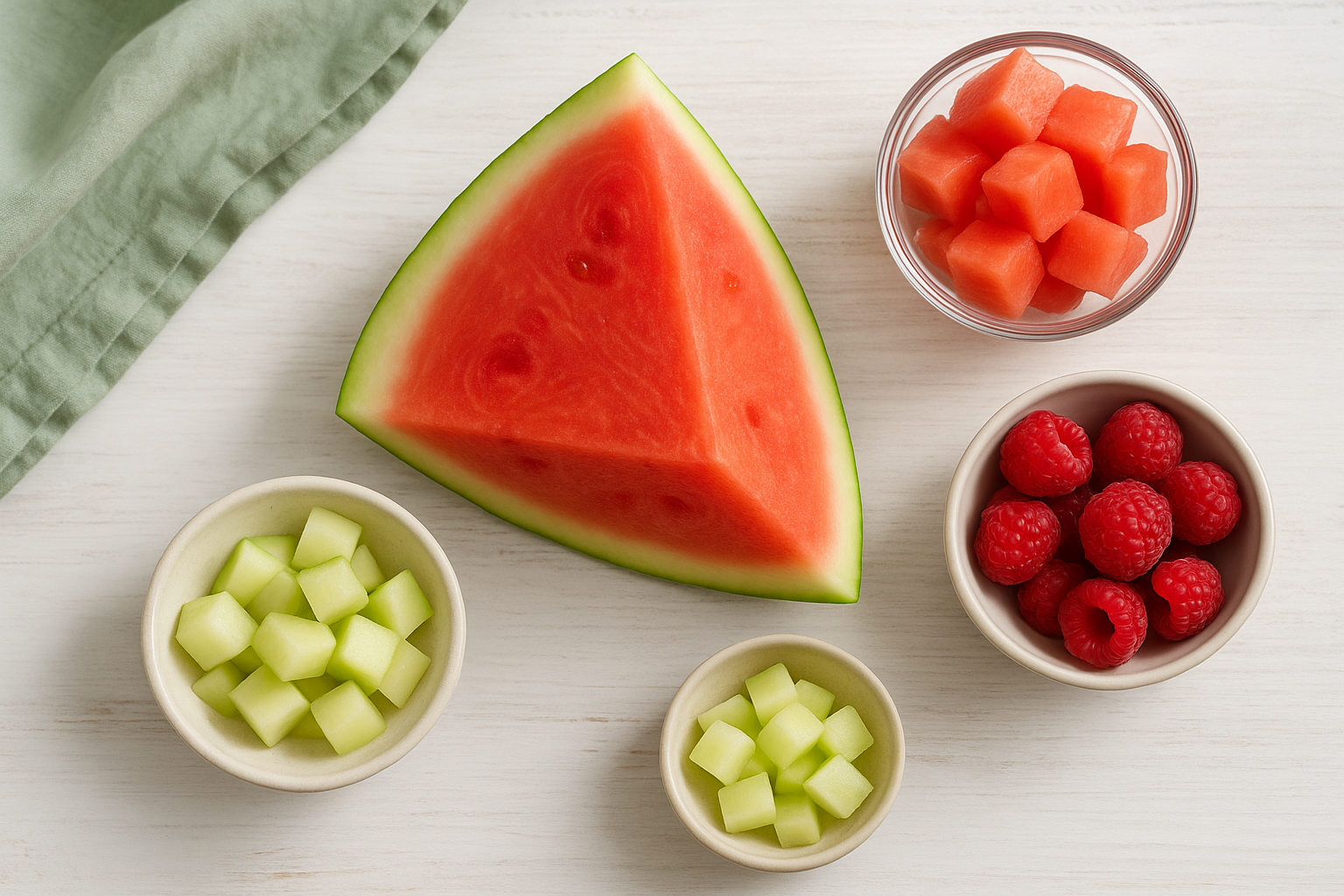
Raspberries: the supermarket champion
A cup gives you 8 grams, close to a third of the label Daily Value, for 64 calories. Frozen bags are usually cheaper than fresh clamshells and work well in oatmeal, yogurt or a smoothie.
Drawback: fresh raspberries spoil within a couple of days, so buy small amounts or lean on frozen.
Blackberries: nearly a tie
At 7.6 grams per cup and 62 calories, blackberries trail raspberries by less than half a gram. Their larger seeds give them a crunch some people love and others pick out of their teeth.
Guava: the tropical heavyweight
Guava packs 8.9 grams per cup, the highest of any fruit you have a fair chance of finding in a big chain store. You can eat the skin and seeds, which is where much of that fiber sits.
Best for: anyone who wants a single fruit to do heavy lifting. A cup covers roughly a third of a younger woman’s daily target.
Pears, Asian and regular
A medium Asian pear has 6.5 grams for just 75 calories, and a standard Bartlett or Bosc pear brings 5.5 grams. Both keep well on the counter, which makes pears the most practical high fiber fruit for a work bag.
Wild blueberries versus regular blueberries
This is one of the bigger gaps on the list. Wild (lowbush) blueberries deliver 6.2 grams per cup, while the larger cultivated berries sold fresh offer 3.6 grams.
Wild blueberries are smaller, so more of them fit in a cup. You’ll find them mostly in the freezer aisle.
Passion fruit: small portion, big number
Only a quarter cup of pulp and seeds gets you 6.1 grams. Spoon it over yogurt or into sparkling water and you’ve added a fifth of the Daily Value without much volume at all.
Persimmon and kiwifruit
One persimmon gives 6 grams, and a cup of sliced kiwi gives 5.4 grams. Both peak in late fall and winter, right when summer berries get expensive.
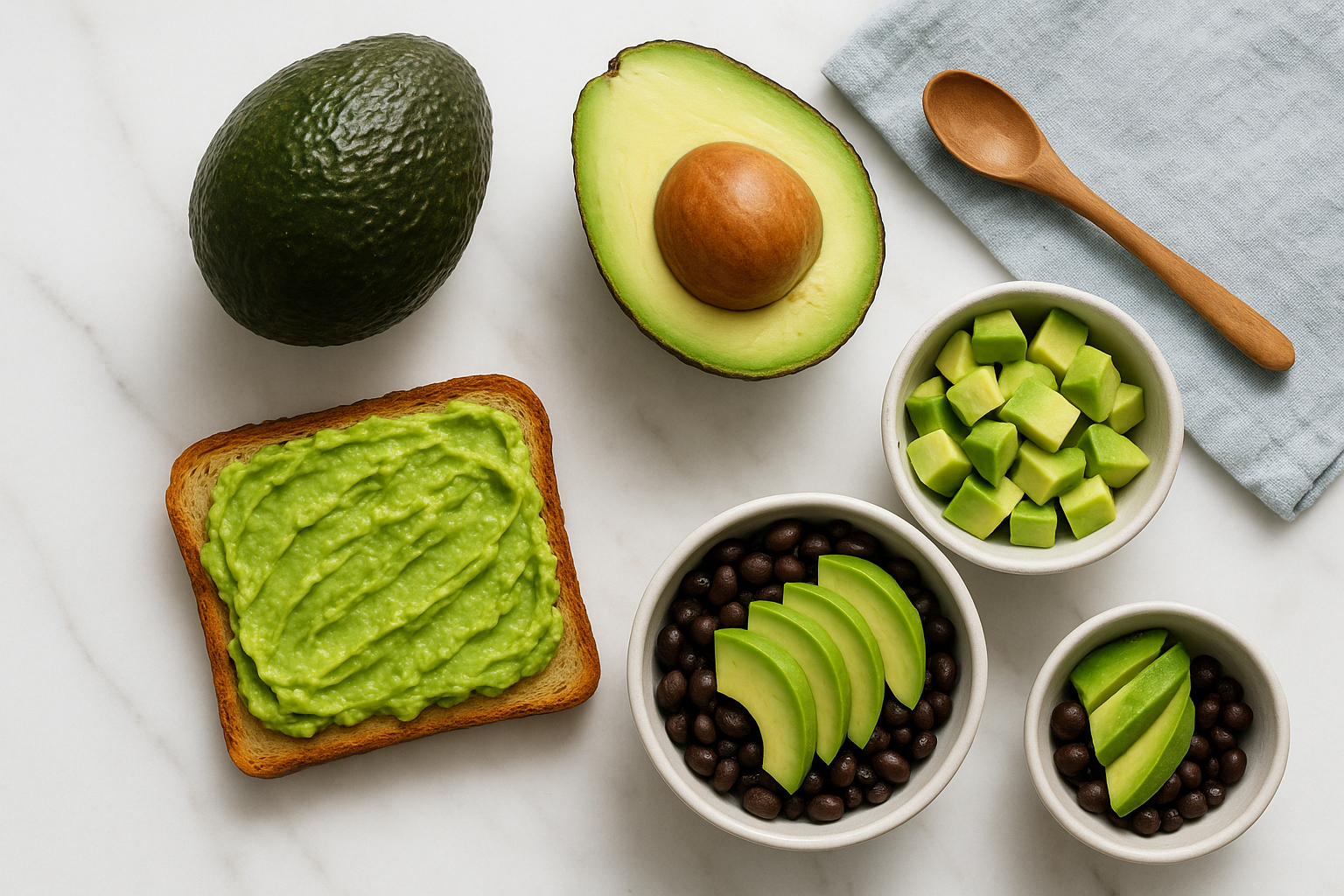
Avocado: the fruit filed as a vegetable
Half a cup of avocado has 5 grams of fiber and 120 calories. Mayo Clinic lists avocados among good sources of soluble fiber, the kind that forms a gel during digestion and can help lower cholesterol and blood sugar.
Not sure how many grams you should be aiming for? Our fiber calculator turns your age and sex into a daily number you can plan around.
Count by calories and the order shuffles
Ranking by portion favors big, filling fruits. If you’d rather know which fruits give the most fiber for the energy they bring, divide grams of fiber by calories and the picture changes.
| Fruit | Fiber per 100 calories | Change from per serving rank |
|---|---|---|
| Raspberries | 12.5g | Moves to first |
| Blackberries | 12.3g | Moves up |
| Passion fruit | 10.7g | Moves up |
| Starfruit | 9.0g | Jumps from mid table |
| Asian pear | 8.7g | Moves up |
| Guava | 7.9g | Moves down |
| Strawberries | 6.1g | Jumps from near the bottom |
| Pear | 5.3g | About the same |
| Apple, with skin | 4.6g | About the same |
| Sapote | 4.4g | Falls from first |
| Banana | 2.9g | Stays near the bottom |
Strawberries are the surprise. At only 3 grams per cup they look ordinary, but that cup has just 49 calories, so per bite of energy they outperform apples, pears and bananas.
Sapote shows the opposite effect. It tops the serving chart because a cup of it is rich and filling, not because its flesh is unusually fibrous.
Dried fruit looks dense, but check the scoop
Drying removes water, not fiber, so dried fruit packs more fiber into each gram. The catch is that a standard portion shrinks to a quarter cup, and calories climb alongside the fiber.
| Dried fruit | Portion | Fiber | Calories |
|---|---|---|---|
| Figs | 1/4 cup | 3.7g | 93 |
| Pears | 1/4 cup | 3.4g | 118 |
| Peaches | 1/4 cup | 3.3g | 96 |
| Prunes | 1/4 cup | 3.1g | 105 |
| Dates | 1/4 cup | 3.0g | 104 |
Myth: dried fruit is the best way to load up on fruit fiber.
Fact: a quarter cup of prunes gives 3.1 grams for 105 calories, while a cup of fresh raspberries gives 8 grams for 64. Dried fruit is a handy backup for travel or hiking, but fresh or frozen berries win on both counts.
Does fruit have fiber worth relying on next to beans and grains?
Yes, but fruit is a strong supporting player rather than the star. Mayo Clinic’s chart of high fiber foods shows how the best fruits compare with other food groups:
| Food | Serving | Fiber |
|---|---|---|
| Split peas, boiled | 1 cup | 16.0g |
| Lentils, boiled | 1 cup | 15.5g |
| Black beans, boiled | 1 cup | 15.0g |
| Chia seeds | 1 ounce | 10.0g |
| Green peas, boiled | 1 cup | 9.0g |
| Raspberries | 1 cup | 8.0g |
| Barley, pearled, cooked | 1 cup | 6.0g |
| Pear | 1 medium | 5.5g |
| Broccoli, boiled | 1 cup | 5.0g |
| Oatmeal, instant, cooked | 1 cup | 4.0g |
A cup of lentils carries about twice the fiber of a cup of raspberries. Still, the top fruits hold their own against whole grains and most vegetables, and they need no cooking.
Fruit also brings variety to the mix. Mayo Clinic names apples, bananas, avocados and citrus among good sources of soluble fiber, while the insoluble kind, which doesn’t dissolve in water, adds bulk and keeps things moving.
Looking for ways to pair fruit with beans and grains at the same meal? Our recipe eBooks have plenty of breakfasts and salads that do exactly that.
A fruit day that adds up to almost 19 grams
Picture a Tuesday where you change nothing except which fruit you reach for. Raspberries go on your morning cereal, a pear rides along in your bag, and a cup of kiwi slices becomes the afternoon snack.
That’s 8 + 5.5 + 5.4 = 18.9 grams of fiber from fruit alone. Swap in a banana, an orange and a cup of strawberries instead and the same three moments give you only 9.9 grams.
Mayo Clinic puts the daily target at 25 grams for women 50 and younger and 38 grams for men in the same age group. The higher fiber trio covers about three quarters of a younger woman’s goal before beans or whole grains enter the picture.
If you’re starting from a low fiber diet, Mayo Clinic advises increasing fiber slowly over a few weeks and drinking plenty of water, which helps your gut bacteria adjust and keeps gas and cramping down.
Want a gentle plan for making that jump without the bloat? Our gut health guides lay out a week by week approach.
For one easy change today, put a bag of frozen raspberries or blackberries on your shopping list. Thawed in the fridge overnight, a cup is ready for breakfast and quietly adds 8 grams before you’ve left the house.
What people also ask about high fiber fruit
Which fruit has the most fiber per serving?
Sapote tops the USDA list at 9.5 grams per cup, followed by guava at 8.9 grams. Among fruits sold in most supermarkets, raspberries lead with 8 grams per cup.
Which berries are highest in fiber?
Raspberries have the most at 8 grams per cup, followed closely by loganberries at 7.8 grams and blackberries at 7.6 grams. Regular cultivated blueberries have about 3.6 grams per cup.
Is avocado a high fiber fruit?
Yes. Half a cup of avocado has about 5 grams of fiber, roughly 18% of the Daily Value, even though the USDA groups it with vegetables.
Do dried fruits have more fiber than fresh fruit?
Per gram, yes, because drying removes water. Per typical serving, usually not: a quarter cup of prunes has 3.1 grams of fiber compared with 8 grams in a cup of fresh raspberries.
Are bananas a good source of fiber?
They are a modest source. A medium banana has about 3.2 grams of fiber, around 11% of the Daily Value, which puts it in the lower half of common fruits.
Which fruit gives the most fiber for the fewest calories?
Raspberries do, with about 12.5 grams of fiber per 100 calories. Blackberries are a close second at about 12.3 grams.
Can you meet your daily fiber target from fruit alone?
Not easily. Three high fiber choices like raspberries, a pear and kiwi add up to about 19 grams, so most people still need beans, whole grains and vegetables to reach 25 to 38 grams.
Sources
- U.S. Department of Agriculture and U.S. Department of Health and Human Services. “Food Sources of Dietary Fiber.” Dietary Guidelines for Americans, 2020 to 2025. dietaryguidelines.gov
- Mayo Clinic. “Chart of high-fiber foods.” 2025. www.mayoclinic.org
- Mayo Clinic. “Dietary fiber: Essential for a healthy diet.” 2026. www.mayoclinic.org
- U.S. Food and Drug Administration. “Daily Value on the Nutrition and Supplement Facts Labels.” 2026. www.fda.gov