
In this article
- Do grapes have fiber? What one cup actually delivers
- Where a grape keeps its small supply of fiber
- Are grapes high in fiber compared with other fruit?
- Raisins: the same fruit with the water pulled out
- What grapes bring to your plate besides fiber
- How much fiber in grapes adds up across a day
- Building a grape snack that counts for more
- Grapes, raisins or another fruit: a quick way to choose
- What research still has to settle about grapes and gut health
- Grape fiber questions people ask
- Sources
Twenty eight cups. That is roughly how many cups of grapes you would need to eat to reach the 28 gram Daily Value for fiber printed on food labels.
So do grapes have fiber? They do, but a full cup of red or green grapes gives you about 1 gram of fiber for 104 calories. Grapes count toward your fruit for the day, yet as a fiber source they sit near the bottom of the produce section.
Do grapes have fiber? What one cup actually delivers
The University of Minnesota Extension lists one cup of red or green grapes at 104 calories, 27 grams of carbohydrate and 1 gram of fiber, plus about 1 gram of protein. Cleveland Clinic puts that same cup at 151 grams, carrying around 15 grams of natural sugar.
Line those figures up and the balance is easy to see. More than half of the carbohydrate in a grape is sugar, while fiber accounts for roughly 1 gram out of 27.
Measured against the FDA’s 28 gram Daily Value, one cup supplies about 4% of a day’s fiber. That is a real contribution, only a modest one.
Grape size varies a lot from bunch to bunch, so the table below works in cups rather than individual grapes. Values are scaled from the 1 cup figures.
| Portion of grapes | Weight (approx.) | Fiber | Calories | % Daily Value for fiber |
|---|---|---|---|---|
| 1/2 cup | 76 g | 0.5 g | 52 | 2% |
| 1 cup | 151 g | 1 g | 104 | 4% |
| 2 cups | 302 g | 2 g | 208 | 7% |
| 3 cups | 453 g | 3 g | 312 | 11% |
Even a three cup bowl, which is a lot of grapes for one sitting, brings in only 3 grams. That is less than a single medium pear.
Where a grape keeps its small supply of fiber
Most of each bite is soft, juicy pulp. The fiber that grapes do have is concentrated in the skin, which Cleveland Clinic describes as the fiber rich part of the fruit.
That skin fiber still pulls its weight. Cleveland Clinic notes it helps your body clear LDL cholesterol, the type often called “bad” cholesterol, which is one reason dietitians favor eating grapes whole.
Red, green or black grapes
The Extension data groups red and green grapes together at the same 1 gram per cup, so color is not a fiber decision. Where color does matter is antioxidants, plant compounds that help neutralize unstable molecules called free radicals.
Red and black grapes may hold a slight edge there, according to Cleveland Clinic, with resveratrol and catechins among the compounds involved. Choose by flavor for fiber, and reach for darker bunches when you want a few more polyphenols in the mix.
Are grapes high in fiber compared with other fruit?
Not by any fair yardstick. Using standard portions from the Dietary Guidelines for Americans, grapes land at the low end of everyday fruit, whether you count per serving or per calorie.
| Fruit | Portion | Fiber | Calories | Fiber per 100 calories |
|---|---|---|---|---|
| Raspberries | 1 cup | 8.0 g | 64 | 12.5 g |
| Pear | 1 medium | 5.5 g | 103 | 5.3 g |
| Kiwifruit | 1 cup | 5.4 g | 110 | 4.9 g |
| Apple, with skin | 1 medium | 4.8 g | 104 | 4.6 g |
| Blueberries | 1 cup | 3.6 g | 84 | 4.3 g |
| Banana | 1 medium | 3.2 g | 112 | 2.9 g |
| Strawberries | 1 cup | 3.0 g | 49 | 6.1 g |
| Cherries | 1 cup | 2.9 g | 87 | 3.3 g |
| Grapes, red or green | 1 cup | 1.0 g | 104 | 1.0 g |
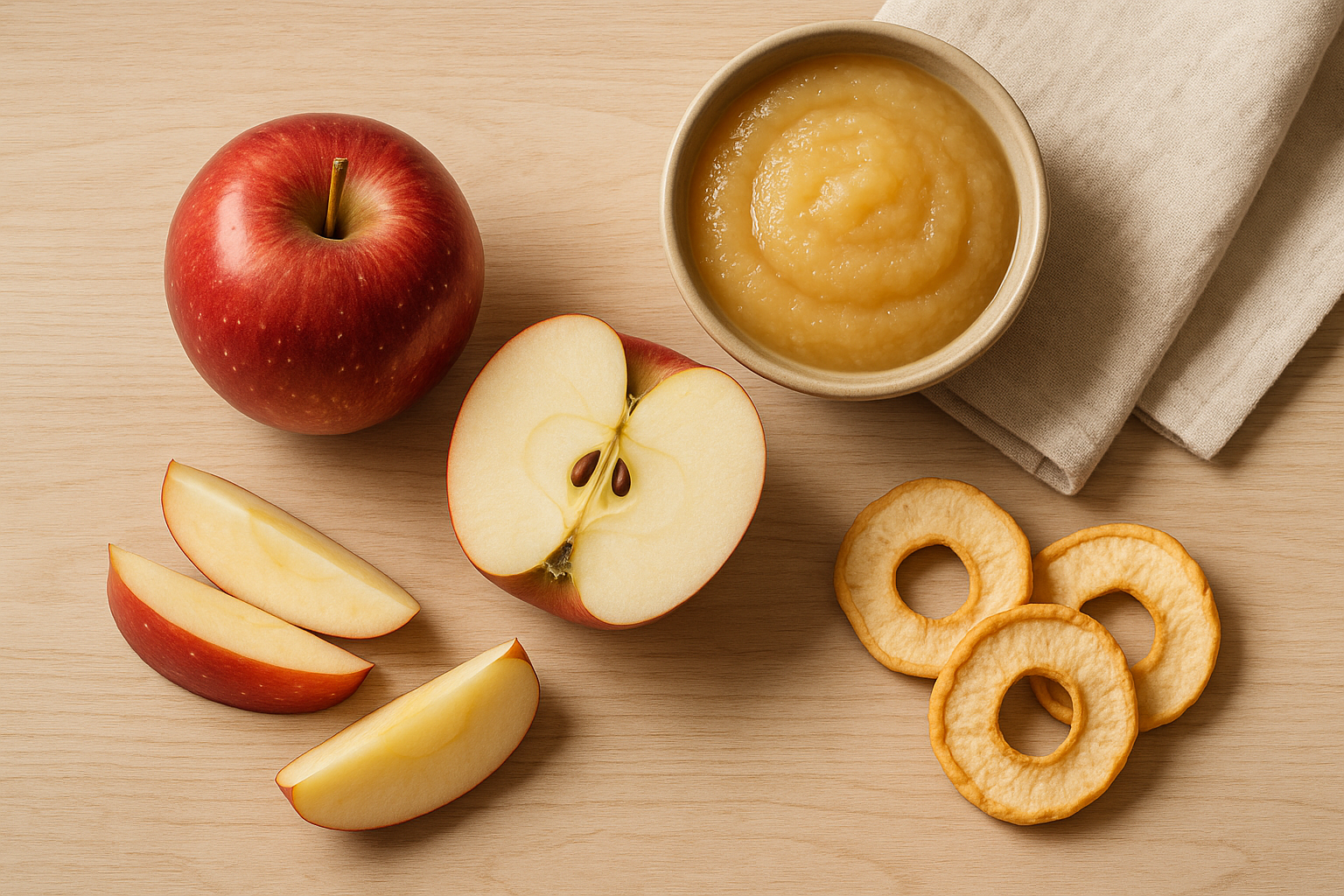
The apple comparison is the most striking, because the calories are identical at 104. A medium apple carries almost five times the fiber of a cup of grapes for the same energy.
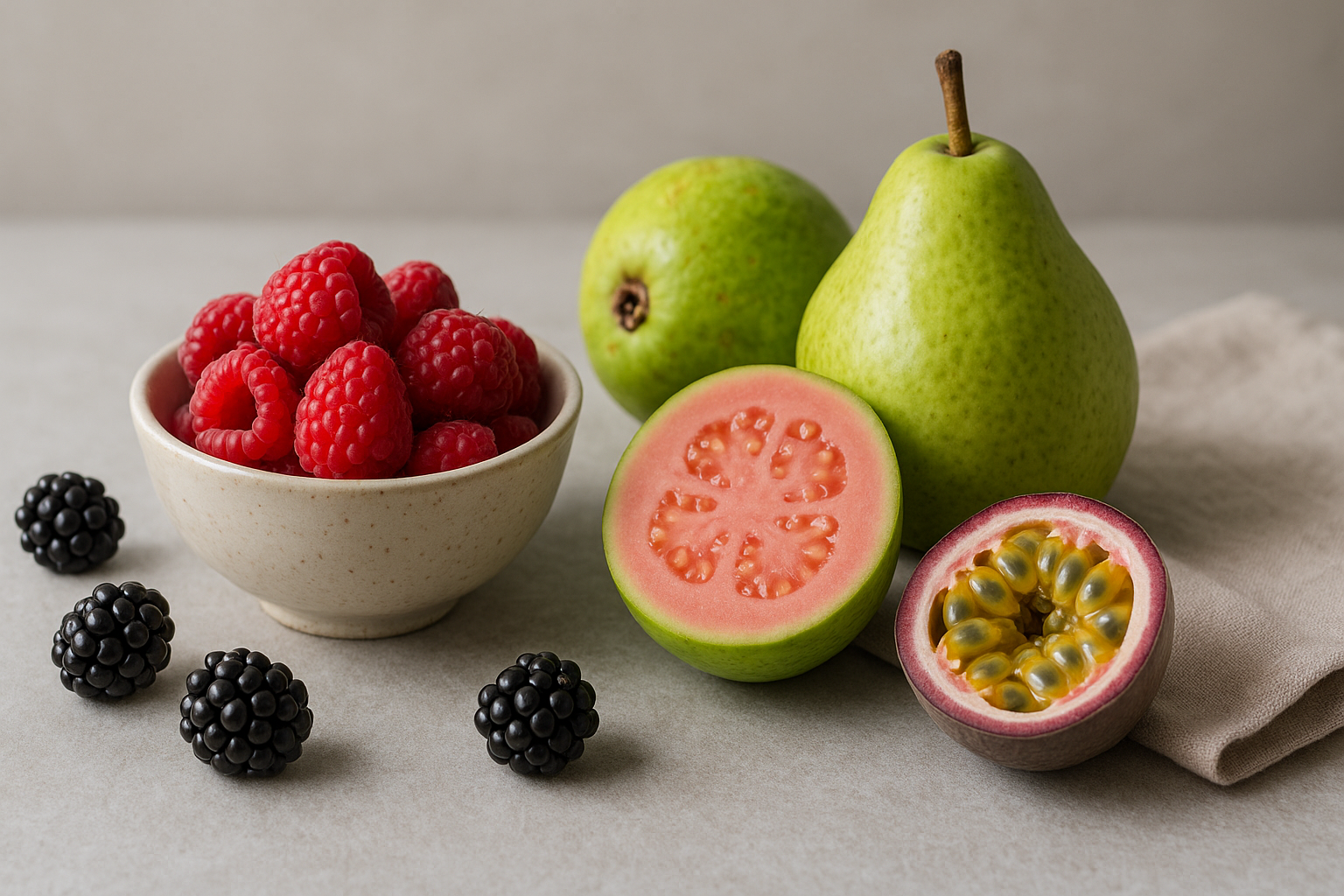
Ask what fruit has the most fiber and the answer points to raspberries, blackberries and pears, not grapes. If you want to know what fruits are high in fiber and easy to find, nearly every option in the table above beats a grape.
For a daily grape eater, one swap shows the gap clearly. Trading your usual cup of grapes for a cup of raspberries adds 7 grams of fiber and trims 40 calories.
Raisins: the same fruit with the water pulled out
Drying changes the numbers. A 2019 review in the journal Nutrients lists raisins at 3.3 grams of fiber per 100 grams for golden and 4.5 grams for dark.
Fresh grapes work out to about 0.7 grams per 100 grams from the Extension figures, so raisins hold roughly five to seven times more fiber by weight. Nothing gets added during drying; losing water simply packs the same fiber into a smaller, lighter piece of fruit.
Myth: A handful of raisins is a big fiber upgrade over a bowl of grapes.
Fact: One ounce of raisins (28 grams) provides about 0.9 to 1.3 grams of fiber, close to what a full cup of fresh grapes gives you. Raisins are denser, but a typical portion is small, so the totals end up near each other.
Where raisins do differ is in what rides along with the fiber. The same review reports that fructans, fermentable carbohydrates that gut bacteria break down, can make up as much as 8% of a raisin, while they are not detectable in fresh grapes.
Raisins also contain tartaric acid, a natural fruit acid. In a nine week trial described in the review, 5 grams a day of tartaric acid, the amount in about 120 grams of raisins, affected colon function in a way similar to eating the raisins themselves.
Their glycemic index, a measure of how quickly a food raises blood sugar, has been reported between 49 and 69, a range the authors call low to moderate. They credit much of that to fructose, a sugar with a low glycemic index of its own.
If fermentable foods like raisins tend to leave you gassy, our gut health guides show you how to bring them in slowly so your digestion can adjust.
What grapes bring to your plate besides fiber
A cup of grapes supplies 288 milligrams of potassium, about 6% of the 4,700 milligram Daily Value. Cleveland Clinic also lists vitamin C and vitamin K among their notable nutrients.
Grapes are a high water fruit as well, which is part of why a bowl of chilled grapes feels so refreshing. That water also explains the low fiber: there is simply less solid fruit in each bite.
Resveratrol gets most of the attention. Cleveland Clinic links it to longer lifespan and better insulin sensitivity, though both are framed as possibilities that research is still sorting out rather than proven effects.
With only about 1 gram of protein and 1 gram of fiber per cup, grapes work best next to something more filling. On their own they are a sweet, light bite, not a snack built to carry you to dinner.
How much fiber in grapes adds up across a day
Mayo Clinic’s guideline is 14 grams of fiber for every 1,000 calories you eat. On a 2,000 calorie day that comes to 28 grams, the same figure used for the label Daily Value.
At 1 gram per cup, grapes cover about 4% of that goal. A generous two cup serving still leaves you around 26 grams short.
Someone eating 1,800 calories a day would aim for about 25 grams, and someone at 2,500 calories closer to 35. Either way, grapes can only nudge the total.
The rest has to come from foods that carry far more fiber per bite:
- Beans and lentils, the densest everyday source
- Whole grains such as oats and whole wheat pasta
- Vegetables like broccoli
- Nuts, seeds and popcorn
- Higher fiber fruit such as berries, pears and apples
Want to see where your own number falls? Our fiber calculator turns your calorie needs into a daily fiber target you can plan meals around.
Building a grape snack that counts for more
Grapes are easiest to use as the sweet note in a dish where something else supplies the fiber. These combinations use Mayo Clinic’s fiber values for the partner foods:
| Pairing | What brings the fiber | Approximate total fiber |
|---|---|---|
| 1 cup grapes + 3 cups air-popped popcorn | Popcorn, 3.5 g | 4.5 g |
| Halved grapes over 1 cup cooked oatmeal | Oatmeal, 4.0 g | 5 g |
| 1 cup grapes in a salad with 1 cup chopped broccoli | Broccoli, 5.0 g | 6 g |
| Grapes tossed into 1 cup whole wheat pasta salad | Pasta, 6.0 g | 7 g |
| Grapes stirred into 1 cup cooked lentils | Lentils, 15.5 g | 16.5 g |
Broccoli and grape salad is an old potluck favorite for good reason. The grapes bring sweetness and crunch, and the broccoli quietly brings five times the fiber.
A lentil salad with halved grapes, herbs and a sharp vinaigrette works the same way. The grapes cut through the earthiness of the lentils, and you end up with more than half a day’s fiber target for many people in one bowl.
If you are serving grapes to small children, slice each one lengthwise into smaller pieces first. Cleveland Clinic points out that whole grapes are the right size and firmness to block a young child’s airway.
Looking for more salads and bowls where fruit plays a supporting role? Our recipe eBooks are full of easy, high fiber meals that make room for the foods you already love.
Grapes, raisins or another fruit: a quick way to choose
Cleveland Clinic’s dietitian guidance is to eat grapes in their natural form, since whole grapes keep the fullest package of nutrients compared with juice or raisins. From there, the right pick depends on what you want the fruit to do.
- If you want the most fiber per bite of fruit, pick raspberries, pears or kiwifruit.
- If you want a sweet, hydrating snack and plan to get fiber from the rest of the meal, grapes are a fine choice.
- If you want a shelf stable fruit that carries fructans and tartaric acid, an ounce of raisins fits, but count it as about a gram of fiber.
- If you are choosing between grapes and grape juice, take the whole grapes.
Most people will land somewhere in between. Grapes can be one of several fruits you rotate through in a week rather than the one you lean on for fiber.
What research still has to settle about grapes and gut health
The more interesting questions about grapes have less to do with grams of fiber and more to do with the compounds that come along with them. The Nutrients review highlights fructans, tartaric acid and polyphenols in raisins as possible reasons they may support digestion beyond their modest fiber content.
The authors are open about the limits. Much of the evidence still comes from cell and animal studies, and they call for longer human trials before drawing firm conclusions.
Future studies may show that a dried grape does more for your gut than its fiber number suggests. Until those results arrive, judge grapes by the 1 gram they reliably deliver, and let the fiber heavy foods on your plate do the rest.
Grape fiber questions people ask
Are grapes a high fiber food?
No. One cup of grapes has about 1 gram of fiber, roughly 4% of the 28 gram Daily Value. Raspberries, pears and kiwifruit give you five to eight times as much per serving.
Do green grapes have more fiber than red grapes?
No. The University of Minnesota Extension lists red and green grapes together at 1 gram of fiber per cup. Red and black grapes may carry slightly more antioxidants, but their fiber is essentially the same.
Do raisins have more fiber than grapes?
Yes, by weight: raisins have 3.3 to 4.5 grams of fiber per 100 grams, compared with about 0.7 grams in fresh grapes. Per usual portion the gap shrinks, since an ounce of raisins and a cup of grapes both land near 1 gram.
How much sugar is in a cup of grapes?
A 151 gram cup of grapes has about 15 grams of natural sugar, according to Cleveland Clinic. That cup also carries 104 calories and about 1 gram of fiber.
Are grapes good for digestion?
On their own, grapes do little for regularity because they provide only about 1 gram of fiber per cup. Raisins add fructans and tartaric acid, which one review links to changes in colon function.
Which fruits are higher in fiber than grapes?
Almost every common fruit. A cup of raspberries has 8 grams, a medium pear 5.5 grams, a medium apple 4.8 grams and a medium banana 3.2 grams, compared with 1 gram in a cup of grapes.
Can grapes fit into a high fiber diet?
Yes. Grapes add sweetness and water without much fiber, so pair them with oatmeal, broccoli, lentils or whole wheat pasta to bring the dish to 5 grams of fiber or more.
Sources
- University of Minnesota Extension. “Grapes.” Real Life Good Food. 2026. reallifegoodfood.umn.edu
- Cleveland Clinic. “10+ Reasons Why Eating Grapes Is Good for You.” 2026. health.clevelandclinic.org
- Nutrients. “Is Eating Raisins Healthy?” Olmo-Cunillera A, et al. 2019. pmc.ncbi.nlm.nih.gov
- U.S. Department of Agriculture and U.S. Department of Health and Human Services. “Food Sources of Dietary Fiber.” Dietary Guidelines for Americans, 2020 to 2025. dietaryguidelines.gov
- Mayo Clinic. “Chart of high-fiber foods.” 2025. www.mayoclinic.org
- U.S. Food and Drug Administration. “Daily Value on the Nutrition and Supplement Facts Labels.” 2026. www.fda.gov