
In this article
- Pea milk fiber, carton by carton
- Why peas lose their fiber on the way to the carton
- Pea protein milk nutrition: where it stands out
- A glass of pea milk versus a cup of peas
- What else is in a carton of pea milk
- How pea milk compares with other plant protein drinks
- Sweetened, flavored and unsweetened pea milk
- Ripple Kids and added fiber
- A pea milk breakfast, counted
- High fiber ways to use pea milk
- Pea milk, gut comfort and your fiber target
- A simple rule for choosing pea milk
- One swap to try this week
- Pea milk fiber: questions people ask
- Sources
Half a cup of cooked green peas has 4.4 grams of fiber. A cup of pea milk made from those same legumes has less than 1 gram, according to the labels Ripple submits to USDA.
So the benefits of pea milk aren’t really about fiber. The drink is built around pea protein, and that’s where it shines.
Pea milk fiber, carton by carton
These values come from Ripple’s records in USDA FoodData Central, with green peas and 2% dairy milk for comparison. Ripple had the most pea milk records we found there.
| Drink or food | Serving | Fiber | Calories | Protein | Added sugar |
|---|---|---|---|---|---|
| Ripple Unsweetened Original | 1 cup | under 1 g | 80 | 8 g | 0 g |
| Ripple Original | 1 cup | under 1 g | 90 | 8 g | 5 g |
| Ripple Chocolate | 1 cup | under 1 g | 140 | 8 g | 15 g |
| Ripple Kids Original | 240 ml | 2 g | 140 | 8 g | 5 g |
| Ripple Oatmilk + Protein | 1 cup | under 1 g | 150 | 6 g | 6 g |
| Green peas, cooked | 1/2 cup | 4.4 g | 67 | not compared | 0 g |
| Reduced fat 2% milk | 1 cup | 0 g | 120 | 8 g | 0 g |
Only one carton reaches 2 grams, and the ingredient list explains why. Ripple Kids lists soluble corn fiber, an added fiber ingredient, rather than getting the extra fiber from peas.
Even the oat and pea blend stays under a gram. Blending in oat concentrate adds calories and carbohydrates, but not enough oats to move the fiber line.
Why peas lose their fiber on the way to the carton
Mayo Clinic defines fiber as the parts of plant foods your body can’t digest. Whole peas are full of it, which is why they rank among the better vegetable sources on the Dietary Guidelines list.
Pea milk doesn’t use whole peas. Ripple’s ingredient list starts with water and a “pea protein blend (water, pea protein),” meaning the protein has been separated out before the drink is made.
Mayo Clinic notes that processed foods are usually lower in fiber than the whole foods they come from. Pea milk is a clear example, since the part of the pea that holds most of the fiber isn’t what goes into the carton.
Pea protein milk nutrition: where it stands out
Protein is pea milk’s headline number. Every Ripple pea milk in our table lists 8 grams per cup, matching 2% dairy milk and covering about 16% of the 50 gram Daily Value.
Calcium is high too. Ripple lists 440 milligrams per cup, about 34% of the 1,300 milligram Daily Value, from added tricalcium phosphate.
Vitamin D comes in at 4.8 micrograms per cup, about 24% of the Daily Value. Potassium reaches 410 milligrams in the original cartons, roughly 9%.
The unsweetened version also lists 2.7 milligrams of iron, about 15% of the 18 milligram Daily Value. Ripple adds DHA algal oil to its unsweetened carton as well, though the label doesn’t give an amount.
A glass of pea milk versus a cup of peas
This comparison tends to surprise people. A cup of cooked green peas has about 8.6 grams of protein, nearly the same as a cup of pea milk, but it also brings 8.8 grams of fiber.
The cup of peas has about 134 calories, compared with 80 in unsweetened pea milk. For around 54 extra calories, you get roughly nine times the fiber and similar protein.
Pea milk still earns its place as a drink for cereal, coffee and smoothies. Just know that the protein survived processing far better than the fiber did.
What else is in a carton of pea milk
Beyond water and pea protein, Ripple’s unsweetened carton lists sunflower oil, sunflower lecithin, sea salt, natural flavor, guar gum and gellan gum. The oil gives the drink its body, at 4.5 grams of fat and 0.5 grams of saturated fat per cup.
The gums keep the protein evenly mixed so the milk doesn’t separate. They’re used in small amounts and don’t change the fiber line in any meaningful way.
How pea milk compares with other plant protein drinks
Pea milk and soy milk are the two plant milks that genuinely compete with dairy on protein. Unsweetened soy milk lists about 7 to 9 grams per cup, and pea milk lists 8.
Most other plant milks fall well short. Unsweetened almond milk has around 1 gram per cup, oat milk about 1.6 grams in USDA’s reference record and cashew milk 1 to 2 grams.
On fiber, pea milk lands near the bottom with almond and cashew. Oat milk, at about 1 to 2 grams per cup in the brands we checked, has a slight edge, but none of these drinks is a real fiber source.
Lining up pea, soy, oat and almond before you choose a carton? Our comparison charts show protein, calcium and fiber side by side.
Sweetened, flavored and unsweetened pea milk
Sugar is where pea milk cartons diverge. Ripple Unsweetened Original lists 0 grams of sugar and 80 calories per cup.
The regular Original adds 5 grams of cane sugar, about 10% of the 50 gram Daily Value for added sugar. Ripple Chocolate lists 15 grams of added sugar, about 30%, along with 140 calories.
If you drink pea milk every day, the unsweetened version keeps the protein and calcium without the added sugar. You can sweeten it yourself with fruit, which brings fiber with it.
Ripple Kids and added fiber
Ripple Kids Original is built differently from the adult cartons. It lists 140 calories, 8 grams of fat, 2 grams of fiber, 460 milligrams of calcium and 540 milligrams of potassium per serving.
The fiber comes from soluble corn fiber, which appears in the ingredients at less than 1% of the recipe. It’s a small boost, about 7% of the 28 gram Daily Value, but more than any other pea milk in our comparison.
Kids still get most of their fiber from fruit, vegetables, beans and whole grains. A glass of Ripple Kids with an apple brings roughly 6.8 grams, using the Dietary Guidelines value of 4.8 grams for a medium apple.
A pea milk breakfast, counted
Picture a weekday bowl of bran flakes with a cup of unsweetened pea milk. Three quarters of a cup of bran flakes brings 5.5 grams of fiber by the Dietary Guidelines list, and the pea milk brings 8 grams of protein.
Add half a cup of raspberries for another 4.0 grams. The bowl now carries about 9.5 grams of fiber and a solid serving of protein, with the pea milk adding almost none of the fiber but most of the protein.
High fiber ways to use pea milk
Pea milk has a neutral flavor and a creamy body, so it works in sweet and savory dishes. These ideas lean on Dietary Guidelines fiber values.
- Split pea soup, made creamy: half a cup of cooked split peas brings 8.2 grams, and a splash of pea milk smooths the texture without adding dairy.
- Blackberry protein smoothie: a cup of pea milk blended with a cup of blackberries (7.6 g) and a tablespoon of chia seeds (4.1 g) lands near 12 grams of fiber and 8 grams of protein.
- Overnight oat bran: half a cup of oat bran (2.9 g) soaked in pea milk with a sliced banana (3.2 g) gives about 6 grams.
- Peas on the side: a cup of green peas (8.8 g) with dinner and a glass of pea milk turns the same legume into both your fiber and your protein.
Want more soups, smoothies and breakfasts built around plant milks and legumes? Our recipe eBooks have plenty of easy, high fiber ideas.
Pea milk, gut comfort and your fiber target
Mayo Clinic suggests about 25 grams of fiber a day for women and 38 grams for men up to age 50. Pea milk adds little toward either, so most of your fiber needs to come from what you eat.
Mayo Clinic also recommends raising fiber gradually and drinking plenty of fluids, since a sudden jump can cause gas and bloating. A protein rich pea milk smoothie with berries is an easy way to add fiber a little at a time.
If you’re working on a calmer gut while you add more fiber, our gut health guides walk you through it one step at a time.
A simple rule for choosing pea milk
If you want the most protein with the least sugar, pick an unsweetened pea milk with 8 grams of protein, 0 grams of added sugar and at least 30% of the Daily Value for calcium.
If you’re buying for kids, compare the kids’ version against plain unsweetened, keeping in mind the extra fat, sugar and added fiber. If fiber is your goal, pea milk won’t get you there, but the peas themselves will.
One swap to try this week
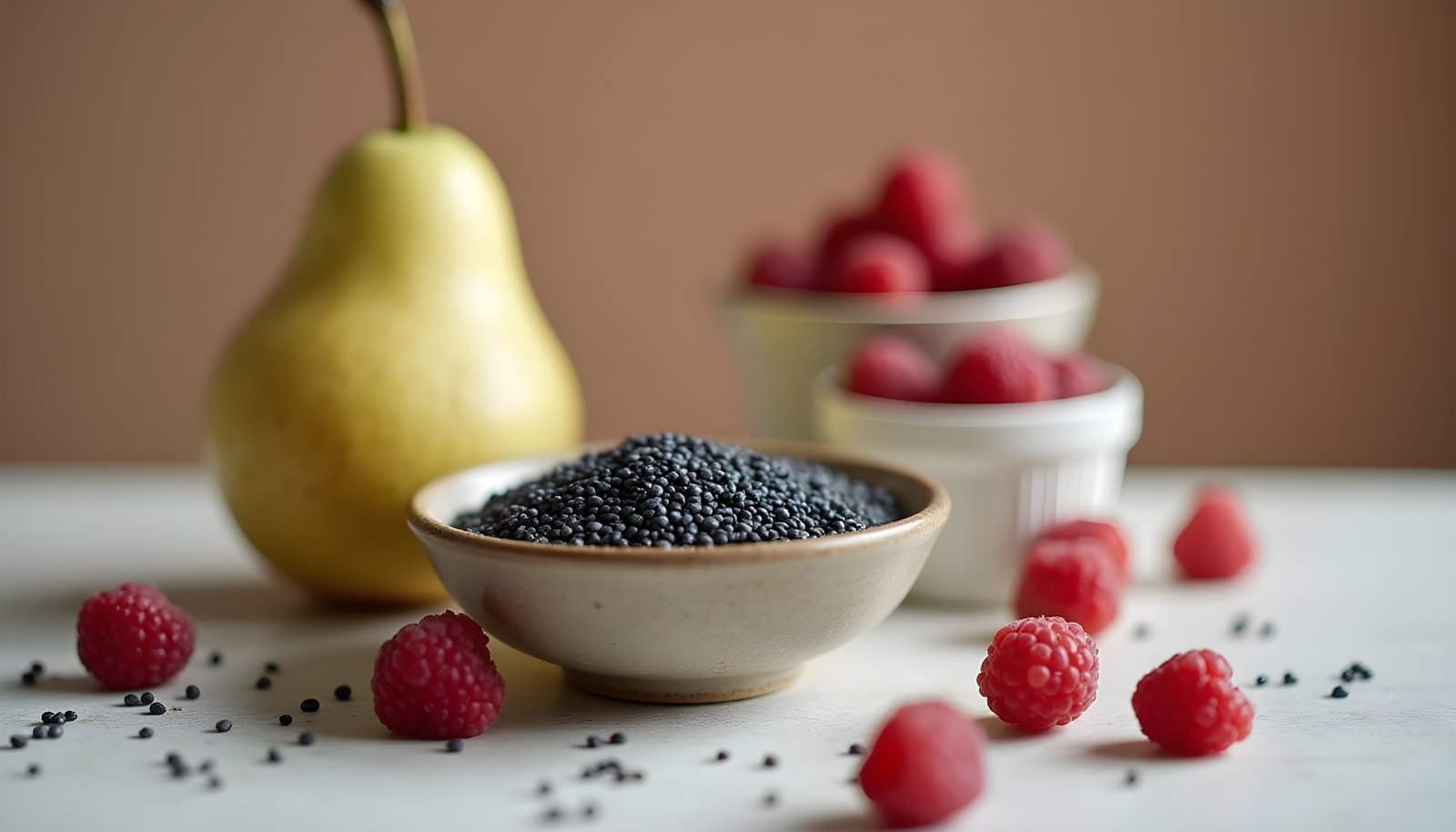
Next time you pour pea milk for breakfast, serve it with a side that carries the fiber the carton lacks. A pear (5.5 grams) or a cup of blackberries (7.6 grams) next to your glass covers more fiber than five cups of pea milk.
Pea milk fiber: questions people ask
Does pea milk have fiber?
Very little. Ripple’s main pea milks list less than 1 gram of fiber per cup, though the kids’ version lists 2 grams from added soluble corn fiber.
Why does pea milk have less fiber than peas?
It’s made from pea protein, not whole peas. Half a cup of cooked green peas has 4.4 grams of fiber, while the pea protein in the carton carries almost none.
How much protein is in pea milk?
About 8 grams per cup. That matches 2% dairy milk and is far more than almond, oat or cashew milk.
Is pea milk better than almond milk?
For protein, yes. Pea milk has about 8 grams per cup compared with around 1 gram in almond milk, while both are low in fiber.
Is pea milk high in calcium?
Yes. Ripple lists 440 milligrams per cup, about 34% of the Daily Value.
Does unsweetened pea milk have sugar?
No. Ripple Unsweetened Original lists 0 grams of total and added sugar per cup.
How can I add fiber to pea milk?
Blend it with high fiber fruit and seeds. A cup of blackberries and a tablespoon of chia seeds add about 11.7 grams of fiber to a glass.
Sources
- USDA Agricultural Research Service. FoodData Central entries for cooked green peas and reduced fat 2% milk (171267), plus branded records for Ripple Unsweetened Original, Ripple Original, Ripple Chocolate, Ripple Kids Original and Ripple Creamy Original Oatmilk + Protein plant based milks (2023). fdc.nal.usda.gov
- U.S. Food and Drug Administration. “Daily Value on the Nutrition and Supplement Facts Labels.” 2024. fda.gov
- U.S. Department of Agriculture and U.S. Department of Health and Human Services. “Food Sources of Dietary Fiber.” Dietary Guidelines for Americans, 2020 to 2025. dietaryguidelines.gov
- Mayo Clinic Staff. “Dietary fiber: Essential for a healthy diet.” Mayo Clinic. 2025. mayoclinic.org