
In this article
- How we compared the cups
- High fiber protein yogurt, side by side
- The standouts, one by one
- Calories, protein and fiber per cup
- Greek style plant yogurt fiber and protein
- Why protein and fiber rarely arrive together
- Turning yogurt into a gut health snack
- A quick label checklist for protein and fiber
- Where these yogurts fit in a day
- One thing to try with your next yogurt
- High fiber protein yogurt: what people ask
- Sources
A cup of yogurt that lists 25 grams of protein sounds like the perfect gut health snack. The protein is real, but in the cups we checked, the highest protein yogurts mostly listed 0 grams of fiber.
Finding a high fiber protein yogurt takes more label reading than you’d think. Out of ten cups compared here, only one clears 20 grams of protein and 5 grams of fiber at the same time.
How we compared the cups
Every number below comes from brand records submitted to USDA FoodData Central. We looked at protein and fiber per container first, then at sugar, saturated fat and where the fiber comes from.
Yogurt made only from milk has no fiber of its own, because fiber comes from plants. So any fiber you see on a dairy cup was added, usually as chicory root fiber, inulin or polydextrose.
High fiber protein yogurt, side by side
| Yogurt | Serving | Protein | Fiber | Sugar | Calories |
|---|---|---|---|---|---|
| Oikos Triple Zero Plain | 1 cup (225 g) | 22 g | 10 g | 8 g | 170 |
| Oikos Triple Zero Peach | 150 g | 15 g | 3 g | 5 g | 90 |
| Tropical Probiotics & Fiber Strawberry (drinkable) | 7 fl oz | 7 g | 4 g | 23 g | 180 |
| Activia Fiber Peach | 113 g | 4 g | 3 g | 12 g | 90 |
| Kite Hill Greek Style Plain (almond) | 150 g | 15 g | 1 g | 0 g | 120 |
| Silk Greek Style Blueberry (coconut) | 150 g | 10 g | 1 g | 9 g (all added) | 190 |
| Ratio Protein Strawberry | 150 g | 25 g | 0 g | 0 g | 170 |
| Oikos Pro Strawberry | 240 g | 20 g | not declared | 3 g | 140 |
| Icelandic Provisions Oatmilk Skyr Plain | 162 g | 13 g | 0 g | 3 g | 190 |
| Plain nonfat skyr (Schnucks) | 150 g | 17 g | 0 g | 5 g | 90 |
The two highest protein cups, Ratio and Oikos Pro, list no fiber at all. The highest fiber drinkable has 23 grams of sugar and just 7 grams of protein.
The standouts, one by one
Best overall: Oikos Triple Zero Plain
This is the only cup that wins on both counts, with 22 grams of protein and 10 grams of fiber per 225 gram cup. The ingredient list is short: cultured nonfat milk, then chicory root fiber, water and a few minor ingredients.
Those 10 grams are about 36% of the 28 gram Daily Value for fiber, and the 22 grams of protein are 44% of the 50 gram Daily Value. Sugar sits at 8 grams, and no sweetener appears in the ingredient list.
Smaller cup, same idea: Oikos Triple Zero Peach
The flavored 150 gram cup has 15 grams of protein and 3 grams of fiber for 90 calories, sweetened with stevia leaf extract. It’s a lighter snack, though the record we found doesn’t name its fiber ingredient.
Most fiber in a bottle: Tropical Probiotics & Fiber
This drinkable yogurt lists 4 grams of fiber per 7 ounce bottle, with polydextrose as its fiber type ingredient. The trade-off is 23 grams of sugar and only 7 grams of protein.
Best Greek style plant yogurt: Kite Hill Plain
Kite Hill builds its 15 grams of protein on almond milk with added soy protein isolate, and lists 0 grams of sugar. Fiber is just 1 gram, so it scores well on protein but needs help from toppings.
Most protein, no fiber: Ratio
Ratio Protein Strawberry reaches 25 grams of protein per 150 gram cup using ultra filtered milk and whey protein concentrate. It’s sweetened with erythritol and sucralose and lists 0 grams of fiber.
Fiber with some whole grain: Activia Fiber Peach
Activia’s fiber line pairs inulin with wheat and oat flakes stirred into the cup, so part of its 3 grams comes from cereal. Protein is modest at 4 grams per 113 gram cup, and cane sugar is the second ingredient.
It works as a light probiotic snack, but it won’t keep you full the way a 15 gram protein cup will.
High protein, zero fiber: skyr
Icelandic style skyr is strained like Greek yogurt, and a plain nonfat cup from Schnucks lists 17 grams of protein for 90 calories with a single ingredient: cultured nonfat milk. Fiber is 0 grams.
Icelandic Provisions’ oat milk skyr is the plant based version, with 13 grams of protein per two thirds of a cup. Even with oats in the base, it lists 0 grams of fiber and 0 milligrams of calcium.
Calories, protein and fiber per cup
Calories tell you how much you pay for the protein. Oikos Triple Zero Peach and plain skyr both deliver 15 to 17 grams of protein for 90 calories, while Silk’s coconut Greek style cup needs 190 calories for 10 grams.
Fiber shifts the math a little. Oikos Triple Zero Plain’s 170 calories bring 22 grams of protein plus 10 grams of fiber, which no other cup on the list matches at any calorie level.
Greek style plant yogurt fiber and protein
Plant based Greek style cups get their protein from added isolates, not from straining. Kite Hill uses soy protein isolate and Silk’s coconut version uses pea protein.
Neither adds much fiber. Both list 1 gram, which is similar to regular plant yogurts and far below the fiber added dairy cups.
Silk’s coconut base also brings 10 grams of saturated fat, half the Daily Value, plus 9 grams of added sugar. Kite Hill lists 0 grams of saturated fat, so the two plant options are very different snacks despite similar fiber.
Why protein and fiber rarely arrive together
Yogurt protein comes from milk, and high protein brands concentrate it by straining or ultra filtering the milk, then sometimes adding whey. None of that adds fiber, because there’s no plant material involved.
Fiber has to be stirred in as its own ingredient. FDA counts isolated fibers like these on labels only when it has found a physiological benefit, and its list of fibers it intends to recognize includes inulin type fructans and polydextrose.
In our table, the cups with 3 grams of fiber or more list an added fiber ingredient or cereal flakes, except Oikos Triple Zero Peach, whose record names none. The cups built only on milk, whey or plant protein isolates land at 0 or 1 gram.
So a yogurt that has both is the result of two separate choices by the brand. Most high protein lines make the first choice and skip the second.
Weighing high protein yogurts against fiber bars or shakes? Our comparison charts put the options side by side.
Turning yogurt into a gut health snack
Picture the hour after a workout and a Kite Hill Greek style cup in the fridge. On its own it brings 15 grams of protein and 1 gram of fiber.
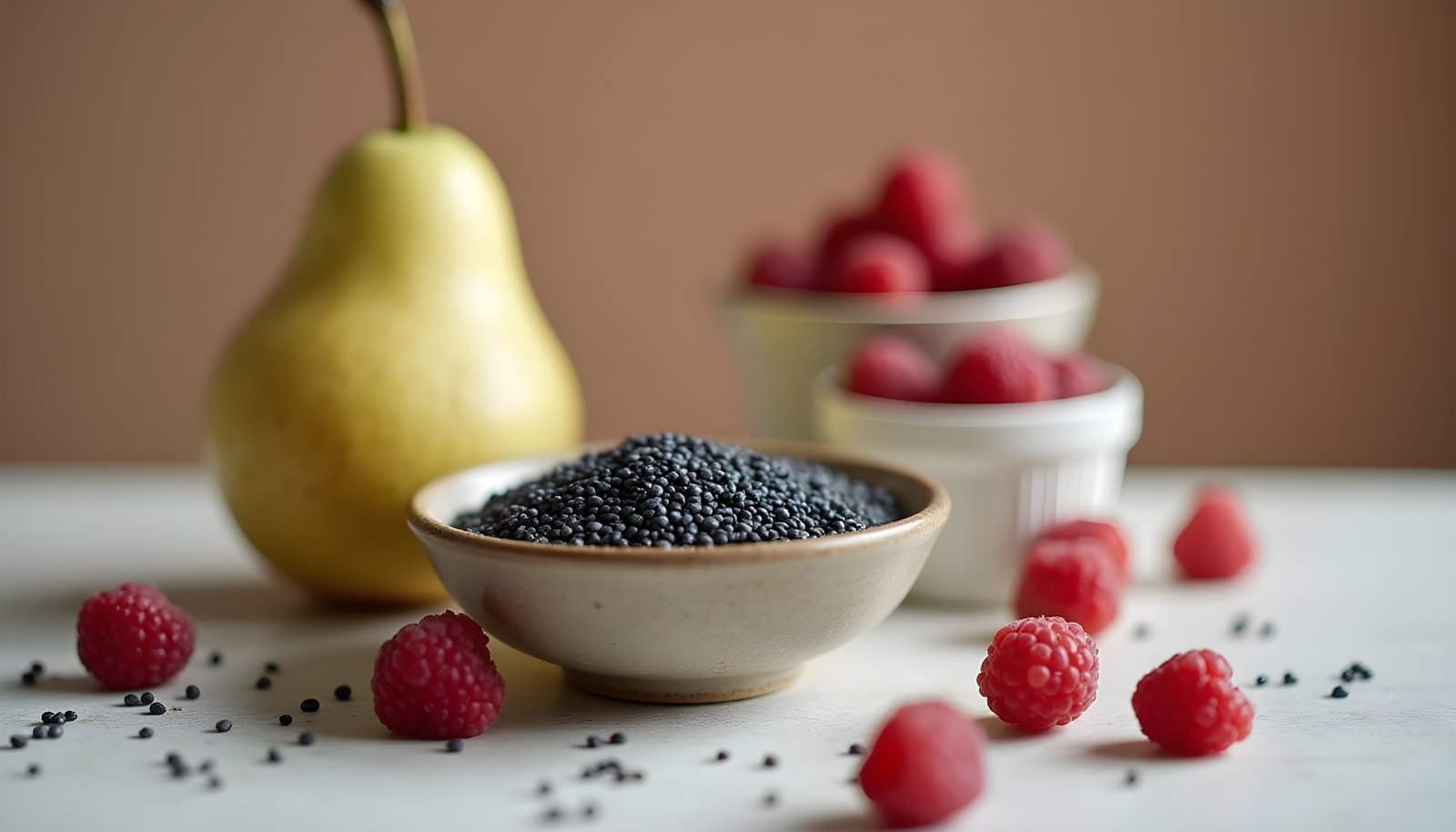
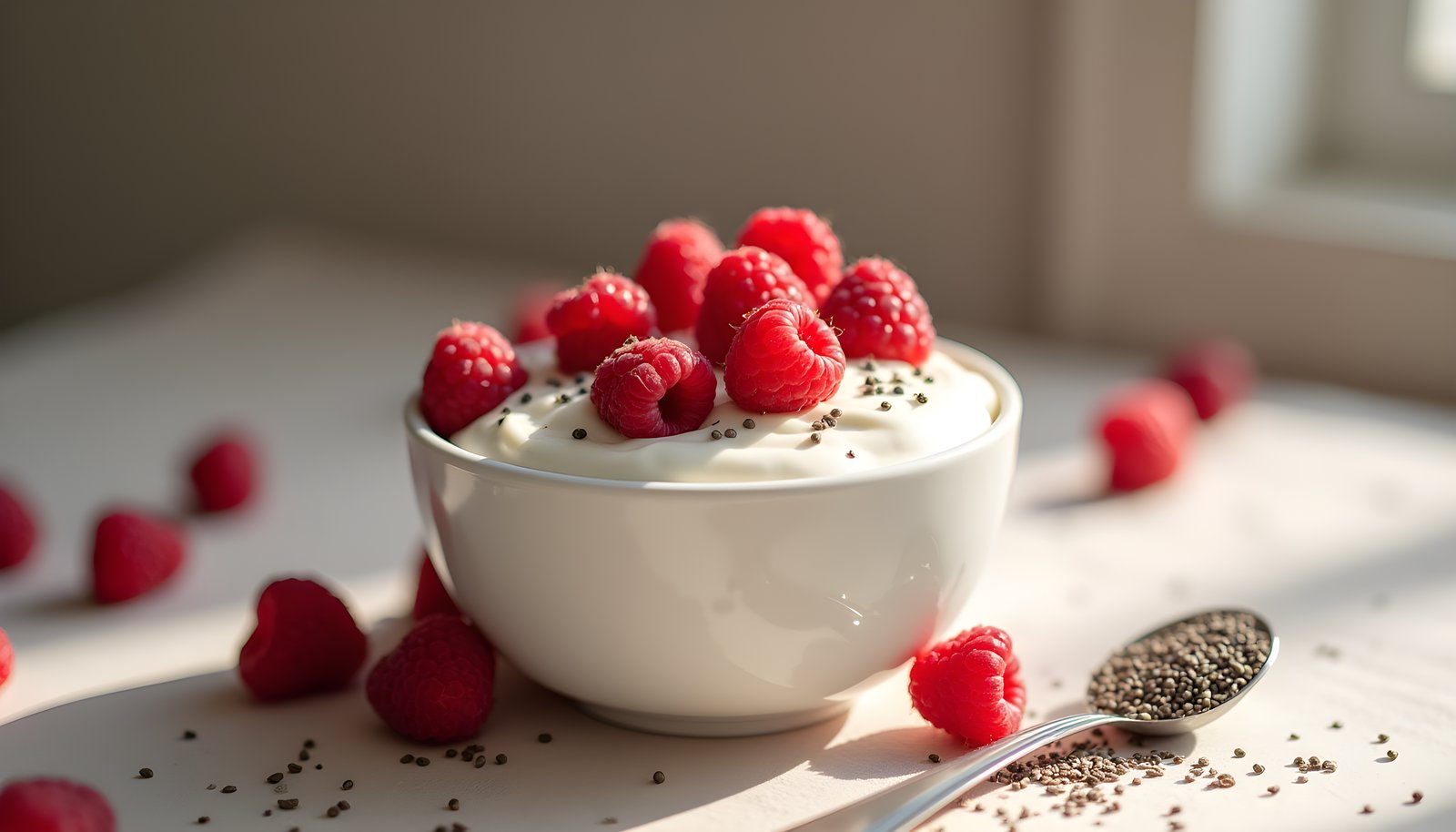
Stir in half a cup of raspberries and a tablespoon of chia seeds, and the Dietary Guidelines put those at 4.0 and 4.1 grams. The cup now carries about 9 grams of fiber, roughly what the Oikos Triple Zero Plain offers before any toppings.
If raspberries aren’t around, an ounce of pumpkin seeds adds 5.2 grams and a medium pear adds 5.5 grams, according to the Dietary Guidelines. Either one turns a zero fiber protein cup like Ratio or skyr into a snack with real staying power.
Fruit and seeds also bring fiber that’s part of the whole food, which Mayo Clinic notes comes with vitamins, minerals and other nutrients that isolated fibers don’t.
Want more snack and breakfast ideas built around yogurt and seeds? Our recipe eBooks have plenty of easy high fiber combinations.
A quick label checklist for protein and fiber
- Protein per container: 15 grams or more puts a cup in the high protein group.
- Fiber line: 3 grams or more, and find the fiber ingredient, such as chicory root fiber, inulin or polydextrose.
- Sugar: compare total sugar to fiber. A drinkable with 23 grams of sugar and 4 grams of fiber is closer to a dessert.
- Sweeteners: stevia, erythritol and sucralose keep sugar low but change the taste.
- Saturated fat: worth checking in coconut based plant cups.
- Serving size: a 225 gram cup and a 113 gram cup aren’t directly comparable.
Where these yogurts fit in a day
Mayo Clinic suggests about 25 grams of fiber a day for women and 38 grams for men up to age 50. The best cup here covers about 40% of the lower target, while most others cover 4% or less.
Chicory root fiber and other added fibers can be a big jump if your diet is usually low in fiber. Mayo Clinic advises adding fiber gradually with plenty of fluids, since too much at once can cause gas, bloating and cramping.
Starting with half of a 10 gram cup is an easy way to ease in. Not sure where your own target sits? Our fiber calculator gives you a personal number in seconds.
One thing to try with your next yogurt
Next time you buy a high protein cup, flip it over and read the fiber line before the protein claim on the front. If it says 0 grams, keep a bag of chia seeds or frozen raspberries next to the yogurt so every cup gets 4 grams added before you eat it.
High fiber protein yogurt: what people ask
Which yogurt has the most protein and fiber?
Among the cups we checked, Oikos Triple Zero Plain leads with 22 grams of protein and 10 grams of fiber per 225 gram cup. Its fiber comes from added chicory root fiber.
Does Greek yogurt have fiber?
Plain Greek yogurt has none, since milk contains no fiber. Any fiber on a Greek yogurt label comes from an added ingredient.
Do high protein yogurts have fiber?
Usually not. Ratio Protein lists 25 grams of protein with 0 grams of fiber, and Oikos Pro doesn’t declare fiber.
Is Greek style plant yogurt high in fiber?
Not really. Kite Hill and Silk Greek style cups each list 1 gram, though Kite Hill has 15 grams of protein.
Is chicory root fiber in yogurt real fiber?
Yes for labeling. Inulin type fructans like chicory root fiber are on FDA’s list of fibers it intends to recognize, and brands can count them now.
Are drinkable yogurts with fiber a good snack?
They can add a few grams. Tropical’s strawberry drinkable lists 4 grams of fiber but 23 grams of sugar and 7 grams of protein.
How can I add fiber to a protein yogurt?
Add fruit and seeds. Half a cup of raspberries and a tablespoon of chia seeds add about 8 grams.
Sources
- USDA Agricultural Research Service. FoodData Central branded records for Oikos Triple Zero Plain (2021) and Peach (2026), Tropical Probiotics & Fiber Strawberry Drinkable Yogurt (2023), Activia Peach Fiber Lowfat Yogurt (2021), Kite Hill Plain Unsweetened Greek Style (2023), Silk Blueberry Greek Style Coconutmilk Yogurt Alternative (2025), Ratio Protein Strawberry (2026), Oikos Pro Strawberry (2026), Icelandic Provisions Plain Oatmilk Skyr (2021) and Schnucks Plain Icelandic Skyr (2021). fdc.nal.usda.gov
- U.S. Food and Drug Administration. “Questions and Answers on Dietary Fiber.” 2024. fda.gov
- U.S. Food and Drug Administration. “Daily Value on the Nutrition and Supplement Facts Labels.” 2024. fda.gov
- U.S. Department of Agriculture and U.S. Department of Health and Human Services. “Food Sources of Dietary Fiber.” Dietary Guidelines for Americans, 2020 to 2025. dietaryguidelines.gov
- Mayo Clinic Staff. “Dietary fiber: Essential for a healthy diet.” Mayo Clinic. 2025. mayoclinic.org