
In this article
- Ice cream fiber, scoop by scoop
- Why ice cream has so little fiber
- How light ice creams reach 3 grams
- Sorbet and other frozen desserts
- Myth: dairy free or fruit flavored means more fiber
- Why serving sizes make labels hard to compare
- Dairy treats nutrition: what a scoop brings
- A banana split, counted two ways
- Toppings that add fiber to any scoop
- A homemade frozen dessert with real fiber
- Where ice cream fits in a high fiber day
- A quick rule for your next bowl
- Ice cream and fiber: questions people ask
- Sources
Half a cup of chocolate ice cream carries about 0.8 grams of fiber, and a pint style light ice cream like Halo Top lists 3 grams per serving. Neither one is a fiber food, but the gap tells you where ice cream fiber comes from.
In regular ice cream, the trace comes from cocoa and other plant ingredients. In the higher fiber pints, it comes from fibers the maker adds on purpose, which is worth knowing before you count a scoop toward your day.
Ice cream fiber, scoop by scoop
These numbers come from USDA FoodData Central, including branded records submitted between 2020 and 2023:
| Frozen dessert | Serving | Fiber | Calories | Total sugars | Saturated fat |
|---|---|---|---|---|---|
| Vanilla ice cream (USDA) | 1/2 cup (66 g) | 0.5 g | 137 | 14 g | 4.5 g |
| Chocolate ice cream (USDA) | 1/2 cup (66 g) | 0.8 g | 143 | 17 g | 4.5 g |
| Breyers No Sugar Added Vanilla | 1/2 cup (69 g) | 0.3 g | 100 | 4 g | Not listed |
| Halo Top Vanilla Bean Light | 2/3 cup (85 g) | 3 g | 100 | 8 g | Not listed |
| Vanilla soft serve frozen yogurt (USDA) | 1/2 cup (72 g) | 0 g | 114 | 17 g | Not listed |
| Oatly Vanilla Non-dairy | 2/3 cup (100 g) | 1 g | 220 | 19 g | 8 g |
| Sharon’s Raspberry Sorbet | 129 g | 3 g | 180 | 36 g | 0 g |
Regular ice cream lands well under a gram, which is why many labels show 0 grams or less than 1 gram. The two 3 gram options get there in very different ways.
Why ice cream has so little fiber
Ice cream is mostly milk, cream and sugar, and none of those carry fiber. Mayo Clinic describes dietary fiber as the parts of plant foods your body can’t digest, so the base of a scoop starts at zero.
Whatever trace shows up comes from the plant ingredients on top of that base. USDA lists vanilla ice cream at 0.7 grams of fiber per 100 grams and chocolate at 1.2 grams, with the chocolate version likely getting its edge from cocoa.
Even rich, premium chocolate ice cream lists less than 1 gram per 100 grams. More cream makes a scoop richer, not more fibrous.
How light ice creams reach 3 grams
Halo Top’s vanilla bean light ice cream lists 3 grams of fiber per two thirds of a cup. Its ingredient list includes soluble corn fiber, along with acacia gum, carob gum and guar gum.
Those added fibers do count on the label, and they help a light pint keep body with less fat and sugar. Mayo Clinic notes, though, that some people get gas after eating foods with added fiber, so a whole pint in one sitting may not sit well.
The same pint also lists erythritol, a sugar alcohol, and 4 grams of added sugar per serving. It has 100 calories per serving, but the fiber is a design choice, not something the dairy brings.
Weighing light pints, sorbets and regular ice cream for your freezer? Our comparison charts line up the main options side by side.
Sorbet and other frozen desserts
Fruit sorbet can carry real fiber when fruit puree is near the top of the list. Sharon’s raspberry sorbet lists water, raspberry puree and cane sugar first, with pectin and guar gum further down, and it reaches 3 grams per serving.
The catch is sugar. That same serving lists 36 grams of total sugar, 30 grams of it added, which is 60% of the FDA’s 50 gram Daily Value.
Frozen yogurt doesn’t help on fiber either. USDA’s vanilla soft serve frozen yogurt lists 0 grams per half cup, and its sugar is right in line with regular ice cream.
Plant based frozen desserts aren’t automatically better. Oatly’s vanilla non-dairy dessert lists 1 gram of fiber, but also 19 grams of added sugar and 8 grams of saturated fat, 40% of the Daily Value, from coconut oil.
Myth: dairy free or fruit flavored means more fiber
Fact: an oat based dessert lists only 1 gram per two thirds of a cup, and fruit flavored ice creams start from the same cream and sugar base as vanilla. The fiber only shows up in a meaningful amount when fruit puree or an added fiber is high on the ingredient list.
The fiber line on the Nutrition Facts panel is the only reliable guide. A picture of berries on the carton isn’t.
Why serving sizes make labels hard to compare
Ice cream labels don’t all use the same scoop. USDA’s basic records use half a cup, while Halo Top and Oatly list two thirds of a cup, and the sorbet uses a 129 gram serving.
Weight tells a clearer story. Per 100 grams, vanilla ice cream has 0.7 grams of fiber, chocolate has 1.2, Oatly’s dessert has 1, Halo Top has about 3.5 and the raspberry sorbet has about 2.3.
So the light pint looks even stronger by weight, while the sorbet looks a little weaker. When you compare two cartons, check the gram weight of the serving before you compare the fiber line.
Dairy treats nutrition: what a scoop brings
A half cup of vanilla ice cream gives you about 137 calories, 2.3 grams of protein and 85 milligrams of calcium, around 7% of the Daily Value. It’s a modest source of calcium compared with a cup of milk.
Its 4.5 grams of saturated fat is about 23% of the FDA’s 20 gram Daily Value, which counts as high. The 14 grams of sugar is a mix of natural milk sugar and added sugar.
No sugar added versions trim the sugar sharply. Breyers No Sugar Added Vanilla lists 4 grams of total sugar and 100 calories per half cup, but its fiber stays at about a third of a gram.
A banana split, counted two ways
Picture a classic banana split: a half cup of vanilla ice cream, chocolate sauce and whipped cream. Without fruit, the fiber is about half a gram.
Now build it the traditional way, with a whole medium banana split lengthwise, half a cup of sliced strawberries and half an ounce of chopped almonds on top. Using Dietary Guidelines numbers, the banana adds 3.2 grams, the strawberries 1.5 and the almonds about 1.8.
The dessert reaches about 7 grams of fiber, a quarter of the 28 gram Daily Value. The ice cream is the same; the fruit and nuts do all the fiber work.
Toppings that add fiber to any scoop
These Dietary Guidelines picks go well with ice cream and bring real fiber:
- 1/2 cup raspberries: 4.0 grams
- 1/2 cup blackberries: 3.8 grams
- 1 medium sliced pear, warmed: 5.5 grams
- 1 cup cherries, pitted: 2.9 grams
- 1/2 ounce pistachios, chopped: about 1.5 grams
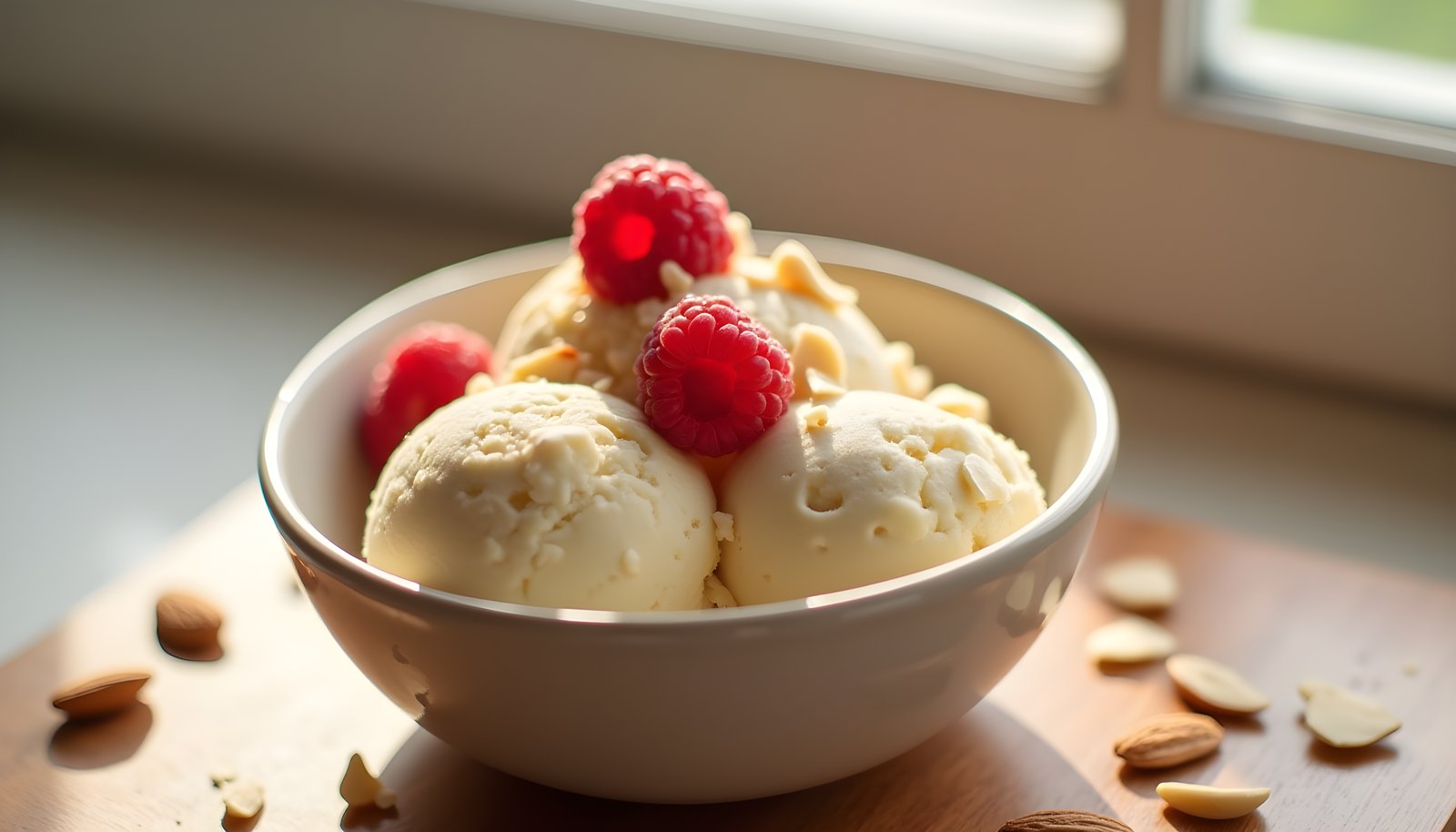
A half cup of chocolate ice cream with half a cup of raspberries and a sprinkle of pistachios lands near 6 grams of fiber. That’s about double the best packaged dessert in the table above.
Want more dessert ideas that pair sweet treats with fruit, nuts and other high fiber foods? Our recipe eBooks have plenty of easy options.
A homemade frozen dessert with real fiber
If you want the fiber built into the bowl, blend frozen fruit into a soft serve style dessert. One frozen medium banana and half a cup of frozen raspberries, blended until creamy, give you about 7.2 grams of fiber using Dietary Guidelines numbers.
A splash of milk helps the blender along, and a spoonful of nut butter makes it richer. The result tastes like a treat, but the fiber comes from whole fruit rather than added fibers.
Because the whole fruit goes into the blender, nothing is strained out. That’s the main difference from a sorbet, where fruit puree shares the bowl with a lot of added sugar.
Where ice cream fits in a high fiber day
Mayo Clinic suggests 25 grams of fiber a day for women and 38 for men up to age 50. Ice cream won’t move you toward either number on its own, and that’s fine for a treat.
If you enjoy a scoop most nights, the easy upgrade is to treat fruit as the base and ice cream as the topping. A bowl of berries with a small scoop gives you more fiber and usually fewer calories than a big scoop alone.
Curious how many grams you should be aiming for? Our fiber calculator gives you a personal target in a few seconds.
A quick rule for your next bowl
If you want ice cream for the taste, pick the one you love and add fruit or nuts for fiber. If you want a lighter pint with some built in fiber, choose one that lists 3 grams and check how your stomach handles the added fiber.
If you’re choosing sorbet for its fruit, look at added sugar before fiber. A sorbet with 3 grams of fiber and 30 grams of added sugar is still a sweet treat first, so enjoy it as one and get your fiber from the fruit bowl beside it.
Ice cream and fiber: questions people ask
Is there any fiber in ice cream?
Only a trace. USDA lists about 0.5 grams per half cup of vanilla ice cream and 0.8 grams for chocolate, so many labels show 0 or less than 1 gram.
Which ice cream has the most fiber?
Light ice creams with added fiber lead. Halo Top Vanilla Bean Light lists 3 grams per two thirds of a cup, mostly from soluble corn fiber and plant gums.
Does chocolate ice cream have more fiber than vanilla?
Slightly. Chocolate ice cream lists about 1.2 grams per 100 grams versus 0.7 for vanilla, likely thanks to the cocoa.
Does sorbet have fiber?
Some does. A raspberry sorbet made with fruit puree lists 3 grams per serving, but also 30 grams of added sugar.
Does frozen yogurt have fiber?
No. USDA’s vanilla soft serve frozen yogurt lists 0 grams per half cup, with about 17 grams of sugar.
Is dairy free ice cream higher in fiber?
Not by much. Oatly’s vanilla non-dairy frozen dessert lists 1 gram per two thirds of a cup, along with 19 grams of added sugar.
How can I add fiber to ice cream?
Top it with fruit and nuts. Half a cup of raspberries adds 4 grams, and a whole sliced banana adds 3.2 grams.
Sources
- USDA Agricultural Research Service. FoodData Central, SR Legacy entries for vanilla ice cream (167575), chocolate ice cream (168809), rich chocolate ice cream (168136), Breyers No Sugar Added Vanilla (170264) and vanilla soft serve frozen yogurt (168815), plus branded records for Halo Top Vanilla Bean Light (2021), Oatly Vanilla Non-dairy Frozen Dessert (2020) and Sharon’s Raspberry Sorbet (2023). fdc.nal.usda.gov
- U.S. Food and Drug Administration. “Daily Value on the Nutrition and Supplement Facts Labels.” 2024. fda.gov
- U.S. Department of Agriculture and U.S. Department of Health and Human Services. “Food Sources of Dietary Fiber.” Dietary Guidelines for Americans, 2020 to 2025. dietaryguidelines.gov
- Mayo Clinic Staff. “Dietary fiber: Essential for a healthy diet.” Mayo Clinic. 2025. mayoclinic.org