
In this article
- How gut bacteria foods work: feeding vs adding
- A prebiotic fiber list for your shopping cart
- Onions, garlic, leeks and other fructan foods
- Whole grains: more than just roughage
- Beans, bananas and cooled starches
- Fermented foods: the surprise result
- Myth vs fact: fiber is all your gut bacteria need
- Which fermented foods actually contain live microbes
- What works against your gut bacteria
- A simple microbiome diet for the week
- Digestive health: going at your gut’s pace
- One thing to do today
- What people ask about gut bacteria foods
- Sources
Picture yourself in the grocery store with a bottle of kombucha in one hand and a bag of lentils in the other, wondering which one your gut actually wants. The honest answer is both: the gut bacteria foods with the best evidence are fiber rich plants like onions, garlic, leeks, bananas, beans and whole grains, plus fermented foods like yogurt, kefir and kimchi.
They work in different ways, and the research comparing them turned up a result few people expected. Here’s which foods feed your microbes, what each one does, and how to build a week of meals around them.
How gut bacteria foods work: feeding vs adding
Your gut holds trillions of microorganisms from thousands of species, according to Harvard’s Nutrition Source. The community includes bacteria as well as fungi, parasites and viruses.
Foods help them in two main ways. Prebiotic foods contain fiber you can’t digest, which your bacteria ferment for fuel. Probiotic foods contain live microbes that join the community, at least for a while.
When bacteria ferment fiber, they produce short chain fatty acids. Harvard notes that researchers are studying how these compounds affect immune activity, blood sugar and cholesterol.
A prebiotic fiber list for your shopping cart
Harvard’s microbiome page names these as prebiotic foods:
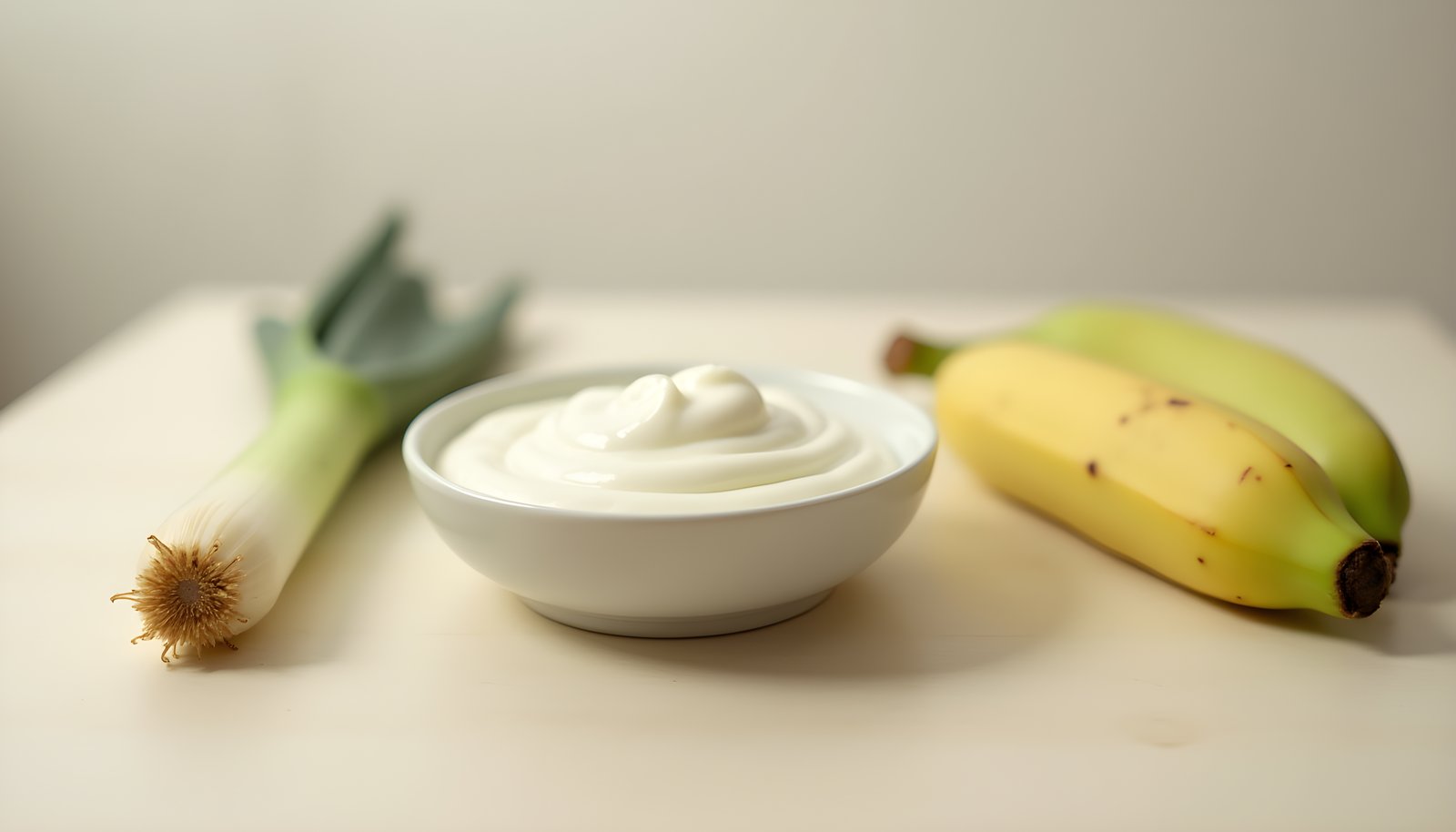
- Garlic, onions and leeks
- Asparagus and Jerusalem artichokes
- Dandelion greens and seaweed
- Bananas
It adds that fruits, vegetables, beans and whole grains in general are good sources too, and that prebiotic content is highest when these foods are eaten raw. Harvard’s fiber page fills in the specific fiber behind each group.
A little raw onion in salsa, sliced leek in a salad or a few dandelion greens tossed with lettuce are easy ways to use that tip.
| Food group | Main fermentable fiber | Examples |
|---|---|---|
| Alliums and roots | Inulin and related fructans | Onions, garlic, leeks, chicory root, Jerusalem artichokes |
| Oats and barley | Beta-glucan | Oatmeal, barley soup, oat bran |
| Fruit | Pectin | Apples, berries |
| Legumes and cooled starches | Resistant starch | Beans, lentils, cooked and cooled potatoes and pasta, unripe bananas |
| Fermented foods | Live microbes rather than fiber | Yogurt with live cultures, kefir, kimchi, sauerkraut, miso, tempeh |
Mixing groups covers every fiber type on Harvard’s list instead of leaning on just one.
Onions, garlic, leeks and other fructan foods
These vegetables have direct human trial evidence behind them. In a 2019 Belgian trial led by Sophie Hiel, healthy young adults ate lunches and soups built on salsify, artichokes, Jerusalem artichokes, leeks, onions and garlic for two weeks.
Their fructan intake rose from about 3 to nearly 16 grams a day, and Bifidobacterium, a group widely considered beneficial, rose about threefold. Total fiber climbed from about 18 to 31 grams a day at the same time. The trial had no control group, so it shows what changed rather than proving cause.
Want easy ways to fit more onions, leeks and garlic into dinner? Our recipe eBooks are packed with simple, high fiber meals.
Whole grains: more than just roughage
A 2008 study at the University of Reading tested whether whole grain wheat acts as a prebiotic. Thirty one volunteers ate 48 grams a day of either a whole grain wheat breakfast cereal or a wheat bran cereal for three weeks each, in random order, without knowing which was which.
Each person tried both cereals with a two week break in between. That crossover design means every volunteer served as their own comparison, which makes the result stronger than a simple before and after test.
Counts of bifidobacteria and lactobacilli were significantly higher after the whole grain cereal than after the bran cereal. Nobody reported intestinal problems on either one.
Short chain fatty acids measured in stool didn’t differ between the two cereals. So the bacterial shift was clear, but it didn’t show up as a measurable change in those compounds.
The bran cereal did something else: it increased how often people went to the bathroom. So the two cereals did different jobs, with the whole grain feeding bacteria and the bran adding bulk.
Beans, bananas and cooled starches
Harvard lists legumes, unripe bananas and cooked then cooled pasta and potatoes as sources of resistant starch, starch that escapes digestion and reaches the colon. Its microbiome page also names resistant starch among the fibers that raise short chain fatty acid levels.
That makes leftovers useful. Yesterday’s potato salad or a cold pasta salad brings a little extra fuel for your microbes compared with the same food eaten piping hot.
Bananas appear on both of Harvard’s lists: as a prebiotic food in general, and unripe bananas as a resistant starch source. A slightly green banana may cover both.
Fermented foods: the surprise result
In 2021, a Stanford team led by Hannah Wastyk and Justin and Erica Sonnenburg randomly assigned 36 healthy adults to 10 weeks of either a high fermented food diet or a high fiber diet. The results appeared in the journal Cell.
The fermented food group ate yogurt, kefir, fermented cottage cheese, kimchi and other fermented vegetables, vegetable brine drinks and kombucha. Their overall microbiome diversity went up, and 19 inflammatory proteins in the blood went down, including interleukin 6.
The researchers also saw stronger effects in people who ate larger servings of fermented food. Interleukin 6 has been linked with conditions such as rheumatoid arthritis, type 2 diabetes and chronic stress.
The high fiber group ate legumes, seeds, whole grains, nuts, vegetables and fruit. On average their microbiome diversity stayed stable, and none of the 19 inflammatory proteins dropped.
Erica Sonnenburg suggested that a longer trial might have given the microbes time to adapt to all that extra fiber. She also raised the idea that some people may need fiber eating microbes introduced before their gut can make full use of it.
Myth vs fact: fiber is all your gut bacteria need
Myth: Eating more fiber will automatically make your gut microbiome more diverse.
Fact: In the Stanford trial, 10 weeks of extra fiber didn’t raise diversity on average, while fermented foods did. The fiber group also had more carbohydrate left in their stool, a sign their microbes weren’t breaking all of it down.
That doesn’t make fiber useless. Fiber still feeds specific beneficial groups, as the Hiel and Reading trials showed, and the Reading bran cereal still made people more regular. It just suggests that fermented foods add something fiber alone doesn’t.
Which fermented foods actually contain live microbes
Not every fermented food still has living bacteria by the time you eat it. Harvard points out that heat treated products such as sourdough bread may not contain live microbes.
The ones Harvard lists as probiotic sources are kefir, yogurt with live active cultures, pickled vegetables, tempeh, kombucha, kimchi, miso and sauerkraut. When you’re shopping, check yogurt and kefir labels for live and active cultures.
What works against your gut bacteria
Feeding your microbes is only half the picture. Harvard notes that a low fiber diet may reduce beneficial microbes and allow more of the harmful bacteria that thrive in less acidic conditions.
The page also lists prolonged use of antibiotics and other bacteria destroying medications as a cause of dysbiosis, an imbalance in the gut community. That’s one more reason to keep prebiotic and fermented foods in your routine, rather than saving them for a quick fix.
A simple microbiome diet for the week
Put the research together and a practical microbiome diet takes shape: some fermented food most days, and fiber from several different plant groups. A week might look like this:
- Breakfasts: whole grain cereal or oatmeal with sliced banana, or plain yogurt with live cultures and berries.
- Lunches: lentil or bean soup started with onion, garlic and leek; a cold pasta or potato salad with a side of sauerkraut.
- Dinners: barley or brown rice bowls with kimchi; tempeh stir fried with asparagus and garlic; miso soup alongside.
- Snacks: a glass of kefir, an apple, or a handful of nuts.
Nothing on that list is exotic. The point is coverage: fructans, beta-glucan, pectin, resistant starch and live cultures all show up several times.
Digestive health: going at your gut’s pace
A big jump in fermentable fiber can mean more gas while your bacteria adjust. In the Hiel trial, flatulence was the one symptom that rose during the two weeks, and it didn’t come with changes in stool or transit time.
Starting with one or two new foods at a time makes the change easier to track. In the Reading cereal trial, nobody reported intestinal problems at 48 grams a day of either cereal.
If your digestion needs a gentler start, our guides walk you through a step by step gut reset.
One thing to do today
Pick one fermented food and one prebiotic food you don’t eat yet, and add both to tomorrow’s shopping list. A carton of live culture yogurt and a bag of leeks is a cheap, realistic first step.
Use the leeks in a soup or stir fry this week, and have the yogurt with fruit or oats at breakfast. Once those feel routine, add the next pair.
Not sure how much fiber your own day should include? Our fiber calculator gives you a personal target in seconds.
What people ask about gut bacteria foods
What foods feed good gut bacteria the most?
Fiber rich plants do, especially onions, garlic, leeks, Jerusalem artichokes, bananas, beans and whole grains. In a Belgian trial, meals built on fructan rich vegetables raised Bifidobacterium about threefold in two weeks.
Are fermented foods better than fiber for gut health?
They do different jobs. In a 2021 Stanford trial, fermented foods raised microbiome diversity and lowered 19 inflammatory proteins, while extra fiber kept diversity stable.
Is yogurt good for gut bacteria?
Yes, if it contains live active cultures. Harvard lists yogurt with live cultures, kefir, kimchi, sauerkraut, miso and tempeh as probiotic foods.
Does sourdough bread have probiotics?
Usually not. Harvard notes that heat treated fermented foods such as sourdough bread may not contain live microbes.
Is whole wheat good for gut bacteria?
Yes. In a 2008 Reading trial, 48 grams a day of whole grain wheat cereal raised bifidobacteria and lactobacilli more than a wheat bran cereal over three weeks.
Are bananas prebiotic?
Yes. Harvard names bananas as a prebiotic food, and unripe bananas also supply resistant starch.
How long does it take to change your gut bacteria with food?
Changes can show up within two to three weeks. In the Hiel trial, though, most shifts faded within three weeks of going back to a usual diet.
Sources
- Harvard T.H. Chan School of Public Health. “The Microbiome.” The Nutrition Source, 2025. nutritionsource.hsph.harvard.edu
- Harvard T.H. Chan School of Public Health. “Fiber.” The Nutrition Source, 2022. nutritionsource.hsph.harvard.edu
- Stanford Medicine News Center. “Fermented-food diet increases microbiome diversity, decreases inflammatory proteins, study finds.” 2021. med.stanford.edu
- Costabile A, Klinder A, Fava F, et al. “Whole-grain wheat breakfast cereal has a prebiotic effect on the human gut microbiota.” British Journal of Nutrition, 2008. cambridge.org
- Hiel S, Bindels LB, Pachikian BD, et al. “Effects of a diet based on inulin-rich vegetables on gut health and nutritional behavior in healthy humans.” American Journal of Clinical Nutrition, 2019. sites.uclouvain.be