
In this article
- Snap peas fiber, from raw pods to frozen
- Snap pea nutrition straight from the bag
- How snap peas rank among crunchy raw snacks
- Building a snack box around snap peas
- Where snap peas fit in a day of fiber
- What kind of fiber is in a snap pea pod
- Snap peas next to their closest cousins
- Cooking snap peas without losing the snap
- A quick snap pea checklist
- One thing to try this week
- Snap pea questions people ask
- Sources
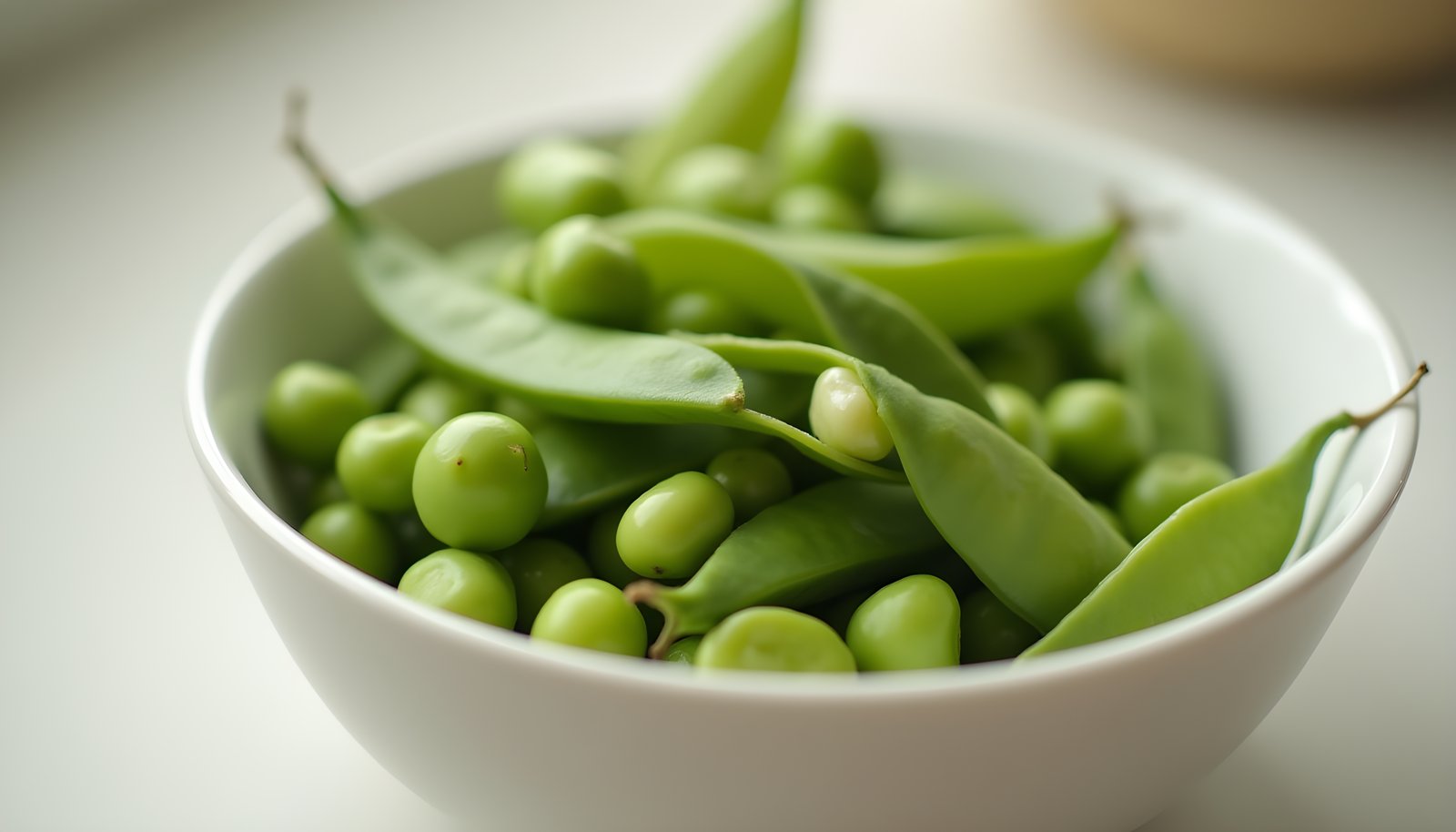
Snap peas are sweet, loud when you bite them and gone in seconds, so plenty of people file them as a watery treat that can’t add much. The numbers say otherwise. A cup of raw snap peas has 2.5 grams of fiber for 41 calories, and a cooked cup reaches about 4.5 grams.
That makes them a steady, mid-range source rather than a fiber heavyweight. Snap peas fiber comes from eating the entire pod, which is why a pod you can snack on straight from the bag carries more than its light taste suggests.
Snap peas fiber, from raw pods to frozen
USDA FoodData Central doesn’t give snap peas their own entry. It groups them with snow peas under edible podded peas, a term for any pea you eat shell and all, so the figures below apply to the plump snap pea you find in the produce aisle.
| Snap peas | Serving | Fiber | % DV (28 g) | Calories |
|---|---|---|---|---|
| Raw, whole or chopped | 1 cup (98 g) | 2.5 g | 9% | 41 |
| Raw | 1 ounce (28 g) | 0.7 g | 3% | 12 |
| Raw | 100 g | 2.6 g | 9% | 42 |
| Boiled, fresh | 100 g | 2.8 g | 10% | 42 |
| Boiled, fresh | 1 cup (160 g) | 4.5 g | 16% | 67 |
| Frozen, then boiled | 1 cup (160 g) | 5.0 g | 18% | 83 |
Gram for gram, raw and cooked pods are close, at 2.6 and 2.8 grams of fiber per 100 grams. Heat doesn’t add fiber to a pea pod.
What heat does change is shape. Raw pods sit loosely in a measuring cup, while softened cooked pods settle together, so a cooked cup weighs 160 grams against 98 grams raw. If you track by the cup, cooked snap peas will always look richer; if you track by weight, the two are nearly even.
Frozen snap peas come out a little ahead, at 3.1 grams per 100 grams once boiled. They also run slightly higher in calories, 52 per 100 grams compared with 42 for fresh.
Snap pea nutrition straight from the bag
Most snap peas get eaten raw, so here’s what a cup of uncooked pods (98 g) delivers, using the FDA Daily Values.
| Nutrient | Raw snap peas, 1 cup | % Daily Value |
|---|---|---|
| Vitamin C | 59 mg | 65% |
| Vitamin K | 25 mcg | 20% |
| Iron | 2.0 mg | 11% |
| Fiber | 2.5 g | 9% |
| Calories | 41 | n/a |
Vitamin C is the standout. A single cup covers about two thirds of the 90 mg Daily Value, more than most people expect from something they eat like chips.
Vitamin K and iron round out the cup, at a fifth and about a tenth of their Daily Values. None of that comes with much energy, since the whole cup is still only 41 calories.
Cook the pods and the numbers per cup climb with the extra weight. A boiled cup gives 77 mg of vitamin C, 40 mcg of vitamin K, 3.2 mg of iron and 5.2 grams of protein.
How snap peas rank among crunchy raw snacks
The fairer test for a snacking vegetable is other snacking vegetables. The Dietary Guidelines for Americans list several raw options people reach for when they want crunch.
| Raw vegetable | Serving | Fiber | Calories | Fiber per 100 calories |
|---|---|---|---|---|
| Jicama | 1 cup | 5.9 g | 46 | 12.8 g |
| Kohlrabi | 1 cup | 4.9 g | 36 | 13.6 g |
| Carrots | 1 cup | 3.6 g | 52 | 6.9 g |
| Red bell pepper | 1 cup | 3.1 g | 39 | 7.9 g |
| Celeriac | 1 cup | 2.8 g | 66 | 4.2 g |
| Snap peas | 1 cup (98 g) | 2.5 g | 41 | 6.1 g |
Snap peas land near the bottom of this list, which surprises people. Jicama and kohlrabi carry roughly twice the fiber per cup, and carrots and red bell pepper edge ahead too.
That doesn’t knock snap peas off the plate. They beat celeriac on fiber per calorie, and unlike jicama or kohlrabi they need no peeling or slicing before they go in the box. The real takeaway is that snap peas work best as part of a mixed snack, not as the only thing in the box.
Building a snack box around snap peas
Because snap peas need no peeling or cutting, they make an easy base for a lunchbox or desk snack. Adding one or two denser vegetables lifts the fiber fast.
| Snack box | Fiber | Calories |
|---|---|---|
| 1 cup raw snap peas | 2.5 g | 41 |
| + 1/2 cup jicama sticks | 3.0 g | 23 |
| + 1/2 cup raw carrots | 1.8 g | 26 |
| Total | 7.3 g | 90 |
That box comes to about 7.3 grams of fiber for 90 calories, around a quarter of the 28 gram Daily Value. Three handfuls of crunch can cover a surprising share of the day.
Swap the carrots for half a cup of red bell pepper strips and you lose only a fraction of a gram of fiber. Either way, snap peas keep the box sweet enough that it actually gets eaten.
Want more ideas for snack plates and quick sides? Our recipe eBooks are full of easy, high fiber options.
Where snap peas fit in a day of fiber
Mayo Clinic suggests 21 to 25 grams of fiber a day for women and 30 to 38 grams for men. A cup of raw snap peas covers roughly 10 to 12% of a woman’s target, and a cooked cup covers closer to 20%.
Mayo also points out that high fiber foods tend to be more filling. The same page credits fiber with helping lower cholesterol, steadying blood sugar and supporting a healthy weight.
If you’re raising your fiber, do it a little at a time and drink plenty of water. Mayo notes that jumping up too quickly can bring gas, bloating and cramping.
Not sure what your personal daily goal should be? Our fiber calculator sorts it out in seconds.
What kind of fiber is in a snap pea pod
Food labels and USDA records list total fiber, without splitting it into types. Mayo Clinic describes the two broad kinds this way.
- Soluble fiber dissolves in water to form a gel like material, which can help lower blood cholesterol and glucose levels.
- Insoluble fiber doesn’t dissolve, and it helps material move through your digestive system and adds bulk to stool.
Mayo places green beans and similar vegetables among the good sources of insoluble fiber. Snap peas are a similar green, podded vegetable, though no USDA record splits their fiber by type, so treat them as a general fiber source rather than a measured one.
If your digestion does better with a slow build, our guides walk you through adding fiber in small, steady steps.
Snap peas next to their closest cousins
Snap peas often stand in for green beans or snow peas in recipes, so it helps to see the three side by side, cooked, one cup each.
| Cooked vegetable, 1 cup | Fiber | Calories |
|---|---|---|
| Snap peas or snow peas | 4.5 g | 67 |
| Green beans | 4.0 g | 44 |
| Green peas, shelled | 8.8 g | 134 |
Snap peas and snow peas share one USDA entry, so their fiber is the same on paper. Green beans come in a touch lower in fiber and calories.
Shelled green peas nearly double the fiber, but they also double the calories. Snap peas sit between the two, giving you whole-pod crunch with a fair share of fiber.
Cooking snap peas without losing the snap
Raw is the easy default, but snap peas also take well to a little heat. The trick is keeping it brief so the pods stay bright and crisp.
- Blanch: drop the pods into boiling water just until they turn vivid green, then move them to cold water.
- Stir fry: add them near the end, after firmer vegetables like carrots have had a head start.
- Roast: toss with a little oil and give them a short spell in a hot oven, just long enough to blister the skins.
- Slice raw: cut them on the diagonal into thin strips for grain bowls, noodle salads and slaws.
Whichever you choose, the fiber stays put. Cooking changes texture and how many pods fit in a cup, not the fiber locked in the pod itself.
A quick snap pea checklist
Getting the most fiber and the best crunch from snap peas comes down to a few small habits.
- Choose firm, glossy pods that bulge with peas and snap cleanly when bent.
- Skip pods that look wrinkled, limp or pale at the ends.
- Eat the whole pod, since every fiber figure here assumes you eat shell and peas together.
- Pull the string from the stem end if your pods have a tough seam.
- Keep a bag of frozen snap peas for stir fries, since they hold slightly more fiber per 100 grams once cooked.
- Weigh rather than measure if you track fiber closely: 100 grams of raw pods gives about 2.6 grams.
One thing to try this week
Wash and dry a pound of snap peas the night you buy them and keep them in a clear container at eye level in the fridge. A pound is about 450 grams, which works out to roughly 11.8 grams of fiber spread across several snacks.
When the snap peas are already clean and visible, they become the first thing you grab. Pair a cup with half a cup of jicama sticks and that afternoon snack brings about 5.5 grams, close to a fifth of the Daily Value.
Snap pea questions people ask
How much fiber is in a cup of raw snap peas?
A cup of raw snap peas (98 g) has about 2.5 grams of fiber, roughly 9% of the Daily Value. It comes with only 41 calories.
Do snap peas have more fiber cooked or raw?
Per 100 grams they’re almost the same, at 2.6 grams raw and 2.8 grams boiled. A cooked cup holds more pods, so it reaches about 4.5 grams.
Do snap peas have more fiber than snow peas?
No, USDA groups snap peas and snow peas together as edible podded peas, so their fiber is the same. Both give about 4.5 grams per cooked cup.
Are frozen snap peas as high in fiber as fresh?
Yes, and slightly higher. Frozen snap peas have about 3.1 grams of fiber per 100 grams once cooked, compared with 2.8 grams for fresh boiled pods.
Are snap peas good for weight loss?
They can help. Snap peas are low in calories, at 41 per raw cup, and Mayo Clinic notes that high fiber foods tend to be more filling.
Can snap peas help with constipation?
They can play a part. Vegetables like snap peas supply insoluble fiber, which helps material move through your gut, and adding fiber slowly with plenty of water works best.
How much vitamin C is in snap peas?
A cup of raw snap peas has about 59 mg of vitamin C, around 65% of the Daily Value. A cooked cup provides about 77 mg because it holds more pods.
Sources
- USDA FoodData Central. “Peas, edible-podded, raw” (FDC 170010), “Peas, edible-podded, boiled, drained, without salt” (FDC 170011) and “Peas, edible-podded, frozen, cooked, boiled, drained, without salt” (FDC 170418). SR Legacy, 2019. fdc.nal.usda.gov
- Dietary Guidelines for Americans. “Food Sources of Dietary Fiber.” 2020. dietaryguidelines.gov
- U.S. Food and Drug Administration. “Daily Value on the Nutrition and Supplement Facts Labels.” 2024. fda.gov
- Mayo Clinic Staff. “Dietary fiber: Essential for a healthy diet.” Mayo Clinic, 2024. mayoclinic.org