Meats & Proteins with Fiber

Meats & Proteins with Fiber

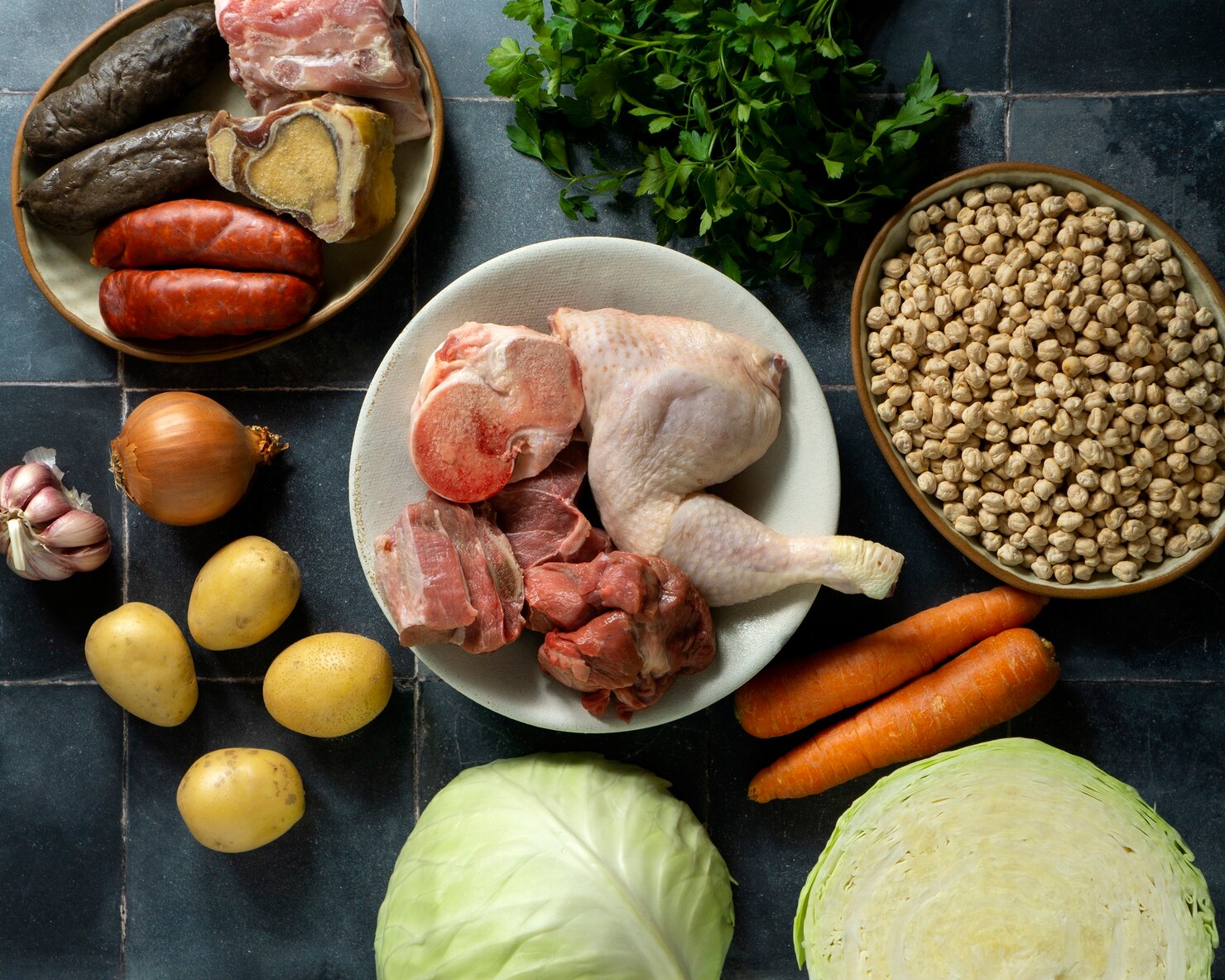
Another hard truth: chicken, fish, beef, pork, and eggs contain zero fiber. Not a single gram.

But that doesn’t mean you can’t eat them on a high-fiber diet. You just need to build your plate strategically.

The Fiber-Void Proteins

  • Chicken breast: 0g
  • Salmon: 0g
  • Beef steak: 0g
  • Pork chops: 0g
  • Eggs: 0g
  • Tuna: 0g

How to Fiber-Proof Your Protein Meals

The trick is pairing animal protein with high-fiber sides and ingredients. Here’s how:

  • Start with vegetables: Fill half your plate with roasted, steamed, or raw vegetables.
  • Choose whole grains: Swap white rice for quinoa, barley, or brown rice.
  • Add legumes: Beans, lentils, or chickpeas as a side or in a salad.
  • Layer in seeds: Sprinkle hemp, chia, or flax on top of your dish.
  • Use fiber-rich sauces: Salsa, pesto with nuts, or tomato-based sauces with vegetables.

High-Fiber Meal Examples with Meat

  • Grilled chicken bowl: Brown rice + black beans + roasted peppers + salsa + avocado.
  • Salmon dinner: Quinoa + roasted Brussels sprouts + lemon-dill dressing.
  • Beef stir-fry: Brown rice + broccoli + carrots + snap peas + soy-ginger sauce.
  • Turkey wrap: Whole grain tortilla + lettuce + tomato + avocado + sprouts.

The 3:1 Rule

For every serving of animal protein, aim for at least 3 servings of plant-based fiber sources. That could be vegetables, grains, legumes, or seeds.

Plant-Based Protein Alternatives

If you want protein and fiber in one package, choose:

  • Lentils: 15g fiber + 18g protein per cup
  • Chickpeas: 12g fiber + 15g protein per cup
  • Black beans: 15g fiber + 15g protein per cup
  • Tofu: 2g fiber + 20g protein per cup
  • Edamame: 8g fiber + 17g protein per cup

Facebook
Twitter
LinkedIn
WhatsApp

Most Popular This Week

1
2
3
4
5

The Best Fiber Supplements of 2026: 6 Top Picks, Tested & Ranked

How Much Fiber Is in an Apple?

The Best Fiber Supplements of 2026: 6 Top Picks, Tested & Ranked

How Much Fiber Is in a Banana?

How Fiber Actually Improves Your Gut Health (The Science)

“The 30-day reset finally gave me predictable digestion. I’d tried everything — this was the first thing that explained why.“

Sarah K.
Joined Mar 2026 · 2,840 students

The 30-Day Gut Reset Protocol

$49

$79

ADVERTISEMENT
300* 250
Recipe Book

60 High-Fiber Recipes Vol. 1

The Weekly Fiber Digest

New articles and research roundups, every Thursday.
No spam. Unsubscribe anytime.

You May Also Like

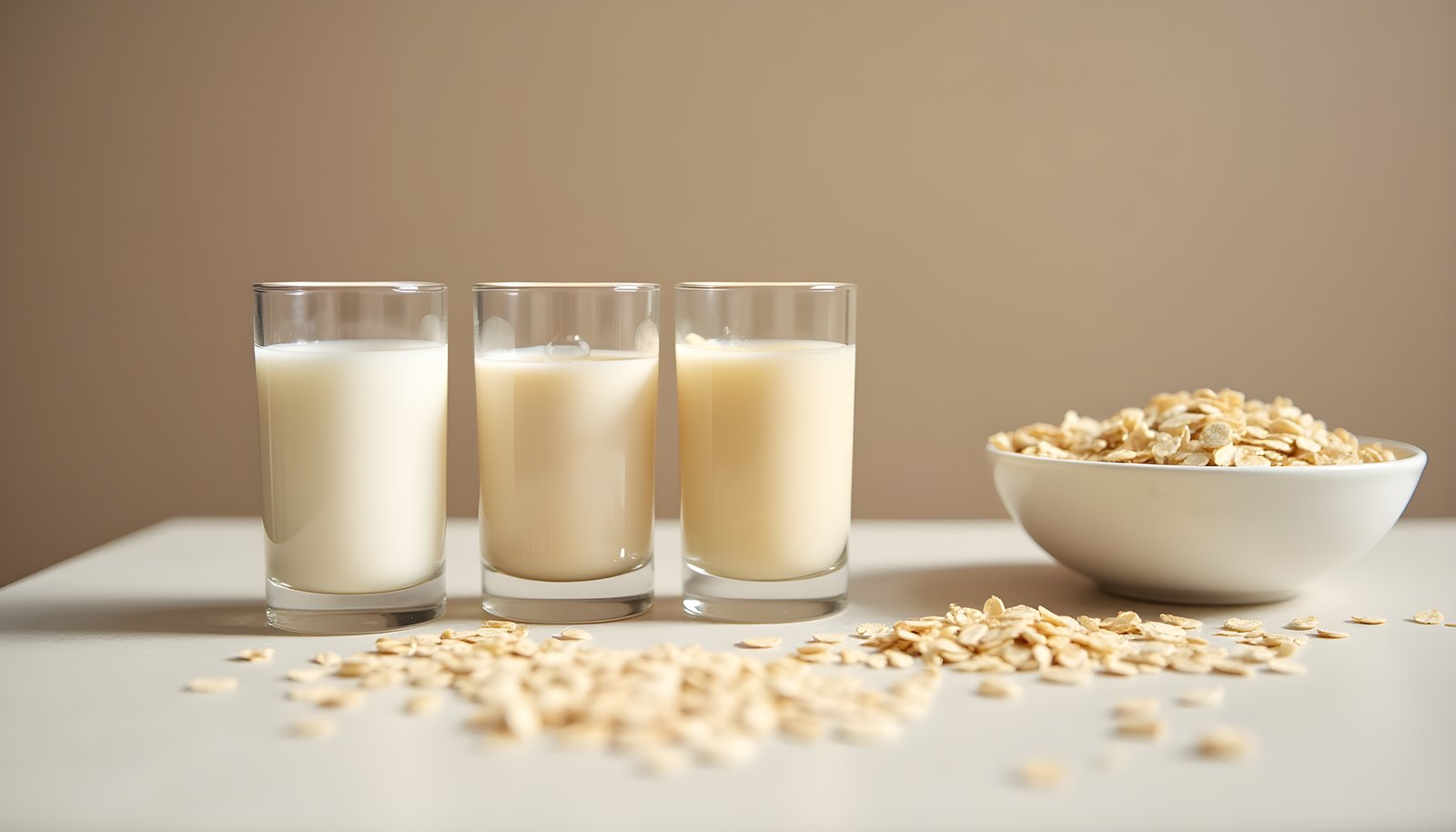
Plant milk fiber comparison shown with three small glasses of oat, soy and almond milk beside a bowl of rolled oats
The plant milk with most fiber is oat milk, with the best cartons listing about 2 grams per cup, and soy milk is close behind. Almond, rice, coconut, cashew and flax milks mostly sit under 1 gram, so no carton covers more than about 7% of your daily fiber.
Plant based creamer fiber shown with a cup of coffee with creamer latte art beside a bowl of oats and a cinnamon stick
Plant based creamer fiber is 0 grams per tablespoon in most bottles, even ones made from oats, almonds or cashews. The few that reach 1 gram get it from an added fiber such as chicory inulin, not from the plant on the front of the label.
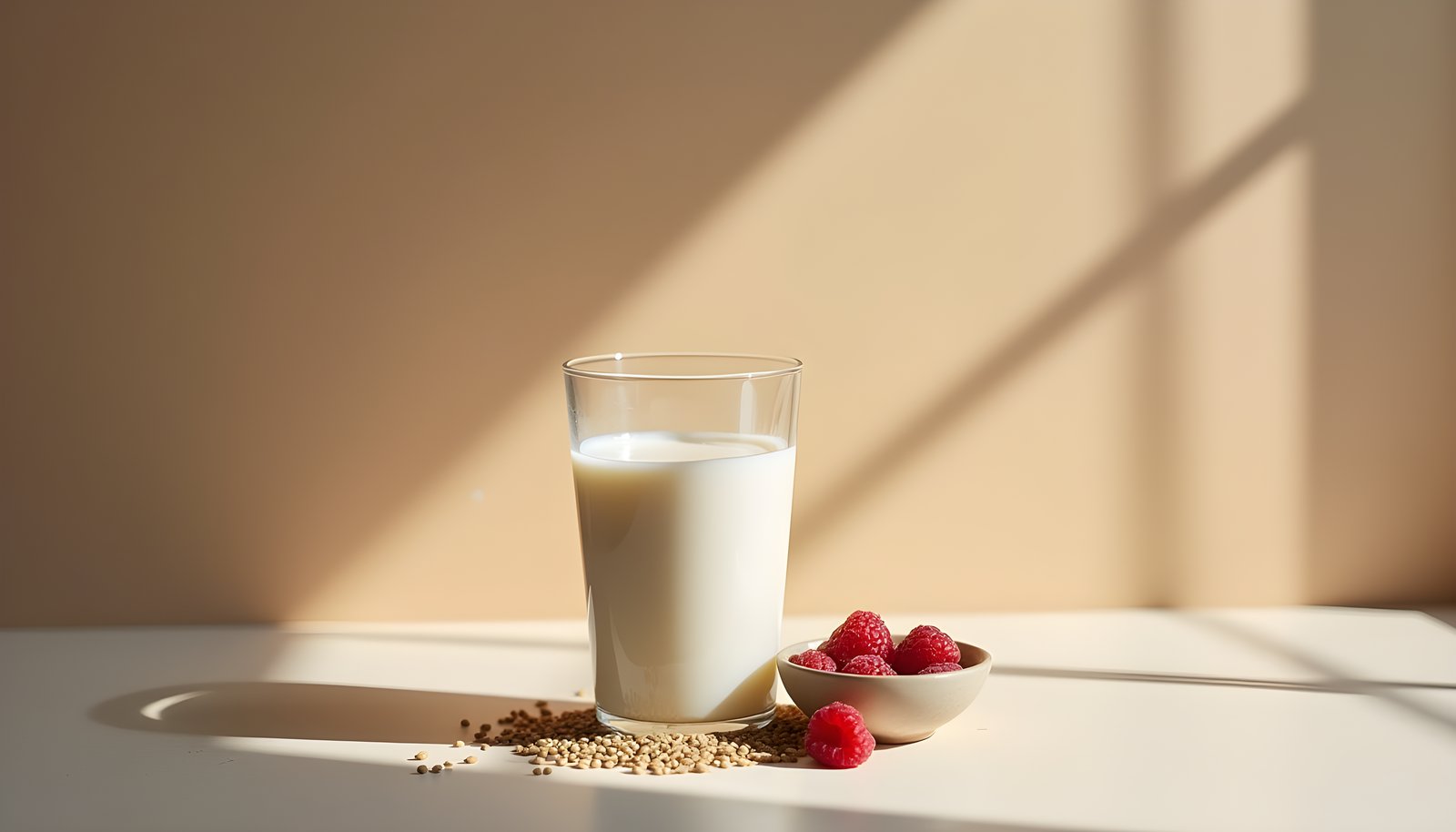
Hemp milk fiber shown with a glass of hemp milk on a sunny table beside a small dish of raspberries and hemp hearts
Hemp milk fiber is under 1 gram per cup in most cartons, because it’s made from shelled hemp seeds that start with only about 1 gram per 3 tablespoons. One brand reaches 2 grams by adding oats, and the real draw of hemp seed is its omega 3 fat.
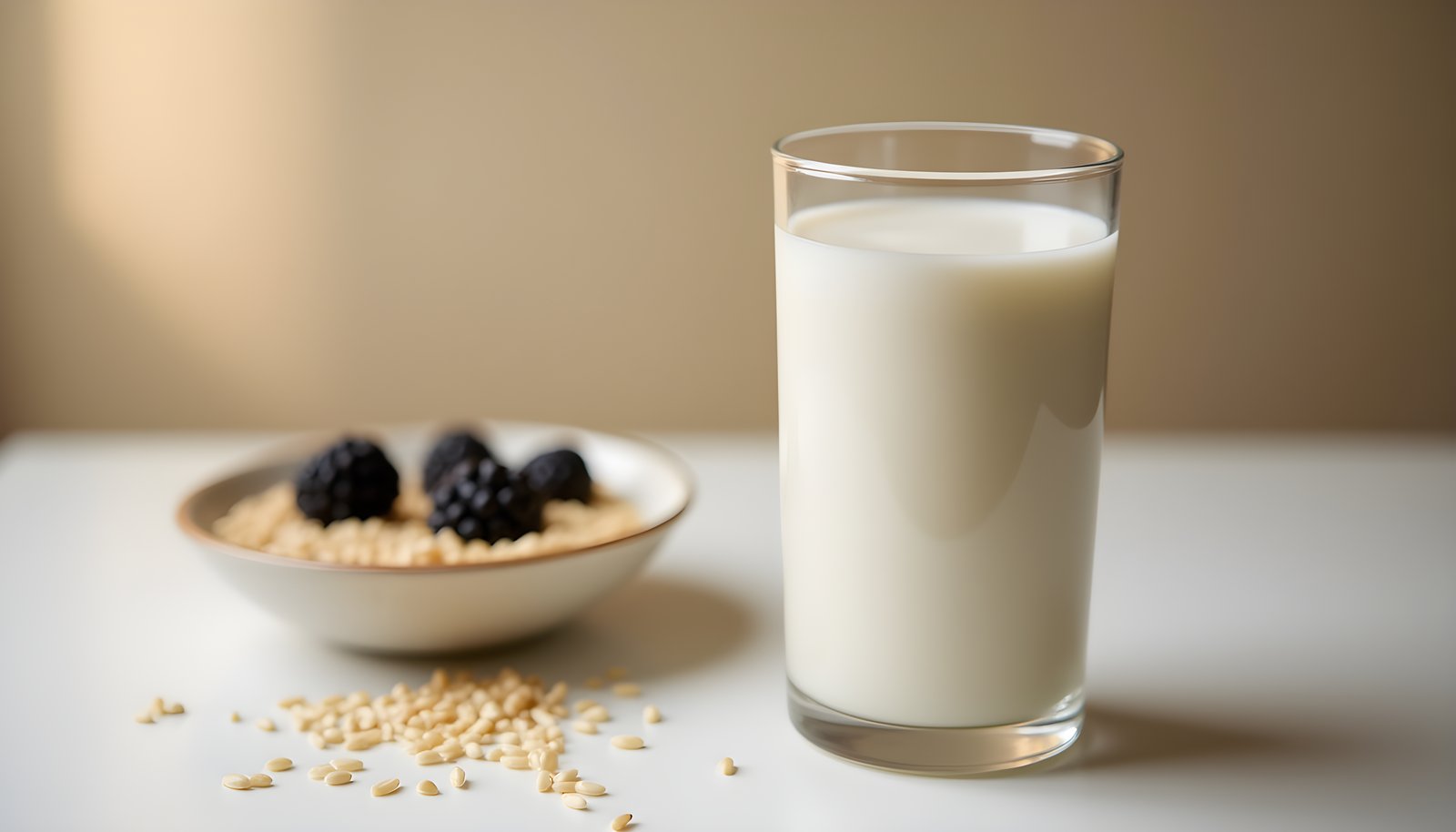
Rice milk fiber shown with a tall glass of rice milk beside a bowl of brown rice grains topped with a few blackberries
Rice milk fiber is under 1 gram per cup, with USDA listing about 0.7 grams and most Rice Dream cartons listing 0. Even brown rice versions lose the grain’s fiber, while many keep 11 to 13 grams of sugar per cup without any added sweetener.
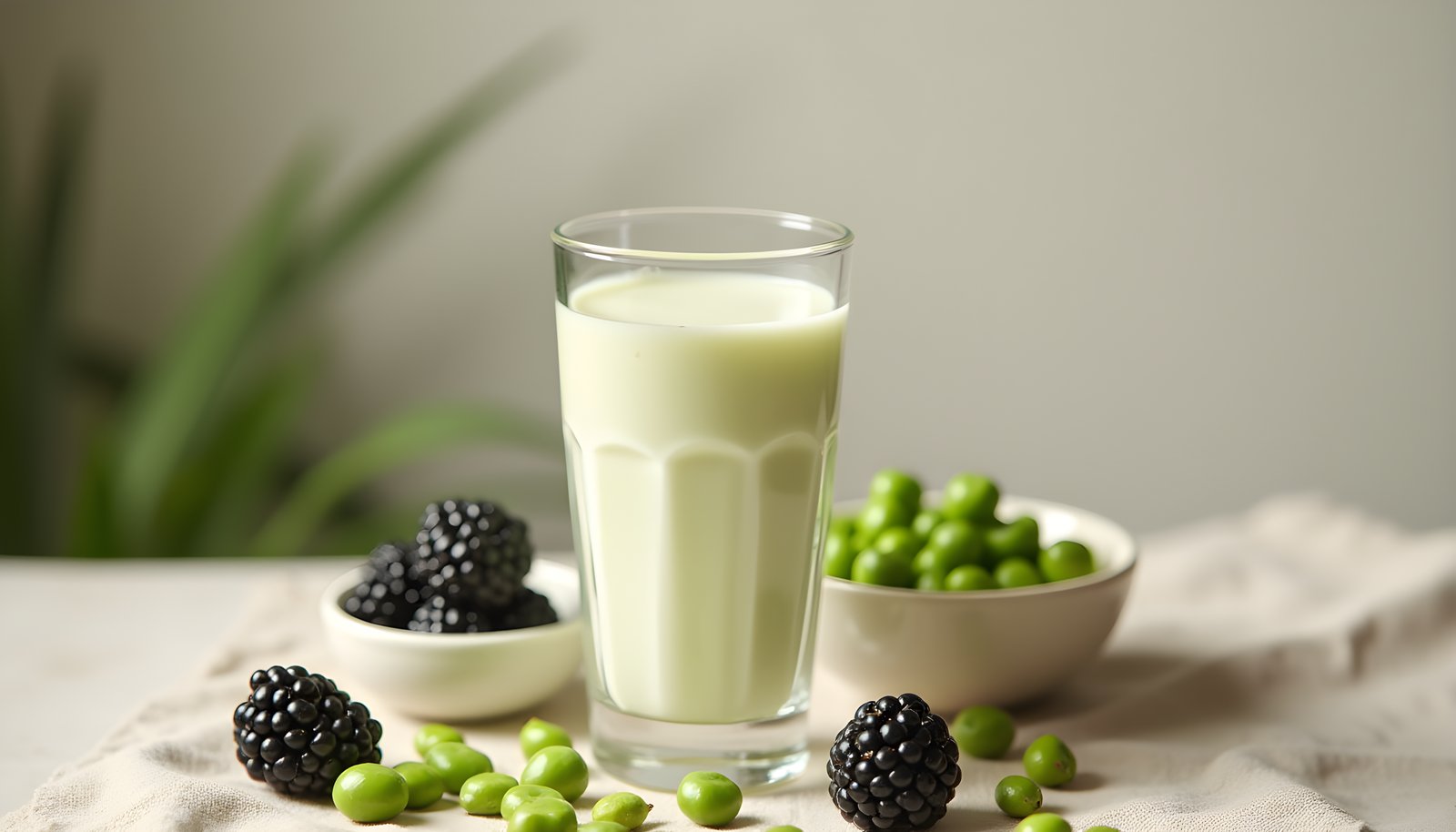
Pea milk fiber shown with a glass of pale green pea milk beside small bowls of fresh green peas and ripe blackberries
Pea milk fiber is under 1 gram per cup in Ripple’s main cartons, far below the 4.4 grams in half a cup of green peas. Its real benefit is protein: 8 grams per cup, plus high levels of added calcium and vitamin D.
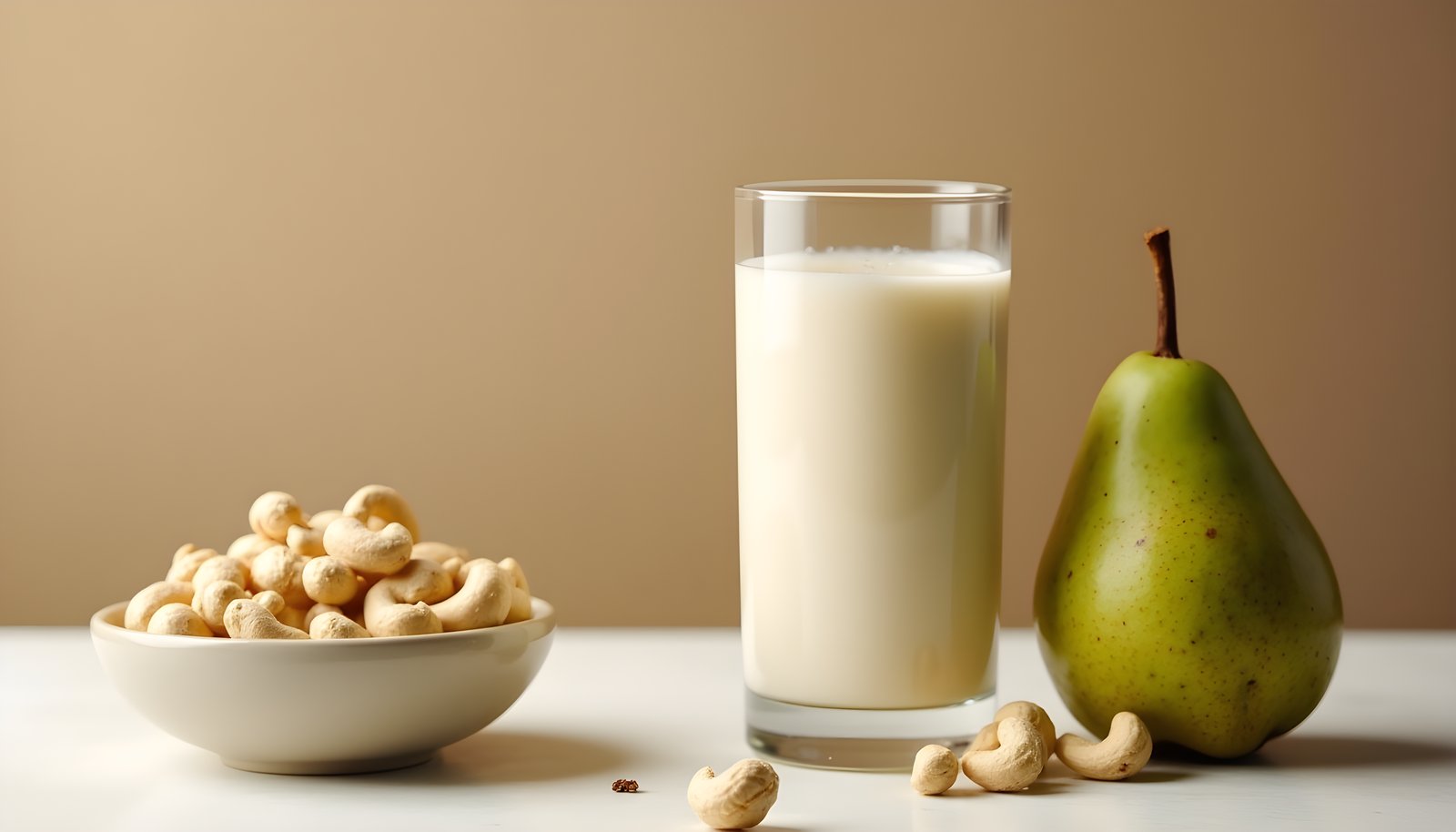
Cashew milk fiber shown with a glass of cashew milk beside a bowl of raw cashews and a ripe green pear on a light table
Cashew milk fiber is 0 grams per cup in every brand we checked, from light 25 calorie cartons to a rich barista version made from just cashews and water. That makes sense once you know whole cashews have under 1 gram per ounce to begin with.