
In this article
- How much fiber adults over 50 need
- Why fiber matters more for senior digestion
- High fiber foods for seniors that are soft and easy to chew
- Cooked versus raw, and other easy upgrades
- A sample day that reaches 21 grams
- Elderly nutrition when appetite shrinks
- Digestive support: fiber works best with fluids
- Nuts and popcorn are not off limits
- An easy fiber checklist for the senior kitchen
- Choosing your first change
- Fiber questions from older adults
- Sources
A common belief is that fiber matters less once you’re past 60, since the daily target drops a little. In reality, the need shrinks only slightly while the payoff grows: about 1 in 3 adults over 60 report constipation symptoms, twice the rate of adults overall.
The right high fiber foods for seniors solve two problems at once. They’re soft enough to chew easily, and they carry enough fiber per spoonful to reach a target even when your appetite is smaller than it used to be.
How much fiber adults over 50 need
Mayo Clinic’s targets for adults older than 50 are 21 grams a day for women and 30 grams for men. That’s down from 25 and 38 grams for younger adults, a drop of roughly 16 to 21%.
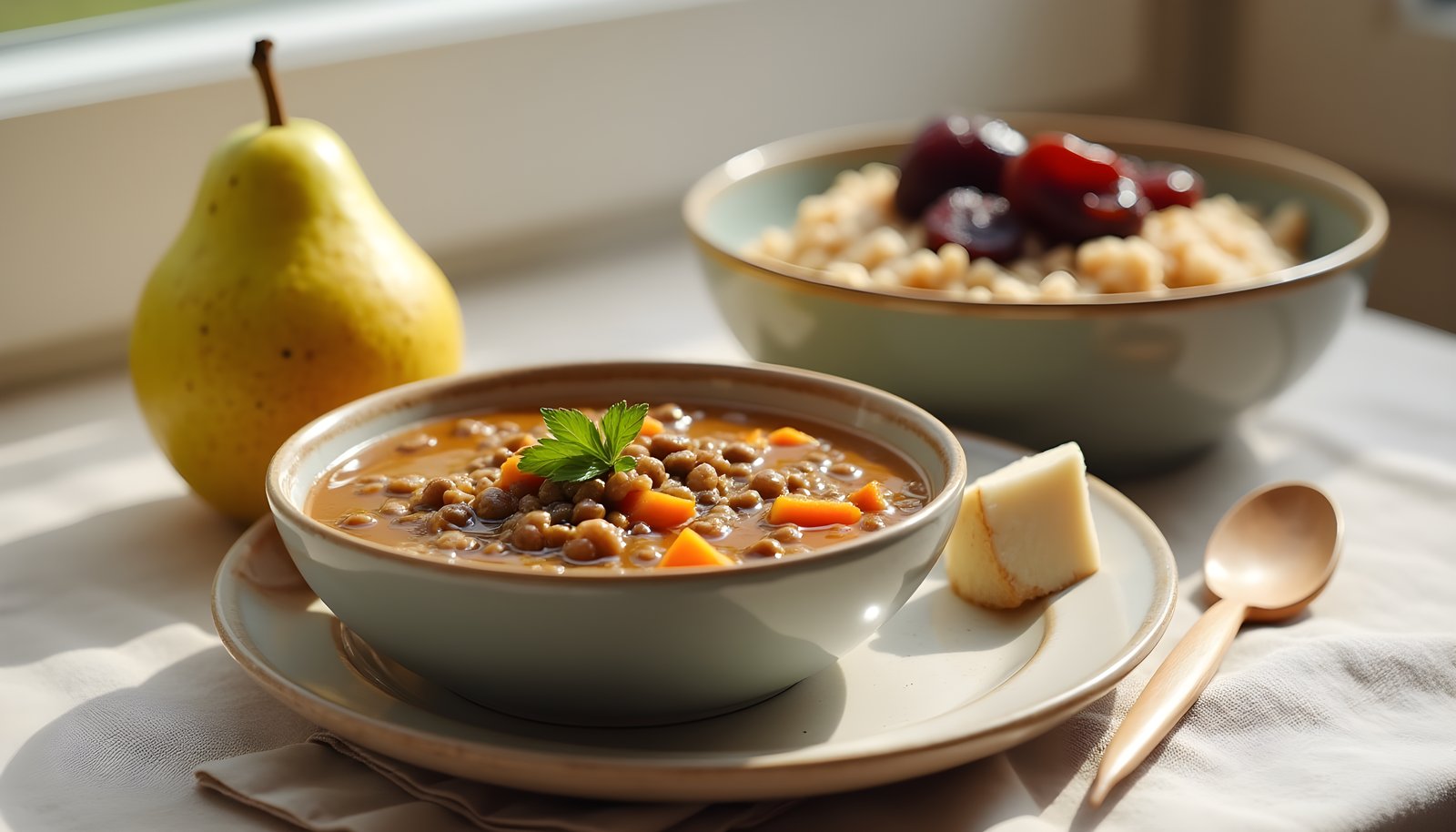
In everyday terms, 21 grams is about a cup of cooked lentils plus a ripe pear. Another route is a bowl of bran flakes, a cup of raspberries and a cup of cooked green peas spread across the day.
The National Institute of Diabetes and Digestive and Kidney Diseases (NIDDK) gives a general adult range of 22 to 34 grams, depending on age and sex. It also notes that older adults sometimes don’t get enough fiber because they may lose interest in food.
Not sure which number fits you? Our fiber calculator works out a personal target from your age and sex in a few seconds.
Why fiber matters more for senior digestion
NIDDK estimates that about 16% of U.S. adults have constipation symptoms, rising to about 33% among adults 60 and older. Its list of higher risk groups includes older adults, people who eat little fiber and people taking certain medicines or supplements.
Mayo Clinic explains that fiber increases the weight and size of stool and softens it, which makes it easier to pass. NIDDK’s core advice is short: eat enough fiber, and drink plenty of liquids so the fiber works better.
Fiber is also linked to less diverticular disease. In the Nurses’ Health Study of more than 50,000 women, those eating 25 grams or more a day had a 13% lower risk of diverticulitis than those eating under 18, according to Harvard’s Nutrition Source.
If your digestion has been unpredictable lately, our gut health guides walk through gentle changes one step at a time.
High fiber foods for seniors that are soft and easy to chew
Texture matters when chewing is harder or dentures make raw crunchy foods a chore. Every food below is soft as served, with fiber from the Dietary Guidelines list.
| Food | Portion | Fiber | Why it’s easy |
|---|---|---|---|
| Green peas, cooked | 1 cup | 8.8 g | Soft, can be mashed |
| Split peas, cooked | 1/2 cup | 8.2 g | Melts into soup |
| Lentils, cooked | 1/2 cup | 7.8 g | Very soft when simmered |
| Raspberries | 1 cup | 8.0 g | No peeling or cutting |
| Canned pumpkin | 1 cup | 7.1 g | Smooth, ready to eat |
| Sweet potato, cooked | 1 cup | 6.3 g | Mashes easily |
| Winter squash, cooked | 1 cup | 5.7 g | Soft and mild |
| Pear | 1 medium | 5.5 g | Soft when ripe |
| Bran flakes | 3/4 cup | 5.5 g | Softens in milk |
| Avocado | 1/2 cup | 5.0 g | Spreadable |
| Carrots, cooked | 1 cup | 4.8 g | Tender when steamed |
| Chia seeds | 1 tablespoon | 4.1 g | Gels in liquid |
| Prunes | 1/4 cup | 3.1 g | Soft, naturally sweet |
| Oat bran, cooked | 1/2 cup | 2.9 g | Smooth hot cereal |
Legumes and cooked peas lead the list, and they’re also among the easiest to eat. A bowl of split pea or lentil soup can cover more than a third of a 21 gram day.
Cooked versus raw, and other easy upgrades
Many people assume raw vegetables are the fiber champions, but cooking often wins by the cup. Mayo Clinic lists a medium raw carrot at 1.5 grams, while a cup of cooked carrots from the Dietary Guidelines list has 4.8 grams and is far easier to chew.
Small swaps in familiar foods add up the same way. Here’s how a few everyday staples compare with a higher fiber alternative:
| Instead of | Fiber | Try | Fiber |
|---|---|---|---|
| 1 medium banana | 3.0 g | 1 ripe medium pear | 5.5 g |
| 1 cup instant oatmeal | 4.0 g | Same oatmeal plus 1 tablespoon chia | 8.1 g |
| 1 medium raw carrot | 1.5 g | 1 cup cooked carrots | 4.8 g |
| 1 cup strawberries | 3.0 g | 1 cup raspberries | 8.0 g |
| 1 cup brown rice | 3.5 g | 1 cup cooked lentils | 15.5 g |
The banana, oatmeal, carrot, strawberry and rice figures come from Mayo Clinic’s fiber chart. None of the swaps asks you to eat more food, only a different version of it.
A sample day that reaches 21 grams
Picture a 72 year old woman with a modest appetite who wants to hit her 21 gram target without big portions. Here’s how her day could look:
- Breakfast: 3/4 cup bran flakes softened in milk with 1/2 cup raspberries, about 9.5 grams
- Lunch: a bowl of soup made with 1/2 cup split peas, plus a slice of whole wheat toast, about 10.2 grams
- Afternoon: a ripe pear, 5.5 grams
- Dinner: 1 cup cooked carrots alongside fish or chicken, 4.8 grams
That’s about 30 grams, comfortably past her target, from four small eating moments. Dropping the pear still leaves her near 25 grams.
Want more soft, fiber rich meals like these? Our recipe eBooks are full of easy ideas that work for every age.
Elderly nutrition when appetite shrinks
NIDDK points out that older adults sometimes eat too little fiber simply because food holds less interest. When portions get smaller, the trick is to choose foods that pack a lot of fiber into a few bites.
High fiber bran cereals are the densest option on the Dietary Guidelines list, at about 14 grams in half a cup for only 62 calories. Even a quarter cup sprinkled over yogurt adds roughly 7 grams.
Another approach is to fold fiber into foods you already like rather than adding new dishes. Half a cup of canned pumpkin stirred into oatmeal adds about 3.5 grams, and half a cup of lentils simmered into a store bought vegetable soup adds 7.8.
Chia works the same way. A tablespoon disappears into a smoothie or a cup of yogurt and brings 4.1 grams without changing the flavor much.
Small, frequent eating moments also help. Three mini meals and two snacks, each with a few grams of fiber, often feel more manageable than three large plates.
Digestive support: fiber works best with fluids
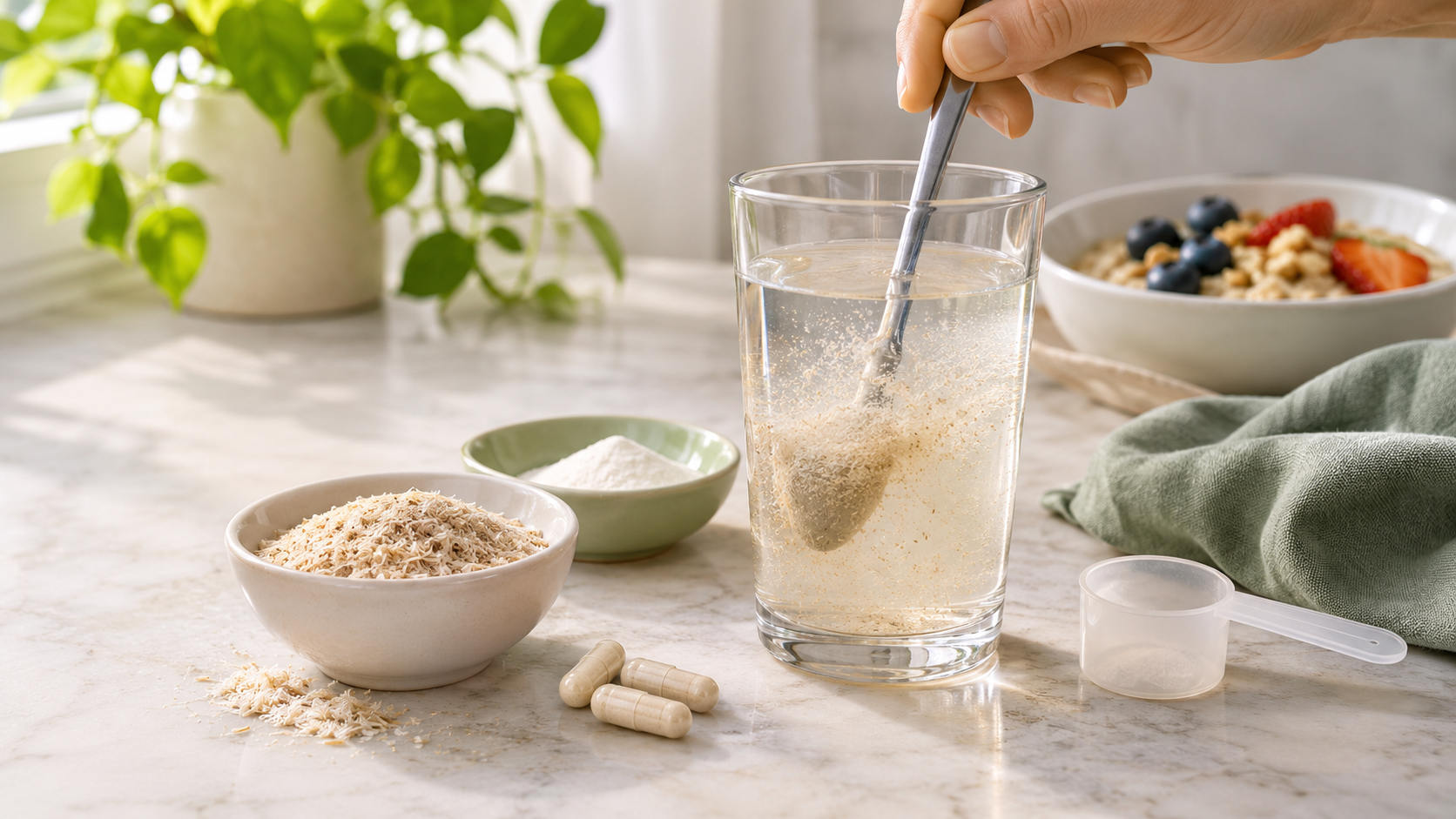
Fiber needs liquid to do its job. NIDDK recommends water and other liquids, such as naturally sweetened fruit and vegetable juices and clear soups, to help fiber soften stool.
Soups are a double win here, because they deliver fiber and fluid in the same bowl. Lentil, split pea and vegetable soups all fit, and a glass of water set beside every meal turns the habit into something you don’t have to remember.
NIDDK also advises adding fiber gradually so your body can adjust. Mayo Clinic suggests spreading the increase over a few weeks.
Nuts and popcorn are not off limits
An old piece of advice told people with diverticulosis to avoid nuts, seeds and popcorn. Harvard’s Nutrition Source reports that in more than 47,000 men, nuts and popcorn were linked to a lower risk of diverticulitis and did not raise the risk of diverticulosis or its complications.
If whole nuts are hard to chew, softer forms work well. Chia seeds gel in milk or yogurt, and a spoonful of nut butter spreads easily on whole wheat toast.
If you can chew them comfortably, whole nuts and seeds are worth keeping. An ounce of pumpkin seeds has 5.2 grams and an ounce of almonds has 3.5, according to the Dietary Guidelines list.
An easy fiber checklist for the senior kitchen
- Canned lentils, split peas and beans for quick soups
- Canned pumpkin to stir into oatmeal or yogurt
- Frozen peas and raspberries that need no prep
- A box of bran flakes or another high fiber cereal
- Chia seeds for overnight pudding
- Ripe pears and prunes for soft, sweet snacks
- A water glass or bottle kept within reach
NIDDK also suggests limiting low fiber choices such as chips, fast food and processed or prepared meals. With the list above stocked, a fiber rich choice is always close at hand.
Choosing your first change
A simple rule helps you pick where to start:
- If chewing is the obstacle, switch raw vegetables to cooked ones and add legume soups
- If appetite is small, lean on dense picks like bran cereal, split peas and lentils
- If constipation is the main concern, add one fiber food a week and a glass of water with each meal
- If you take a medicine linked to constipation, give fiber and fluids extra priority, since NIDDK lists certain medicines among the risk factors
Whichever line fits, give each change about a week before adding the next. That pace matches the gradual approach NIDDK and Mayo Clinic recommend, and it makes it easier to tell which food is helping.
Fiber questions from older adults
How much fiber does a 70 year old need?
Mayo Clinic recommends about 21 grams a day for women and 30 grams for men older than 50. NIDDK gives a broader adult range of 22 to 34 grams.
What is the best fiber food for elderly constipation?
Legumes, bran cereal and fruit like pears and raspberries are strong choices. Pair them with plenty of fluids, since NIDDK says liquids help fiber soften stool.
Are prunes good for seniors?
Yes, they’re soft and easy to eat. A quarter cup of prunes has 3.1 grams of fiber, so they work best alongside other high fiber foods.
Can older adults with diverticulosis eat nuts and seeds?
Research summarized by Harvard found nuts and popcorn were linked to a lower risk of diverticulitis, not a higher one. Ground or soft forms like chia gel or nut butter are easiest to chew.
What soft foods are high in fiber?
Cooked green peas, split pea and lentil soup, canned pumpkin, mashed sweet potato, avocado and ripe pears all give 5 to 9 grams per serving.
Should seniors take a fiber supplement?
Food comes first, since Mayo Clinic says whole foods are generally better. A supplement can help fill a gap, but Harvard notes it doesn’t replace high fiber foods.
Does eating more fiber mean drinking more water?
Yes. NIDDK advises drinking plenty of liquids so fiber can work, and soups count toward that total.
Sources
- U.S. Department of Agriculture and U.S. Department of Health and Human Services. “Food Sources of Dietary Fiber.” Dietary Guidelines for Americans, 2020 to 2025. dietaryguidelines.gov
- Mayo Clinic Staff. “Chart of high-fiber foods.” Mayo Clinic, 2025. www.mayoclinic.org
- Mayo Clinic Staff. “Dietary fiber: Essential for a healthy diet.” Mayo Clinic, 2025. www.mayoclinic.org
- National Institute of Diabetes and Digestive and Kidney Diseases. “Eating, Diet, and Nutrition for Constipation.” 2018. www.niddk.nih.gov
- National Institute of Diabetes and Digestive and Kidney Diseases. “Definition and Facts for Constipation.” 2018. www.niddk.nih.gov
- Harvard T.H. Chan School of Public Health. “Fiber.” The Nutrition Source, 2024. nutritionsource.hsph.harvard.edu