
In this article
- Why your gut microbiome cares about resistant starch
- The four places resistant starch comes from
- Resistant starch foods ranked as you’d eat them
- Beans and lentils are the easiest win
- Green bananas: powerful raw, fragile in the pot
- Cooked cooled potatoes, rice and pasta
- Raw vs cooked: how heat changes each food
- How resistant starch compares with other prebiotic fibers
- A day built around resistant starch
- A quick rule for picking your sources
- One step to take this week
- Resistant starch questions people ask
- Sources
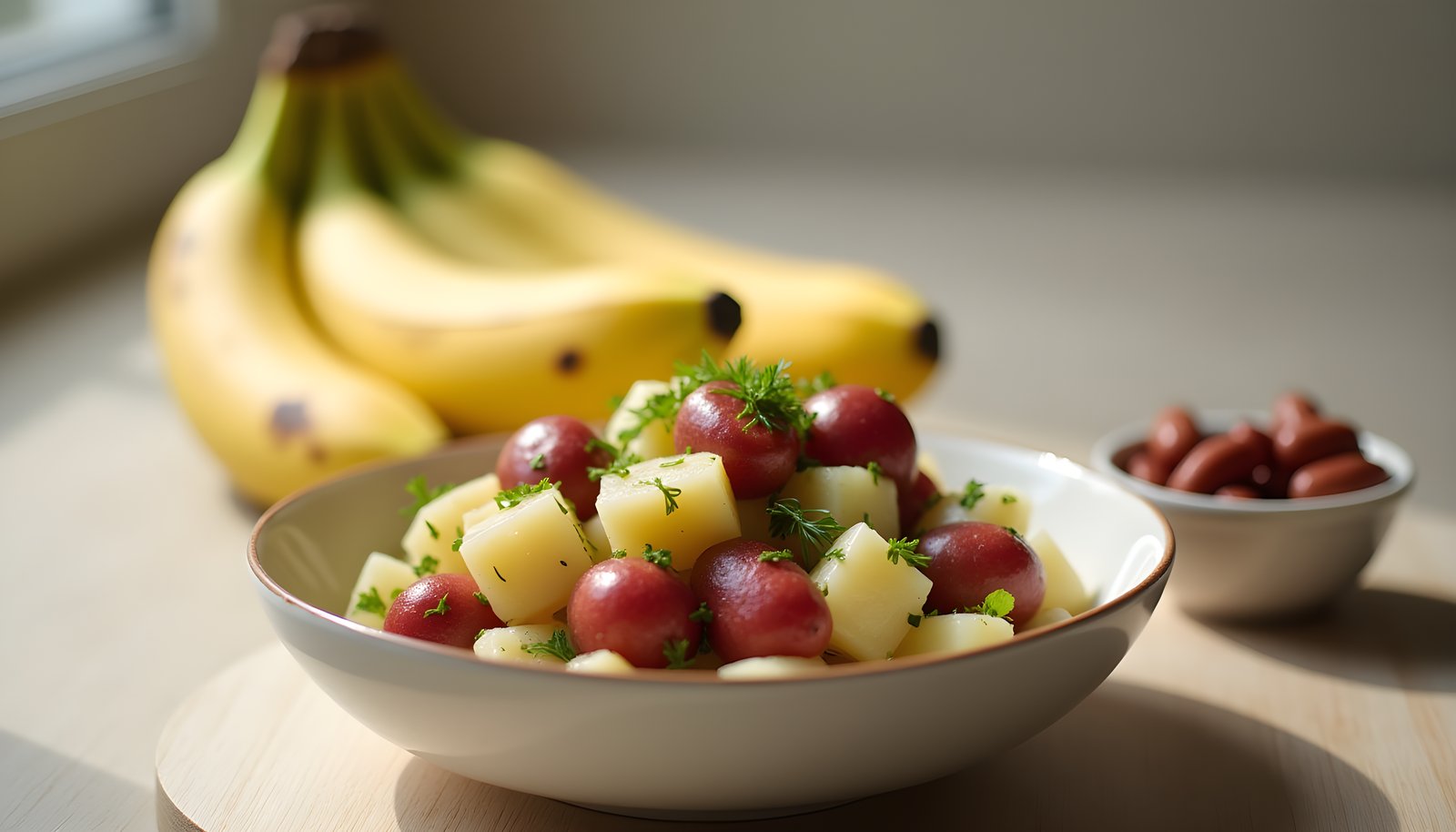
The richest resistant starch foods on paper are raw potatoes and green bananas, and almost nobody eats those. The best resistant starch foods for real meals are beans and lentils, slightly green bananas, and starchy foods like potatoes, rice and pasta that are cooked and then cooled.
Beans lead the everyday list. In a 2024 Australian lab study, kidney beans held about 3.2 grams of resistant starch per 100 grams as eaten, while lentils and chickpeas came in a little above 2 grams.
Cooking changes the picture in ways that surprise people. Some foods lose most of their resistant starch in the pot, and others gain it.
Why your gut microbiome cares about resistant starch
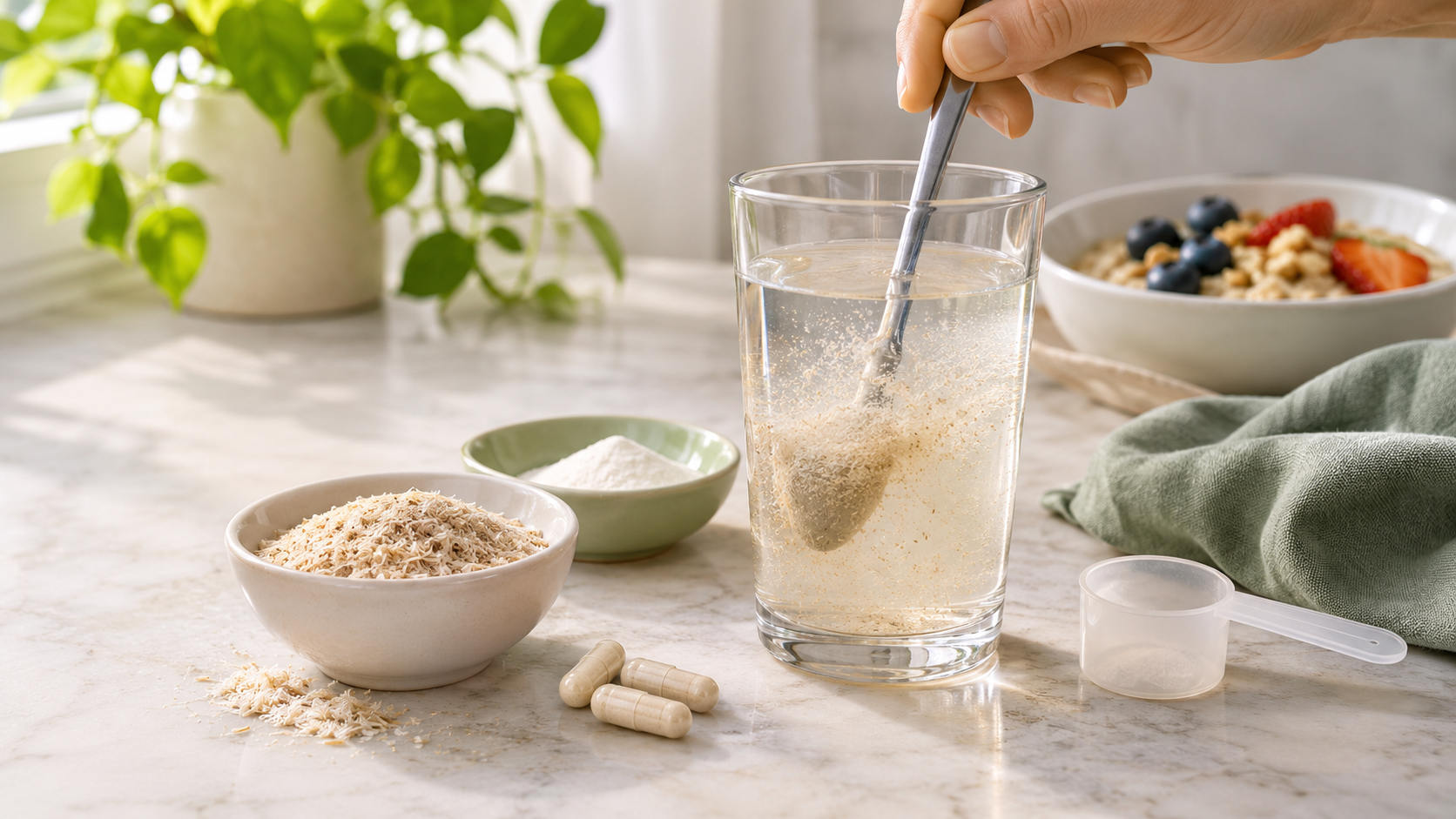
Resistant starch is starch that skips digestion in your small intestine. Cleveland Clinic describes it as a carbohydrate that travels on to the large intestine, where it feeds the helpful bacteria living there.
That makes it a prebiotic starch, meaning a food source for gut microbes rather than for you directly. Harvard’s Nutrition Source explains that bacteria ferment prebiotics into short chain fatty acids, small compounds that help nourish the cells lining your colon.
Cleveland Clinic links resistant starch with better blood sugar control, gut and microbiome health and feeling full for longer. Its dietitian notes that most people in the U.S. get only about 5 grams a day, and suggests working toward 6 grams or more at each meal.
Harvard also groups resistant starch with fiber, since it behaves like a fermentable fiber once it reaches the colon.
The four places resistant starch comes from
Resistant starch isn’t one thing. Cleveland Clinic sorts it into four types, and knowing which is which tells you how to cook each food.
| Type | Where it hides | Example foods | How to keep it |
|---|---|---|---|
| Type 1 | Locked inside plant cell walls | Beans, lentils, whole grains, seeds | Eat whole or lightly processed |
| Type 2 | Raw starch granules | Green bananas, raw potatoes | Eat bananas while still slightly green |
| Type 3 | Forms as cooked starch cools | Cooled potatoes, rice, pasta | Cook, chill, then eat or reheat |
| Type 4 | Made in a factory | Some processed foods | Not a whole food source |
Types 1 and 3 are the ones most people can lean on. Type 2 is real, but you’d rarely eat a raw potato, and bananas lose it as they ripen.
Resistant starch foods ranked as you’d eat them
Most published numbers come from raw ingredients, which says little about your plate. The 2024 study by Hareer and colleagues is useful because it measured foods in the form people actually eat them.
| Food, as eaten | Resistant starch per 100 g |
|---|---|
| Kidney beans | 3.23 g |
| Lentils | 2.16 g |
| Chickpeas | 2.06 g |
| Cannellini beans | 1.99 g |
| Pancake made with green banana flour | 1.78 g |
| Baked beans | 1.48 g |
| Potato gnocchi | 1.00 g |
| Wholemeal bread | 1.00 g |
| White bread | 0.61 g |
Every legume on the list beat both breads. Even baked beans carried more than wholemeal bread, gram for gram.
The authors found wide variation between samples, so treat these as ballpark figures. The order is what matters: legumes sit at the top of the everyday list.
Beans and lentils are the easiest win
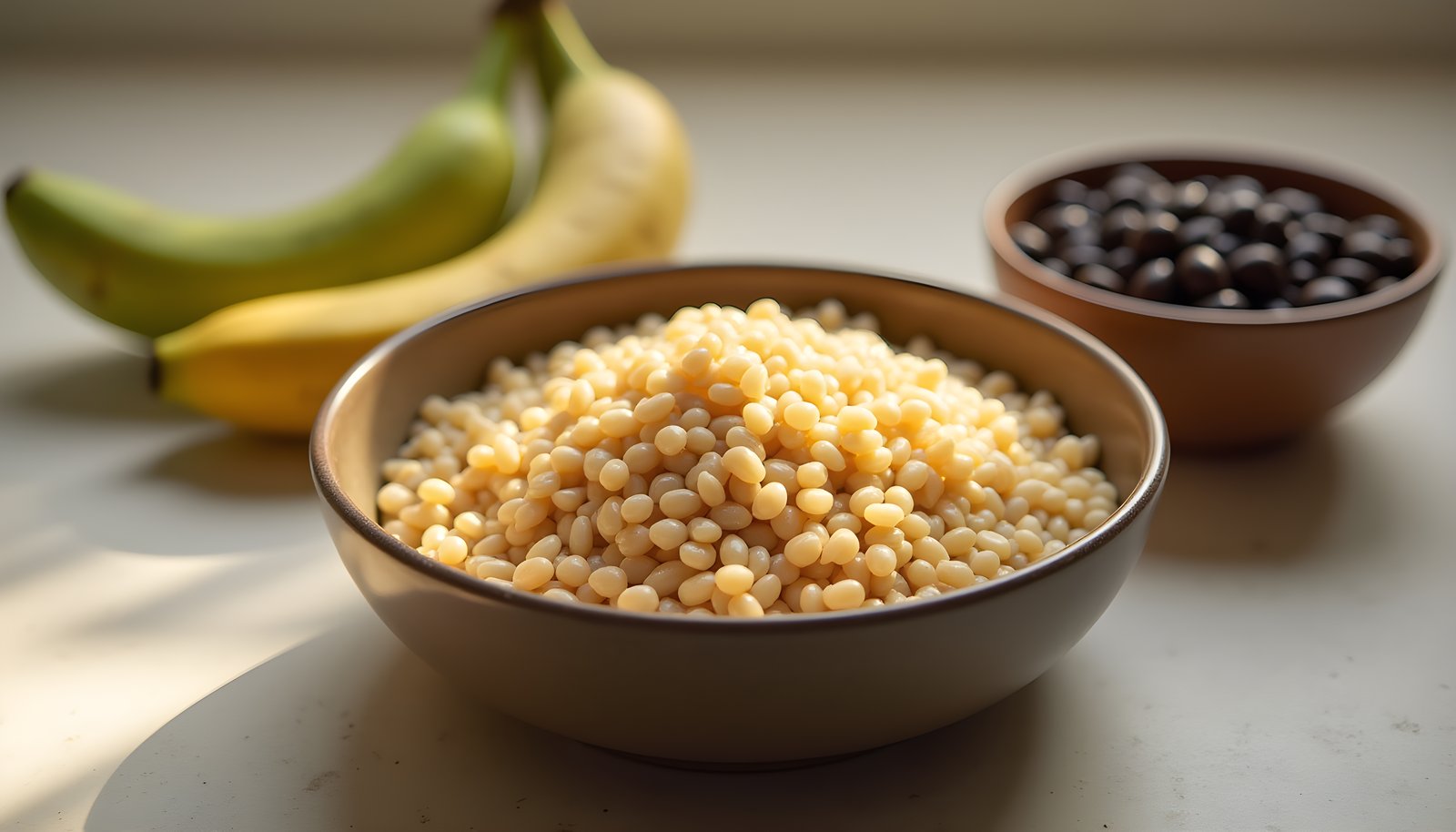
If you only change one thing, add more beans. Cleveland Clinic names beans and legumes first among its food sources, and the lab data backs that up.
At 3.23 grams per 100 grams, a 150 gram serving of kidney beans gives you about 4.8 grams of resistant starch. That’s close to the 6 gram per meal target from a single scoop.
Legumes also handle heat well. In the Karunarathna study, chickpeas measured 7.3 grams per 100 grams of dry weight raw, rising to 9.4 grams after boiling and 10.3 grams after pressure cooking.
The researchers saw the opposite in potatoes, green bananas and oats, which makes chickpeas unusually forgiving. Boiled or pressure cooked, they came out ahead of where they started.
Want more ways to cook beans and lentils beyond chili? Our recipe eBooks are full of easy, high fiber dishes built around them.
Green bananas: powerful raw, fragile in the pot
A banana that’s still slightly green is one of the few raw foods most people will happily eat for resistant starch. Cleveland Clinic lists unripe bananas as a type 2 source, and Harvard names them too.
The same lab study found raw unripe banana at 23.9 grams per 100 grams of dry weight. Boiling wore that down fast:
- 15 minutes of boiling: 17.8 g
- 30 minutes: 10.5 g
- 45 minutes: 4.8 g
- 15 minutes of pressure cooking: 4.0 g
So if you cook green bananas or plantains, keep the time short. For the most resistant starch, eat bananas just before they turn fully yellow, or use green banana flour in pancakes and baking.
Cooked cooled potatoes, rice and pasta
This is where type 3 resistant starch comes in. When cooked starch cools, some of it changes form so that it resists digestion.
A narrative review by Patterson and colleagues found that foods cooked and then chilled tend to have more resistant starch than the same foods freshly cooked. It also found that starches higher in amylose, the straight chain form of starch, tend to carry more.
Harvard lists cooked and cooled pasta and potatoes as resistant starch sources. Cleveland Clinic suggests a simple routine: refrigerate cooked rice or pasta overnight before reheating and eating it.
What cooking does to a potato first
Raw potato is loaded with resistant starch, at 33.9 grams per 100 grams of dry weight in the Karunarathna study. After 45 minutes of boiling it dropped to 14.4 grams, while 15 minutes of pressure cooking kept it at 20.1 grams.
So the method matters: in this test, a quick pressure cook kept more than a long boil. Cooling afterward then gives the potato a chance to build some back, which is why potato salad made the night before is a smart choice.
Not sure how much total fiber your day should hold? Our fiber calculator works out a personal target from a few quick answers.
Raw vs cooked: how heat changes each food
Putting the Karunarathna results side by side shows how differently foods respond. All values are grams per 100 grams of dry weight.
| Food | Raw | After boiling | After pressure cooking (15 min) |
|---|---|---|---|
| Potato | 33.9 g | 14.4 g (45 min) | 20.1 g |
| Unripe banana | 23.9 g | 4.8 g (45 min) | 4.0 g |
| Chickpea | 7.3 g | 9.4 g (45 min) | 10.3 g |
Oats fell from 5.3 grams raw to 1.6 grams after pressure cooking. Arrowroot also tested high raw, at 28.8 grams. Lentil, green gram and black eyed pea each sat around 6 grams raw.
The pattern is clear enough to use. Potatoes, green bananas and oats lose resistant starch with long cooking, while chickpeas hold steady or gain.
How resistant starch compares with other prebiotic fibers
Resistant starch isn’t the only prebiotic on your plate. Harvard points to beta-glucan in oats and barley as another soluble, highly fermentable fiber that may help normalize blood sugar and cholesterol.
The two complement each other. Oats lose most of their resistant starch once cooked, yet still bring beta-glucan, while beans bring both resistant starch and plenty of regular fiber.
Fiber totals are worth a glance too. The Dietary Guidelines list a half cup of cooked navy beans at 9.6 grams of fiber and lentils at 7.8 grams, which makes legumes one of the few foods that cover several gut goals at once.
Cleveland Clinic adds a kitchen trick: cooking with chickpea flour, tapioca flour or potato starch. These swap easily into batters, sauces and flatbreads.
A day built around resistant starch
This is how one person might bring these foods together without changing how they eat very much.
On Sunday evening, Maya boils a pot of small potatoes for 20 minutes and cooks a batch of rice, then puts both in the fridge. Monday’s breakfast is a slightly green banana with yogurt.
Lunch is potato salad with a scoop of cannellini beans stirred through it. Dinner is a lentil and vegetable soup served over the reheated rice.
That’s legumes at two meals, a type 2 source in the morning and cooled starch twice. Nothing on the menu feels like a special diet.
If your gut isn’t used to this much fermentable food, our guides explain how to build up gently, step by step.
A quick rule for picking your sources
Different goals call for different foods, so match the choice to what you’re after:
- Fastest gain with little effort: add a serving of kidney beans, lentils or chickpeas to one meal a day.
- You prefer starchy sides: cook potatoes, rice or pasta ahead, chill them overnight and reheat.
- You want a no cook option: eat bananas while the peel still has some green.
- You’re cooking green bananas or plantains: keep cooking short, since long boiling strips most of it.
- You also want cholesterol support: pair resistant starch foods with oats or barley for beta-glucan.
One step to take this week
Pick one night this week to cook extra. Make a double batch of rice or potatoes, chill the leftovers, and build the next day’s lunch around them with a scoop of beans.
That single habit puts both of the strongest everyday resistant starch foods on your plate at once. Once it feels routine, add a second batch night.
Resistant starch questions people ask
Which food has the most resistant starch?
Raw potatoes and green bananas are the richest sources, but few people eat them raw. Among foods as eaten, kidney beans tested highest in one study at about 3.2 grams per 100 grams.
Do cooked and cooled potatoes have more resistant starch?
Yes. Cooking and then chilling starchy foods tends to raise resistant starch compared with eating them freshly cooked, and Harvard lists cooked and cooled potatoes as a source.
Are green bananas a good source of resistant starch?
Yes, when raw or barely cooked. Unripe banana tested at about 24 grams per 100 grams of dry weight raw, but 45 minutes of boiling cut that to under 5 grams.
Do baked beans have resistant starch?
Yes. In Australian testing, baked beans held about 1.5 grams per 100 grams, more than wholemeal bread at 1.0 gram.
Is resistant starch a prebiotic?
Yes. It passes undigested into the large intestine, where gut bacteria ferment it into short chain fatty acids that help nourish the colon.
Does pressure cooking destroy resistant starch?
It depends on the food. Pressure cooking raised resistant starch in chickpeas to about 10 grams per 100 grams of dry weight, but cut it sharply in green bananas and oats.
Can you cook with potato starch to get more resistant starch?
Yes, Cleveland Clinic suggests cooking with potato starch, chickpea flour or tapioca flour as easy ways to add resistant starch to meals.
Sources
- Cleveland Clinic. “Are Foods With Resistant Starch Good for You?” Health Essentials, 2025. health.clevelandclinic.org
- Hareer LW, Tran C, O’Neill HM, Genoni A. “Resistant starch content of Australian foods.” International Journal of Food Science and Technology, 2024. academic.oup.com
- Karunarathna S, et al. “Investigating the impact of boiling and pressure cooking on resistant starch levels in food.” International Journal of Food Science and Technology, 2024. academic.oup.com
- Patterson MA, Maiya M, Stewart ML. “Resistant Starch Content in Foods Commonly Consumed in the United States: A Narrative Review.” Journal of the Academy of Nutrition and Dietetics, 2020. jandonline.org
- Harvard T.H. Chan School of Public Health. “Fiber.” The Nutrition Source, 2022. nutritionsource.hsph.harvard.edu
- Dietary Guidelines for Americans. “Food Sources of Dietary Fiber.” 2020. dietaryguidelines.gov