
In this article
- Why fiber only comes from plants
- The best plant based high fiber foods in each group
- Vegan fiber sources compared: what 25 grams costs in calories
- Vegetarian fiber foods that replace meat in familiar dishes
- Two plant fiber myths
- Plant nutrition: why the mix of sources matters
- A plant based fiber pantry checklist
- Going plant based without the bloating
- The catch: plant based doesn’t always mean high fiber
- Plant fiber questions, answered
- Sources
Every gram of fiber you eat comes from a plant. Meat, fish, eggs and dairy contain none, so the real question isn’t whether a plant based diet gives you fiber, but which plants give you the most.
The gap between them is wide. A cup of cooked lentils has 15.5 grams, while a cup of brown rice has 3.5, so knowing your plant based high fiber foods by group makes it far easier to reach your target without eating huge volumes.
Why fiber only comes from plants
Mayo Clinic defines dietary fiber as the parts of plant foods your body can’t digest or absorb. Animal foods have no plant cell walls, which is why a steak or a glass of milk shows zero grams on the label.
Even the fiber added to packaged foods traces back to plants. The National Academy of Medicine definition Harvard cites covers both naturally occurring plant fiber and functional fiber, which is extracted from plants or made synthetically and added to products.
Harvard’s Nutrition Source splits fiber into two working types. Soluble fiber dissolves in water and can help lower blood glucose and cholesterol, while insoluble fiber stays intact and helps keep you regular.
Harvard recommends at least 25 to 35 grams a day and notes that most Americans get about 15. Mayo Clinic’s targets are 25 grams for women and 38 for men up to age 50, then 21 and 30 grams after that.
Want a number tailored to you? Our fiber calculator works out a personal daily target in a few seconds.
The best plant based high fiber foods in each group
These picks come from the Dietary Guidelines food source list, using standard portions. They’re grouped the way you’d shop for them.
| Group | Food | Portion | Fiber |
|---|---|---|---|
| Legumes | Navy beans | 1/2 cup | 9.6 g |
| Legumes | Split peas | 1/2 cup | 8.2 g |
| Legumes | Lentils | 1/2 cup | 7.8 g |
| Legumes | Pinto beans | 1/2 cup | 7.7 g |
| Vegetables | Artichoke | 1 cup | 9.6 g |
| Vegetables | Green peas | 1 cup | 8.8 g |
| Vegetables | Canned pumpkin | 1 cup | 7.1 g |
| Vegetables | Brussels sprouts | 1 cup | 6.4 g |
| Fruit | Guava | 1 cup | 8.9 g |
| Fruit | Raspberries | 1 cup | 8.0 g |
| Fruit | Blackberries | 1 cup | 7.6 g |
| Fruit | Asian pear | 1 medium | 6.5 g |
| Whole grains | Whole grain kernels (wheat, rye, oat) | 1/2 cup | 7.5 g |
| Whole grains | Shredded wheat cereal | 1 cup | 6.2 g |
| Whole grains | Bulgur | 1/2 cup | 4.1 g |
| Nuts and seeds | Pumpkin seeds | 1 ounce | 5.2 g |
| Nuts and seeds | Chia seeds | 1 tablespoon | 4.1 g |
| Nuts and seeds | Almonds | 1 ounce | 3.5 g |
Legumes are the group where a half cup most reliably clears 7 grams. Vegetables and fruit get there too, but usually need a full cup to do it.
Whole grain kernels, sold as wheat berries, rye berries or oat groats, are the surprise of the grains group. They’re simply the intact grain, and half a cup cooked matches most beans for fiber.
Vegan fiber sources compared: what 25 grams costs in calories
Grams per serving tell only part of the story, because servings differ in size and calories. A fairer comparison asks how many calories you’d eat to get 25 grams from one food alone.
| Food | Amount for 25 g of fiber | Calories |
|---|---|---|
| Turnip greens, cooked | 5 cups | 145 |
| Raspberries | About 3 cups | 200 |
| Artichoke, cooked | About 2.6 cups | 232 |
| Broccoli, cooked | About 4.8 cups | 260 |
| Navy beans | About 1.3 cups | 333 |
| Lentils | About 1.6 cups | 369 |
| Bulgur | About 3 cups | 463 |
| Pear | About 4.5 medium pears | 468 |
| Pumpkin seeds | About 4.8 ounces | 606 |
| Almonds | About 7 ounces | 1,171 |
Leafy greens, berries and artichokes are the most calorie efficient, while beans give the most fiber per bite. Nuts sit at the bottom: you’d need about 7 ounces of almonds, more than 1,100 calories, to match what a cup and a third of navy beans delivers.
Bulgur and pears land in the middle, at roughly 460 calories each for 25 grams. That makes them steady everyday picks rather than heavy hitters.
Nobody eats 25 grams from one food, of course. The table simply shows which groups to lean on when you want fiber without a lot of extra energy.
Vegetarian fiber foods that replace meat in familiar dishes
Harvard suggests using beans or legumes in place of meat two to three times a week, in dishes like chili or soup. Because meat has no fiber, every swap is pure gain.
- Chili: trade the ground beef for a cup of black beans, which Mayo Clinic lists at 15 grams
- Bolognese: simmer cooked lentils into the sauce, at 7.8 grams per half cup
- Tacos: fill tortillas with pinto beans, at 7.7 grams per half cup
- Soup: thicken a pot with split peas instead of ham, at 8.2 grams per half cup
- Burgers: shape a patty from mashed navy beans and bulgur for about 13.7 grams from a half cup of each
Even one of these swaps a week adds up. Two chili nights with black beans instead of beef put roughly 30 extra grams into your week.
If you’re vegetarian rather than vegan, eggs, cheese and yogurt can share the protein role. They still add no fiber, though, so the plant side of the plate has to do all the work.
Two plant fiber myths
Myth: nuts are the best plant source of fiber. Fact: nuts are useful, but beans beat them easily. An ounce of almonds has 3.5 grams, while half a cup of navy beans has 9.6 for fewer calories.
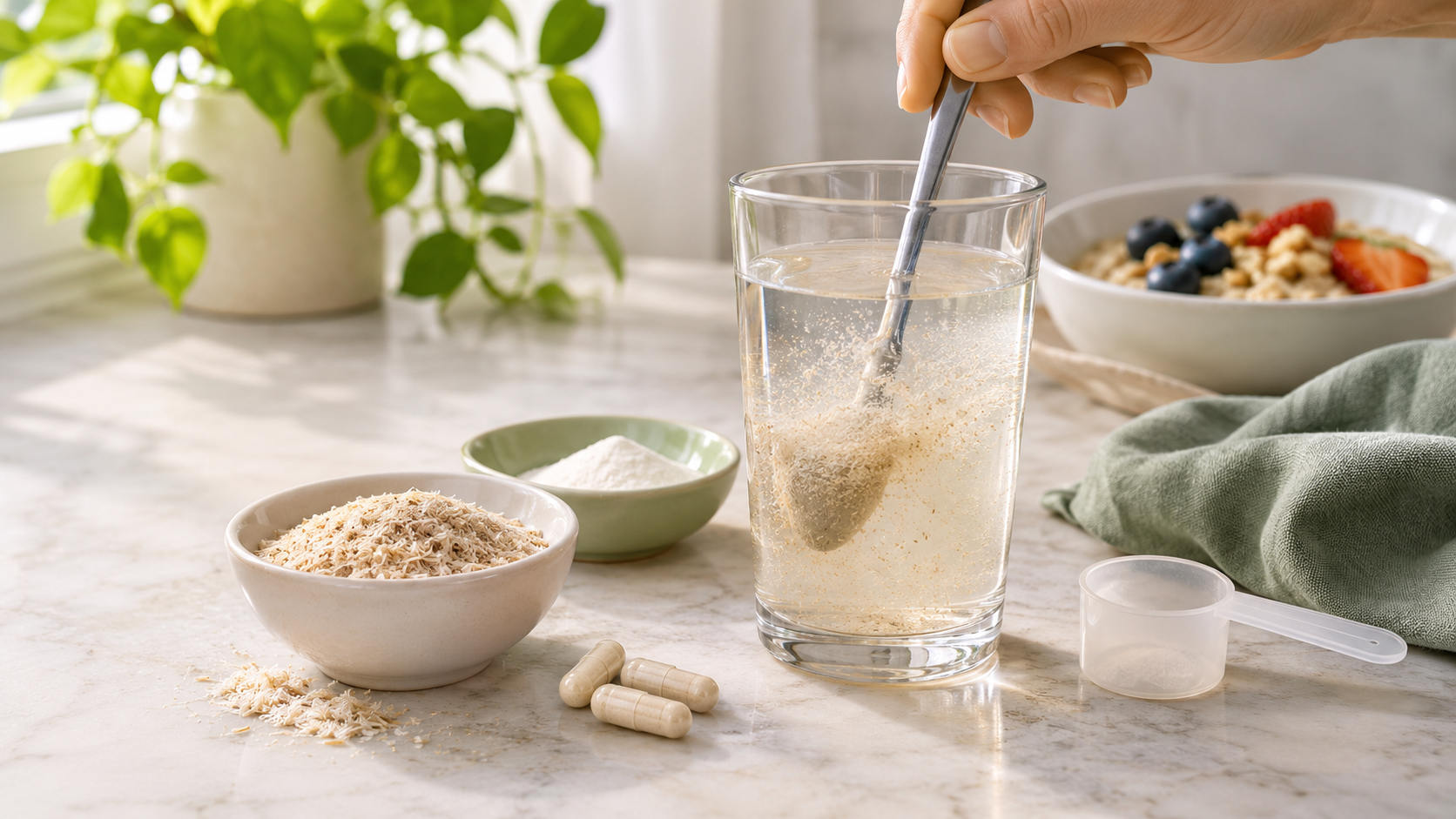
Myth: a fiber supplement can stand in for plant foods. Fact: Mayo Clinic says whole foods are generally better than supplements, and Harvard notes that psyllium or methylcellulose products don’t replace high fiber foods. Plants bring a mix of fiber types plus vitamins and minerals that a powder can’t copy.
Still weighing whether a supplement fits your routine? Our comparison charts set the main options side by side.
Plant nutrition: why the mix of sources matters
Different plants lean toward different fiber types. Harvard lists oatmeal, chia seeds, beans, lentils, apples and blueberries as soluble fiber sources, and whole wheat bran, quinoa, brown rice, kale, almonds and fruit skins as insoluble ones.
Legumes land on both lists. Eating across all five groups gives you a balance of both types rather than leaning on one.
Harvard’s review also ties higher fiber intake to lower risk of heart disease, type 2 diabetes and diverticular disease. In one cohort of more than 50,000 women, eating 25 grams or more a day was linked to a 13% lower risk of diverticulitis than eating under 18 grams.
A plant based fiber pantry checklist
- Dried or canned beans: navy, pinto, black and white
- Lentils and split peas for soups and sauces
- A whole grain you’ll actually cook, such as bulgur, barley or whole grain kernels
- Frozen green peas, raspberries and blackberries
- Canned pumpkin for soups, oats and baking
- Pumpkin seeds, chia seeds and almonds
- Pears and apples to eat with the skin on
With these on hand, almost any meal can pick up 5 to 10 grams with one addition. Frozen berries and peas keep for months, so they’re ready when the fresh produce runs out.
Looking for plant based recipes that put this pantry to work? Our recipe eBooks are full of easy, high fiber meals.
Going plant based without the bloating
A fully plant based day adds up faster than most people expect. Here’s one built entirely from the Dietary Guidelines portions above and a few close relatives on the same list:
| Meal | What’s in it | Fiber |
|---|---|---|
| Breakfast | 3/4 cup bran flakes with 1 cup blackberries | 13.1 g |
| Lunch | 1/2 cup lentils over 1/2 cup bulgur | 11.9 g |
| Snack | 1 medium pear and 1 ounce pumpkin seeds | 10.7 g |
| Dinner | 1/2 cup black beans, 1 cup sweet potato, 1 cup broccoli | 19.0 g |
| Total | 54.7 g |
That’s more than double a 25 gram target and over three times the 15 gram American average. Mayo Clinic advises adding fiber slowly over a few weeks and drinking plenty of water, so a day like this is a destination, not a starting point.
A practical pace is one new high fiber food every few days. Start with grains and fruit, then build up beans and lentils in half cup steps as your gut adjusts.
The catch: plant based doesn’t always mean high fiber
A plate can be entirely plant based and still low in fiber. Mayo Clinic notes that refined or processed foods usually have less fiber, and that peeling fruit or straining the pulp from juice lowers it further.
White bread, white rice, regular pasta and fruit juice are all plants, but most of their fiber has been milled or squeezed out. Harvard’s advice is to eat whole fruit instead of juice, swap in brown rice and other whole grains, and pick cereals with a whole grain listed first and at least 20% of the Daily Value for fiber.
So the label that matters isn’t plant based. It’s whole: beans, intact grains, and fruit and vegetables with their skins still on.
Plant fiber questions, answered
What plant food has the most fiber per serving?
Among everyday foods, navy beans and cooked artichokes tie at 9.6 grams per standard portion. High fiber bran cereals go higher, at about 14 grams per half cup.
Do any animal foods have fiber?
No. Fiber comes from the parts of plants your body can’t digest, so meat, fish, eggs and dairy contain none unless fiber is added during processing.
Is a vegan diet automatically high in fiber?
Not automatically. Refined grains, juice and processed foods are plant based but low in fiber, so the benefit comes from beans, whole grains, fruit and vegetables.
Which beans have the most fiber?
Navy beans lead the Dietary Guidelines list at 9.6 grams per half cup. Split peas, lentils, pinto and black beans all follow closely at 7.5 to 8.2 grams.
Which plant foods have soluble fiber?
Harvard lists oatmeal, chia seeds, nuts, beans, lentils, apples and blueberries as good soluble fiber sources. These are the types linked to lower cholesterol and steadier blood sugar.
Do vegetarians need a fiber supplement?
Usually not. A diet built on beans, whole grains, fruit and vegetables can easily meet the 25 to 38 gram targets, and Mayo Clinic says whole foods are generally better than supplements.
Can you get too much fiber on a plant based diet?
You can feel it if you add a lot at once. Mayo Clinic recommends increasing fiber gradually over a few weeks and drinking plenty of water to avoid gas and bloating.
Sources
- U.S. Department of Agriculture and U.S. Department of Health and Human Services. “Food Sources of Dietary Fiber.” Dietary Guidelines for Americans, 2020 to 2025. dietaryguidelines.gov
- Mayo Clinic Staff. “Chart of high-fiber foods.” Mayo Clinic, 2025. www.mayoclinic.org
- Mayo Clinic Staff. “Dietary fiber: Essential for a healthy diet.” Mayo Clinic, 2025. www.mayoclinic.org
- Harvard T.H. Chan School of Public Health. “Fiber.” The Nutrition Source, 2024. nutritionsource.hsph.harvard.edu