
In this article
- How these five were chosen
- Vegan protein powder fiber, side by side
- The five plant protein shakes up close
- Seed fiber versus added fiber
- Dairy free protein and the sodium question
- Boosting the fiber in any plant protein shake
- Matching a powder to your goal
- A checklist before you buy
- Check the tub you already own
- Plant protein powder and fiber: common questions
- Sources
A 30 gram serving of one hemp powder on this list carries 11 grams of fiber, while a popular pea protein powder with a scoop half again as big has 4. That spread is the whole reason vegan protein powder fiber is worth comparing label by label.
Plant based powders vary a lot. Some are ground seed with nothing added, and others are pea and rice blends that reach their fiber number through acacia, chicory root or chia.
Below are five dairy free protein powders, ranked by fiber, with what each one does best and where it falls short.
How these five were chosen
Each powder here is plant based, widely sold in the U.S. and lists at least 4 grams of fiber per serving on its Nutrition Facts panel. Numbers come from the label on each product’s retail listing.
We looked at four things for every pick:
- Fiber per serving and per 100 calories, so different scoop sizes compare fairly.
- Protein per serving, since a shake still has to do its main job.
- Where the fiber comes from: the seed itself, or fibers added to the formula.
- Sugar and sodium, which vary widely between plain and flavored tubs.
Vegan protein powder fiber, side by side
Here’s how the five line up, sorted by fiber per serving:
| Powder | Serving | Calories | Protein | Fiber | Fiber per 100 kcal | Sodium |
|---|---|---|---|---|---|---|
| Nutiva Organic Hemp Protein Fiber Plus | 30 g | 110 | 11 g | 11 g | 10.0 g | 0 mg |
| Manitoba Harvest Hemp Yeah! Balanced Protein + Fiber | 36 g | 140 | 18 g | 8 g | 5.7 g | 0 mg |
| Orgain Organic Protein, Creamy Chocolate Fudge | 2 scoops | 150 | 21 g | 7 g | 4.7 g | 390 mg |
| Ka’Chava All in One Nutrition Shake, Chocolate | 62 g | 240 | 25 g | 6 g | 2.5 g | 300 mg |
| Vega Original Protein + Greens, Creamy Chocolate | 46 g | 180 | 25 g | 4 g | 2.2 g | 350 mg |
The two hemp powders win on fiber density and have no sodium at all. The three pea based blends deliver more protein per scoop, but their fiber per 100 calories falls to between 2.2 and 4.7 grams.
The five plant protein shakes up close
1. Nutiva Organic Hemp Protein Fiber Plus
This is the fiber leader. The label lists 11 grams of fiber and 11 grams of protein in 110 calories, with organic hemp seed protein as the only ingredient.
It also brings 4.5 mg of iron and 160 mg of magnesium per serving, with less than 1 gram of sugar. Best for: people who want fiber first and a short ingredient list.
Drawbacks: 11 grams of protein is light for a post workout shake, and this one is unflavored, so most people will want to blend it with fruit.
2. Manitoba Harvest Hemp Yeah! Balanced Protein + Fiber
Manitoba’s balanced blend sits between a fiber powder and a protein powder. A 36 gram serving gives 18 grams of protein and 8 grams of fiber for 140 calories, again from hemp seed powder alone.
Its mineral numbers stand out, at 8 mg of iron and 296 mg of magnesium per serving. Best for: a one ingredient powder that does both jobs reasonably well.
Drawbacks: the serving is about a third of a cup, which is a lot of powder for one shake.
3. Orgain Organic Protein, Creamy Chocolate Fudge
Orgain’s plant powder lists 21 grams of protein and 7 grams of fiber for 150 calories, with no added sugar. The protein comes from pea, brown rice and chia seed.
Much of the fiber comes from added ingredients, including acacia, rice dextrin and guar gum, and the powder is sweetened with erythritol and stevia. Best for: a flavored shake that balances protein and fiber.
Drawbacks: 390 mg of sodium per serving is the highest here, and erythritol is a sugar alcohol. Monash University cautions that sugar alcohols are sometimes used at doses above what sensitive guts tolerate.
4. Ka’Chava All in One Nutrition Shake, Chocolate
Ka’Chava is built as a meal shake rather than a pure protein powder. Each 62 gram serving gives 25 grams of protein, 6 grams of fiber and 240 calories, with 7 grams of sugar, 4 of them added.
Its fiber comes from a long list that includes flax, chia, quinoa, amaranth, soluble corn fiber, acacia and chicory root. Best for: replacing a light meal on a busy day.
Drawbacks: the calories and added sugar are higher than a basic protein shake, and chicory root is one of the ingredients Monash suggests people with IBS check for.
5. Vega Original Protein + Greens, Creamy Chocolate
Vega’s classic tub delivers 25 grams of protein in 180 calories with 0 grams of sugar. Fiber comes in at 4 grams per 46 gram scoop.
Pea protein is the main source, and acacia gum appears on the ingredient list. Best for: high protein with no sugar, when fiber can come from what you blend in.
Drawbacks: the lowest fiber per 100 calories of the five, and 350 mg of sodium per scoop.
Weighing these against other dairy free protein options? Our comparison charts line up popular tubs so you can scan them in one place.
Seed fiber versus added fiber
The split on this list is clear. The two hemp powders get every gram of fiber from the seed, while the pea blends lean on ingredients like acacia, rice dextrin, soluble corn fiber or chicory root.
Neither route is wrong, but they suit different people. Monash University notes that pea proteins can contain traces of GOS and fructan, and it flags inulin, chicory root and products marketed as “prebiotic” for people with IBS.
If your gut is sensitive, a single ingredient hemp powder avoids most of those flags. If it isn’t, the blends offer more protein and plenty of flavored options.
Dairy free protein and the sodium question
Sodium is the surprise column in the table. Both hemp powders list 0 mg, but the flavored blends range from 300 to 390 mg per serving.
That’s worth knowing if you drink a shake every day. Two servings of the Orgain powder add 780 mg of sodium before you’ve eaten anything else.
Plain powders let you control salt and sweetness yourself, while flavored ones trade that control for convenience. Neither choice is wrong, as long as you know which one you’re making.
Boosting the fiber in any plant protein shake
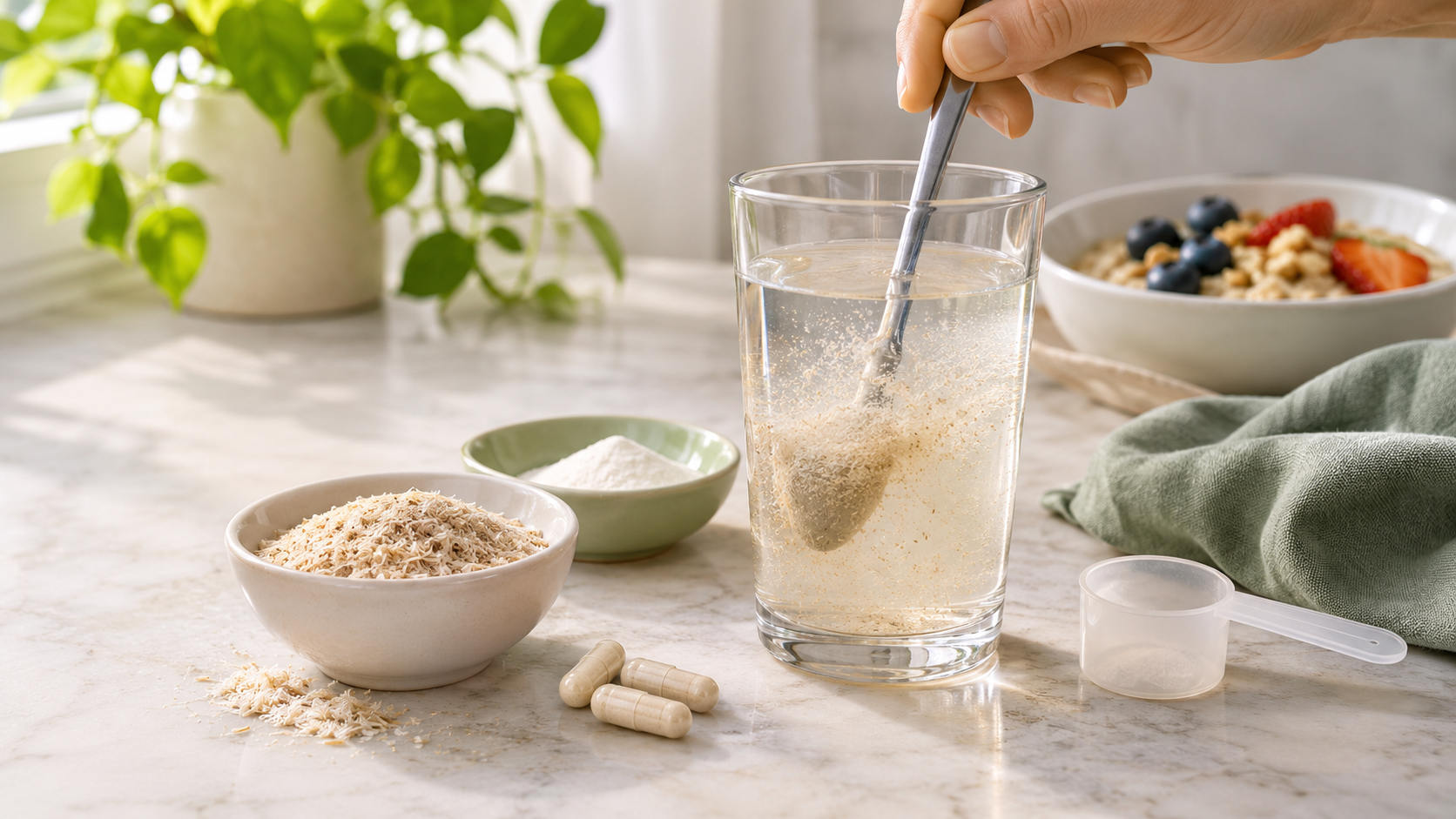
Even the lowest fiber pick here can become a high fiber shake with a few whole foods. Blending a Vega scoop with half a cup of frozen berries and a spoonful of chia or ground flax adds several grams of fiber in seconds.
Mixing powders works too. Half a serving of Nutiva hemp stirred into a Vega shake adds about 5.5 grams of fiber and 5.5 grams of protein to the glass.
Looking for smoothie recipes that pair plant protein with fruit, oats and seeds? Our recipe eBooks are full of easy blender ideas.
Matching a powder to your goal
Each of the five fits a different kind of shake. Use your main goal to narrow the list:
- If fiber is the priority, Nutiva Fiber Plus gives the most per gram and per calorie.
- If you want one ingredient but more protein, Manitoba Harvest’s balanced hemp gets you to 18 grams.
- If you want a flavored shake with both, Orgain lands at 21 grams of protein and 7 grams of fiber.
- If the shake replaces a meal, Ka’Chava’s 240 calories and 25 grams of protein suit that role.
- If protein matters most and sugar must be zero, Vega’s 25 grams with no sugar is the pick.
You can also pair two. Half a serving of Nutiva and half of Orgain together give about 16 grams of protein and 9 grams of fiber for roughly 130 calories, more fiber than a full serving of any pea blend here.
A checklist before you buy
Run through these points on any tub you’re considering:
- Fiber per serving: 6 grams or more is strong for a protein powder.
- Fiber source: is it the seed itself, or a list of added fibers?
- Protein per serving: 20 grams or more if the shake is your main protein for that meal.
- Added sugar: 0 grams is easy to find in plain and stevia sweetened tubs.
- Sodium: compare it if you plan on more than one shake a day.
- Serving size in grams: check it so the fiber and protein numbers compare fairly.
If extra fiber from shakes tends to leave you gassy, our gut health guides explain how to build up your intake comfortably.
Check the tub you already own
Before you buy anything new, turn your current tub around and find two lines: dietary fiber and the first ingredient. If fiber is under 4 grams, plan to add a fruit or seed to every shake.
If you’re shopping, start with the fiber per 100 calories column above. It’s the quickest way to see which vegan protein powder fiber numbers are real value and which just come from a bigger scoop.
Plant protein powder and fiber: common questions
Which vegan protein powder has the most fiber?
Of the five compared here, Nutiva Organic Hemp Protein Fiber Plus has the most, with 11 grams of fiber and 11 grams of protein in a 30 gram serving.
Is hemp protein high in fiber?
Yes, many hemp powders are. Manitoba Harvest’s balanced hemp powder lists 8 grams of fiber and 18 grams of protein per 36 gram serving, from hemp seed alone.
Does pea protein have fiber?
Some, but the pea based powders here get much of their fiber from added ingredients such as acacia, rice dextrin, soluble corn fiber or chicory root.
Which plant protein powder has the most protein and fiber together?
Orgain Organic Protein is a good balance here, with 21 grams of protein and 7 grams of fiber in 150 calories.
Is Ka’Chava high in fiber?
It has 6 grams of fiber per 62 gram serving, along with 25 grams of protein and 240 calories, so it works more like a meal shake.
Are plant protein powders good for sensitive stomachs?
It depends on the formula. Monash University says pea protein can contain some FODMAPs and flags inulin and chicory root, so a single ingredient hemp powder may be gentler.
How can I add fiber to a vegan protein shake?
Blend in frozen berries, chia or ground flax, or mix in half a scoop of a high fiber hemp powder to add several grams.
Sources
- Nutiva. “Organic Hemp Protein Powder, Fiber Plus” Nutrition Facts, via Vitacost. 2026. vitacost.com
- Manitoba Harvest. “Balanced Protein + Fiber Hemp Protein Powder, Unsweetened” Nutrition Facts, via Vitacost. 2026. vitacost.com
- Orgain. “Organic Protein Plant Based Powder, Creamy Chocolate Fudge” Nutrition Facts, via H-E-B. 2026. heb.com
- Ka’Chava. “All-In-One Nutrition Shake, Chocolate” Nutrition Facts, via Vitacost. 2026. vitacost.com
- Vega. “Original Protein + Greens, Creamy Chocolate” Nutrition Facts, via Vitacost. 2026. vitacost.com
- Rhys-Jones D. “Protein powders and IBS.” Monash University FODMAP Blog. 2021. monashfodmap.com