
In this article
- Two nutrients that slow the rise
- Protein fiber for diabetics, ranked by serving
- What a three month bean trial showed
- Why the order on your plate matters
- Protein sources linked to lower diabetes risk
- A myth about beans and blood sugar
- Low glycemic protein foods for each meal
- Easing into more legumes
- A simple rule for choosing your protein
- Where the evidence stops
- Protein, fiber and diabetes: questions people ask
- Sources
You check your meter two hours after a sandwich and see a number you don’t like. The same sandwich, eaten after a bowl of lentil soup with chicken, often reads lower. That swap is the core of protein fiber for diabetics: pick proteins that bring fiber with them, and let them lead the meal.
Legumes do this best, with roughly 15 grams of protein and 15 grams of fiber per cooked cup. Fish, poultry, eggs and tofu add protein with almost no carbohydrate, and the research below shows which protein sources help blood sugar control and which ones work against it.
Two nutrients that slow the rise
Carbohydrate is what lifts blood glucose after a meal. Fiber is technically a carbohydrate too, but the CDC notes that your body doesn’t absorb or break it down, so it doesn’t cause the same spike.
Soluble fiber, the kind that dissolves in water, goes a step further. It forms a gel in your stomach that slows digestion, which means the sugar from the rest of the meal enters your bloodstream more gradually. Black beans, lima beans and peas are on the CDC’s list of soluble fiber foods.
Protein does something different. Lean chicken, fish, eggs and firm tofu contain little or no carbohydrate, according to USDA data, so they add staying power to a meal without adding much to the glucose load.
Put the two together and you have a plate that fills you up while carrying less carbohydrate. Legumes are the rare food that supplies both in one serving.
Protein fiber for diabetics, ranked by serving
Here’s how common protein foods compare per typical serving, using USDA FoodData Central values. Legumes sit at the top for fiber, and the animal proteins and soy foods fill in extra protein.
| Protein food (serving) | Protein | Fiber | What it adds |
|---|---|---|---|
| Split peas, cooked (1 cup) | 16.3 g | 16.3 g | Equal protein and fiber |
| Lentils, cooked (1 cup) | 17.9 g | 15.6 g | Top protein of the cooked beans and peas listed |
| Black beans, cooked (1 cup) | 15.2 g | 15.0 g | Soluble fiber on the CDC list |
| Chickpeas, cooked (1 cup) | 14.5 g | 12.5 g | Easy to add to salads |
| Edamame (1 cup) | 18.5 g | 8.1 g | Soy protein plus fiber |
| Firm tofu (100 g) | 9.0 g | 0.9 g | Very little carbohydrate |
| Chicken breast, roasted (3 oz) | about 26 g | 0 g | Lean protein, no carbohydrate |
| Sockeye salmon (4 oz) | about 30 g | 0 g | Just over 1 g saturated fat |
| Eggs (2 large) | about 13 g | 0 g | Quick breakfast protein |
The pattern is clear. No animal protein supplies fiber, so a meal built only on meat or fish relies on vegetables and grains for every gram of it. Adding a half cup or more of a legume changes that math fast.
Not sure how many grams of fiber your own day should hold? Our fiber calculator works out a personal target for you.
What a three month bean trial showed
The strongest test of legumes as a diabetes food comes from a University of Toronto trial led by David Jenkins, published in Archives of Internal Medicine in 2012. It followed 121 adults with type 2 diabetes for three months.
One group was asked to eat at least 1 cup of legumes a day, about 190 grams, as part of a low glycemic diet. The comparison group ate more whole wheat fiber instead.
The legume group’s HbA1c, a measure of average blood sugar over the past few months, fell by 0.5 percentage points. The wheat fiber group’s fell by 0.3 points.
Systolic blood pressure dropped more in the legume group too, by about 4.5 mm Hg more than in the wheat group. So the same cup of beans helped both blood sugar and blood pressure.
The takeaway for your plate is practical. A daily cup of beans, lentils or chickpeas was enough to move a lab marker that doctors track closely, and it did better than a fiber source with less protein.
Why the order on your plate matters
Protein and fiber help even more when they come first. In a small 2015 study in Diabetes Care, researchers at Weill Cornell gave 11 adults with type 2 diabetes the same meal on two days, one week apart.
On one day they ate the carbohydrate first. On the other, they ate the protein and vegetables first and saved the carbohydrate for last.
When protein and vegetables led, blood glucose was 28.6% lower at 30 minutes, 36.7% lower at 60 minutes and 16.8% lower at 2 hours. Insulin levels were lower as well.
You don’t need to change what’s on the plate to try this. Start with the chicken, fish or lentils and the vegetables, then finish with the bread, rice or potato.
Protein sources linked to lower diabetes risk
Harvard’s Nutrition Source puts it plainly: for diabetes risk, the source of protein matters more than the amount. Eating more red meat predicts a higher risk of type 2 diabetes, while nuts, legumes and poultry are linked to a lower one.
The largest recent look at this, published in the American Journal of Clinical Nutrition in October 2023, followed 216,695 people for up to 36 years. More than 22,000 of them developed type 2 diabetes.
- People who ate the most red meat had a 62% higher risk than those who ate the least.
- Each extra daily serving of processed red meat, like bacon or deli meat, was linked to a 46% higher risk.
- Each extra daily serving of unprocessed red meat was linked to a 24% higher risk.
- Swapping one daily serving of red meat for nuts and legumes was linked to a 30% lower risk, and swapping it for dairy to a 22% lower risk.
These are observational findings, so they show links rather than proof. Still, the senior author, Walter Willett, suggested that about one serving of red meat a week would be a reasonable limit.
Harvard also notes that people who most often ate red meat and chicken cooked at high temperatures were about 1.5 times more likely to develop diabetes. Baking, poaching and simmering are gentler choices than charring.
If you’d like recipes that lean on lentils, beans and fish instead of red meat, our recipe eBooks are packed with easy, high fiber ideas.
A myth about beans and blood sugar
Myth: Beans and lentils are too starchy for a diabetes diet, so it’s safer to stick to meat.
Fact: Legumes do contain carbohydrate, but much of it comes with fiber, and a cup of lentils carries 15.6 grams of it. In the Jenkins trial, a cup of legumes a day lowered HbA1c more than the wheat fiber diet, and the 2023 cohort linked swapping red meat for nuts and legumes with a 30% lower risk of type 2 diabetes.
Sticking to meat can actually backfire. Red and processed meats are the protein sources most consistently tied to higher diabetes risk.
Low glycemic protein foods for each meal
A few combinations make it easy to get protein and fiber at every meal without much planning.
Breakfast
Two eggs scrambled with a half cup of black beans give you about 20 grams of protein and 7.5 grams of fiber. Add salsa and spinach for more volume.
Lunch
A cup of lentil soup with 3 ounces of shredded chicken brings roughly 44 grams of protein and 15.6 grams of fiber. Eat the soup before any bread on the side.
Dinner
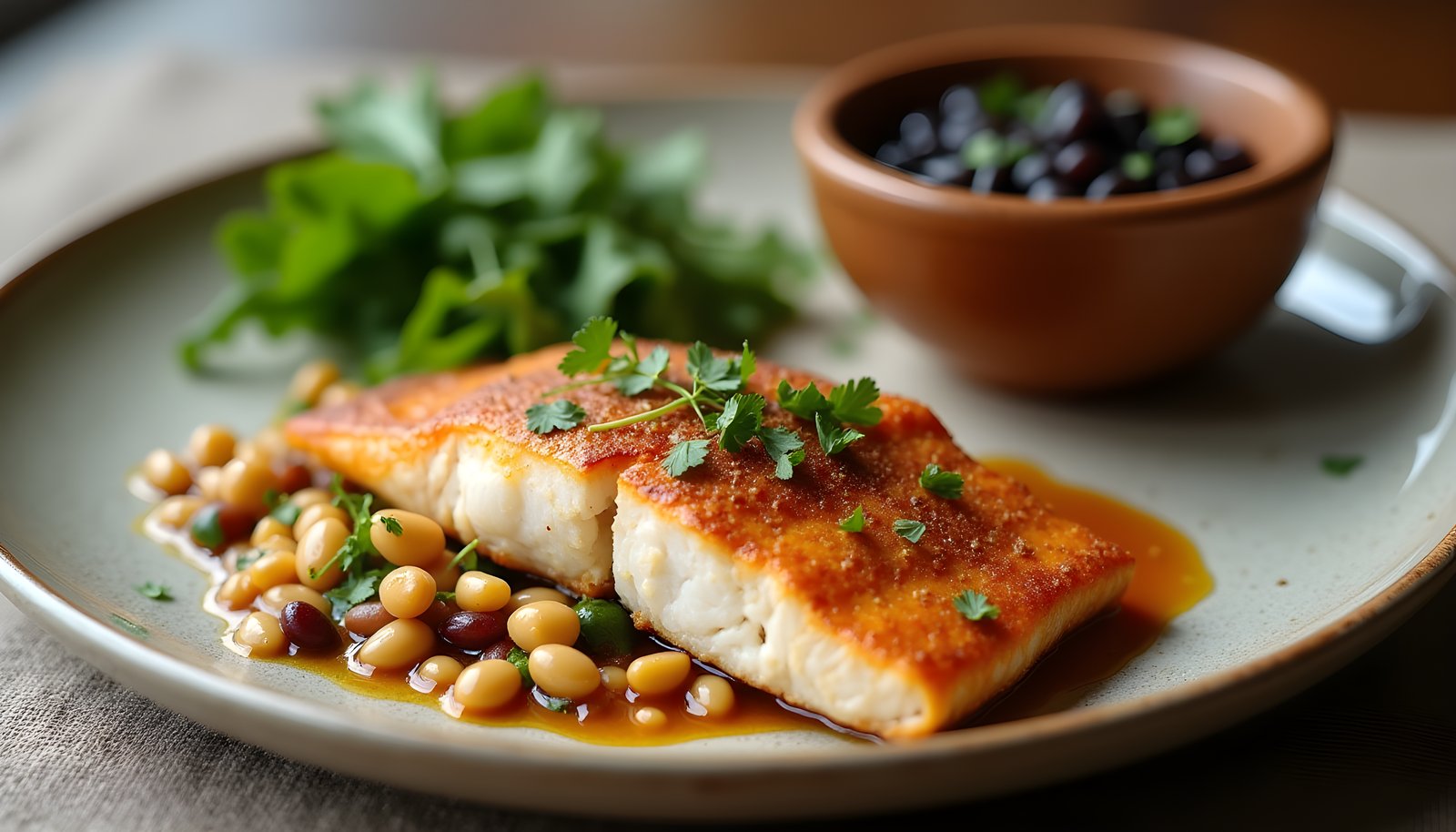
Four ounces of salmon over a cup of chickpeas and roasted vegetables reaches about 45 grams of protein and 12.5 grams of fiber before the vegetables are counted.
Snack
A cup of shelled edamame offers 18.5 grams of protein and 8.1 grams of fiber, a filling bridge between meals.
Easing into more legumes
If you’re eating far less fiber than the CDC’s 22 to 34 grams a day, there’s no need to jump straight to a cup of beans at every meal. Start with a half cup once a day and build from there over a couple of weeks.
Canned beans save a lot of time, and a few spoonfuls stirred into soups, salads or eggs add up quickly.
If extra beans leave your stomach unsettled, our gut health guides explain how to build tolerance one step at a time.
A simple rule for choosing your protein
When you’re deciding what to put on the plate, run through it this way:
- If you can include a legume, make it the main protein or pair it with fish, chicken or tofu.
- If the meal has no legume, choose fish, poultry, eggs or tofu and add vegetables for the fiber.
- If you’re craving red meat, keep it to about once a week and skip the processed kinds.
- Whatever you choose, eat the protein and vegetables before the starch.
Where the evidence stops
The food order study was small: 11 people, two meals each, on the same medication. It shows a real short term effect, but it doesn’t prove that eating protein first will lower HbA1c over months.
The Jenkins trial lasted only three months, and the red meat findings come from observational cohorts. Each piece points the same way, but none settles exactly how much legume or how little red meat is right for you.
Your own meter is the best tool for that. Try a legume based lunch and a meat only lunch on separate days, eat the protein first both times, and compare your two hour readings.
Protein, fiber and diabetes: questions people ask
Is protein good for diabetics?
Yes. Lean protein like fish, poultry, eggs and tofu contains little or no carbohydrate, so it adds fullness without much effect on blood sugar. Harvard notes that the source of protein matters more than the amount.
Does eating protein first lower blood sugar?
It can. In a 2015 Diabetes Care study, eating protein and vegetables before carbohydrates lowered blood glucose by 28.6% at 30 minutes and 36.7% at 60 minutes.
Can lentils replace meat in a diabetes diet?
Yes. A cup of cooked lentils has 17.9 grams of protein and 15.6 grams of fiber, and swapping red meat for legumes and nuts was linked to a 30% lower diabetes risk.
Is chicken good for diabetics?
Yes, in most cases. Chicken breast has about 26 grams of protein per 3 ounces and no carbohydrate, but Harvard links chicken and red meat cooked at high temperatures to higher diabetes risk, so bake or poach it.
How much red meat can a diabetic eat?
Less is better. A 2023 Harvard analysis linked each daily serving of processed red meat to a 46% higher risk of type 2 diabetes, and its senior author suggested about one serving a week as a reasonable limit.
Is tofu good for blood sugar control?
Yes. Firm tofu has 9 grams of protein per 100 grams and very little carbohydrate. Pair it with edamame or beans to add the fiber it lacks.
What is a good high fiber protein breakfast for diabetics?
Two eggs with half a cup of black beans give about 20 grams of protein and 7.5 grams of fiber. Eat the eggs and beans before any toast.
Sources
- U.S. Department of Agriculture, Agricultural Research Service. “FoodData Central” (lentils, split peas, black beans, chickpeas, edamame, tofu, chicken breast, eggs, all cooked or prepared). 2024. fdc.nal.usda.gov
- Centers for Disease Control and Prevention. “Fiber: The Carb That Helps You Manage Diabetes.” 2024. cdc.gov
- Jenkins DJA, Kendall CWC, Augustin LSA, et al. “Effect of Legumes as Part of a Low Glycemic Index Diet on Glycemic Control and Cardiovascular Risk Factors in Type 2 Diabetes Mellitus: A Randomized Controlled Trial.” Archives of Internal Medicine. 2012. doi.org/10.1001/2013.jamainternmed.70
- Shukla AP, Iliescu RG, Thomas CE, Aronne LJ. “Food Order Has a Significant Impact on Postprandial Glucose and Insulin Levels.” Diabetes Care. 2015. doi.org/10.2337/dc15-0429
- Harvard T.H. Chan School of Public Health. “Red meat consumption associated with increased type 2 diabetes risk.” 2023. hsph.harvard.edu
- Harvard T.H. Chan School of Public Health. “Protein.” The Nutrition Source. 2025. nutritionsource.hsph.harvard.edu