
In this article
- How much protein muscle building takes
- Where fiber fits in a lean muscle diet
- High fiber protein for muscle, serving by serving
- Lean meats and dairy: the protein anchors
- Legumes and soy: the two for one foods
- Muscle plates that bring both
- A training day that covers both
- Recovery meals for a training week
- Common mistakes in strength training nutrition
- Evening protein and recovery meals
- Ramping up fiber during a training block
- The bulking edge case
- Questions about fiber and muscle building
- Sources
An 80 kilogram lifter aiming for 1.6 grams of protein per kilogram needs about 128 grams a day. Reach it with chicken breast, eggs and whey alone and the day’s fiber total can sit near zero.
That gap is common in strength training nutrition, and it’s easy to fix. High fiber protein for muscle simply means adding legumes and soy alongside the lean meats and dairy you already eat.
Here’s how the most useful foods compare, how to hit the protein doses the research supports, and a training day that covers both targets.
How much protein muscle building takes
The International Society of Sports Nutrition (ISSN) says a daily intake of 1.4 to 2.0 grams per kilogram of body weight is enough for most exercising people to build and maintain muscle. It adds that intakes above 3.0 grams per kilogram may help body composition in resistance trained people.
Per meal, the ISSN suggests about 0.25 grams per kilogram, or 20 to 40 grams, spread every 3 to 4 hours. Each dose should ideally contain 700 to 3,000 mg of leucine, an amino acid the ISSN singles out for its role in muscle protein synthesis.
The ISSN also says whole foods can meet these needs, and that supplements are simply a practical backup. That’s good news for anyone who’d rather eat their protein than drink it.
Where fiber fits in a lean muscle diet
Fiber doesn’t build muscle directly, but it still matters for a lifter. Mayo Clinic links a high fiber diet with healthier bowel movements, lower cholesterol and steadier blood sugar.
Mayo Clinic puts daily needs at about 38 grams for men and 25 grams for women aged 50 or younger. Those targets don’t shrink just because protein goes up, so the fiber has to come from somewhere on the plate.
High fiber protein for muscle, serving by serving
This table lists common muscle building foods with USDA FoodData Central values. It’s sorted by protein, with fiber alongside.
| Food (USDA) | Serving | Protein | Fiber | Calories |
|---|---|---|---|---|
| Chicken breast, roasted | 4 oz | 35.1 g | 0 g | 187 |
| Cottage cheese, 2% | 1 cup | 24 g | 0 g | 185 |
| Firm tofu | 1/2 cup | 21.8 g | 2.9 g | 181 |
| Edamame, cooked | 1 cup | 18.4 g | 8.1 g | 188 |
| Lentils, cooked | 1 cup | 17.9 g | 15.6 g | 230 |
| Greek yogurt, plain nonfat | 170 g | 17.3 g | 0 g | 100 |
| Split peas, cooked | 1 cup | 16.3 g | 16.3 g | 231 |
| Black beans, cooked | 1 cup | 15.2 g | 15.0 g | 227 |
| Chickpeas, cooked | 1 cup | 14.5 g | 12.5 g | 269 |
| Eggs | 2 large | 12.6 g | 0 g | 155 |
| Chia seeds | 1 oz | 4.7 g | 9.8 g | 138 |
Chicken, cottage cheese and Greek yogurt are the most protein dense, but none of them brings fiber. Lentils, split peas and black beans deliver roughly equal grams of both.
Not sure what your own fiber target is? Our fiber calculator works it out for your age and sex in a few seconds.
Lean meats and dairy: the protein anchors
A 4 ounce chicken breast gives 35 grams of protein for under 190 calories, which clears the ISSN’s 20 to 40 gram range in a single portion. Cottage cheese and Greek yogurt do much the same for snacks and breakfasts.
Harvard’s Nutrition Source encourages choosing protein sources with a healthy overall “package,” favoring poultry, fish, beans and nuts over red and processed meats. These anchors fit that advice, but they need a plant partner to cover fiber.
Legumes and soy: the two for one foods
Legumes count toward both totals at once. One cup of lentils adds nearly 18 grams of protein and 15.6 grams of fiber, which is about 41% of a man’s daily fiber target from Mayo Clinic.
Soy is the most protein dense plant option. Half a cup of firm tofu gives 21.8 grams of protein, and a cup of edamame offers 18.4 grams with 8.1 grams of fiber.
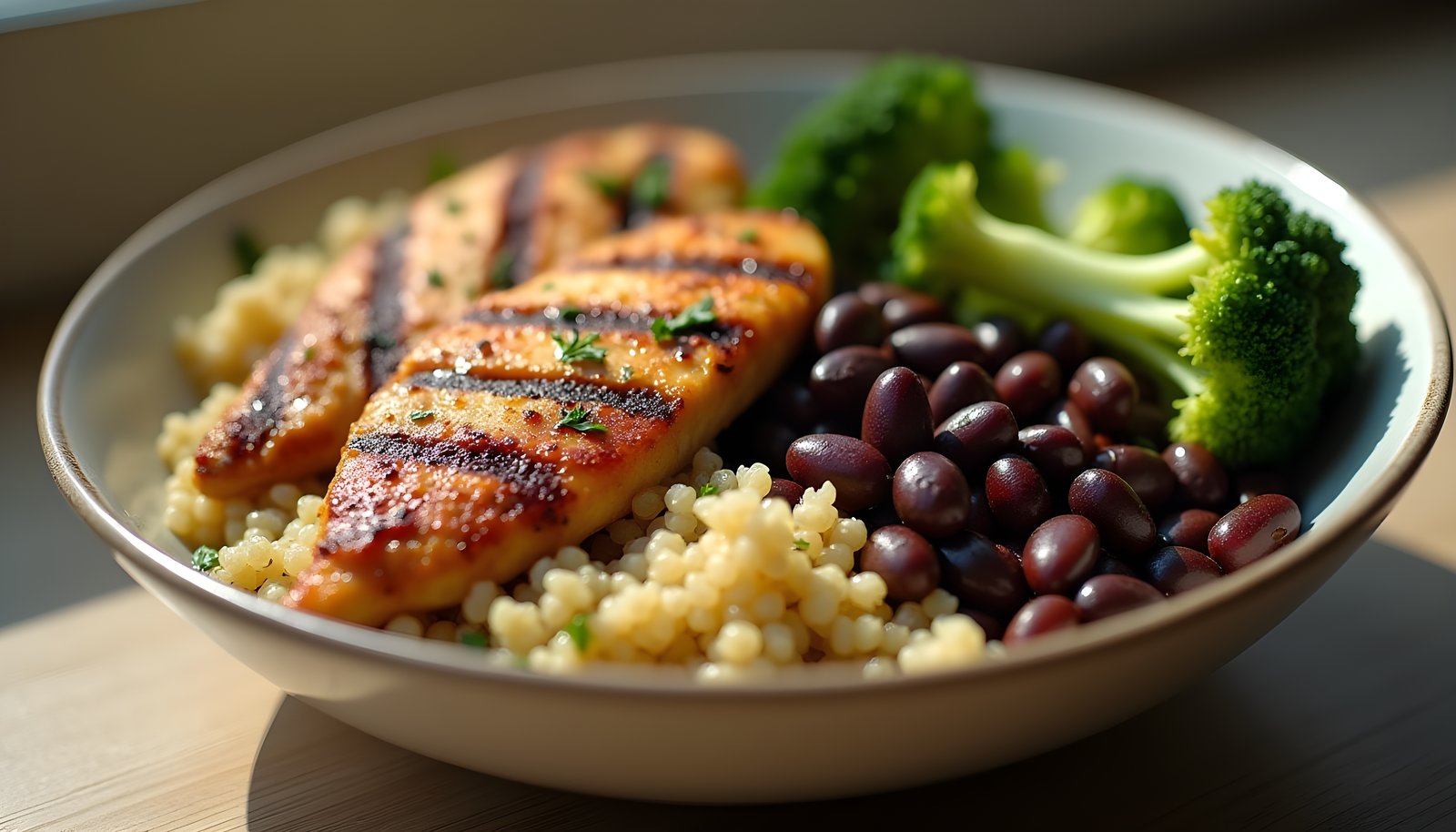
Adding a cup of beans or lentils to a chicken plate can take a 35 gram protein meal to about 50 grams. It also adds 12 to 16 grams of fiber you’d otherwise miss.
Muscle plates that bring both
These combinations land in or above the ISSN’s per meal protein range while adding real fiber:
- Chicken and chickpeas: 4 oz chicken breast with 1 cup chickpeas gives about 49.7 grams of protein and 12.5 grams of fiber.
- Chicken and edamame: 4 oz chicken breast with 1 cup edamame gives about 53.5 grams of protein and 8.1 grams of fiber.
- Tofu and lentils: half a cup of tofu with 1 cup lentils gives about 39.7 grams of protein and 18.5 grams of fiber.
- Yogurt and chia: 170 grams of Greek yogurt with 1 ounce of chia gives about 22 grams of protein and 9.8 grams of fiber.
Want more recovery meals built around these pairings? Our recipe eBooks are packed with easy, high fiber dinners.
A training day that covers both
Here’s a sample day for that 80 kilogram lifter, spread across four meals to match the ISSN’s every 3 to 4 hours guidance:
| Meal | What’s on the plate | Protein | Fiber |
|---|---|---|---|
| Breakfast | 170 g Greek yogurt + 1 oz chia | 22.0 g | 9.8 g |
| Lunch | 4 oz chicken breast + 1 cup chickpeas | 49.7 g | 12.5 g |
| After training | 2 eggs + 1/2 cup edamame | 21.8 g | 4.1 g |
| Dinner | 1/2 cup tofu + 1/2 cup lentils | 30.8 g | 10.7 g |
The day totals about 124 grams of protein, close to the 128 gram goal, and about 37 grams of fiber. That lands almost exactly on Mayo Clinic’s 38 gram target for men.
Each meal sits in the 20 to 40 gram range or above, so no single dose is too small to count.
Protein and fiber per 100 calories
If you’re cutting, calories per gram start to matter. Chicken breast gives about 18.8 grams of protein per 100 calories and Greek yogurt about 17.3, but both offer no fiber.
Tofu delivers about 12 grams of protein and 1.6 grams of fiber per 100 calories, and edamame about 9.8 and 4.3. Lentils come in near 7.8 grams of protein and 6.8 grams of fiber, the most even split on the list.
Recovery meals for a training week
Batch cooking makes these plates realistic on busy weeks. A pot of lentils and a tray of chickpeas take little hands on time and can anchor several meals.
- Cook once: a big batch of lentils or chickpeas and a few chicken breasts at the start of the week.
- Mix and match: chicken with chickpeas one day, lentils with tofu the next.
- Keep quick add ons: frozen edamame, chia seeds and Greek yogurt cover snacks and breakfasts.
- Check the plate: each meal should have one protein anchor and one fiber source.
That rhythm keeps protein doses steady across the day without relying on shakes for every meal.
Common mistakes in strength training nutrition
A few habits quietly push fiber down when protein goes up:
- Shakes for every meal: most powders bring little fiber unless it’s added, so whole food meals matter.
- Beans only at dinner: one serving rarely covers a lifter’s fiber target, so spread legumes across two meals.
- Swapping carbs for more meat: cutting beans and grains to make room for chicken also cuts fiber.
The fix in each case is the same pairing idea: keep the protein, and add a legume, seed or soy food beside it.
Evening protein and recovery meals
The ISSN notes that 30 to 40 grams of casein protein before sleep can raise overnight muscle protein synthesis and metabolic rate. Casein usually comes as a powder, but an evening dairy snack is a whole food alternative.
A cup of cottage cheese supplies 24 grams of protein, and stirring in an ounce of chia adds 9.8 grams of fiber. If you want to reach the 30 gram mark, a scoop of casein powder is the practical option the ISSN describes.
Ramping up fiber during a training block
If your current diet is low in fiber, jumping straight to 37 grams can upset your stomach. Mayo Clinic recommends increasing fiber gradually over a few weeks and drinking plenty of water.
A practical plan is to add one legume serving a day for the first week, then a second the next. Training days are a good time to keep portions moderate around your session if large meals sit heavily.
If digestion tends to slow down when your protein goes up, our gut health guides explain how to keep things comfortable.
The bulking edge case
Fiber’s biggest strength can also be a catch when you’re trying to gain weight. Mayo Clinic notes that high fiber foods tend to be more filling, so you’re likely to eat less and stay satisfied longer.
That’s ideal when cutting, but it can make a calorie surplus harder to reach. If you’re struggling to eat enough, lean on denser options like tofu, edamame and dairy, and keep the biggest bean portions for days when appetite isn’t the problem.
Questions about fiber and muscle building
What is the best high fiber protein for muscle?
Lentils are a strong choice, with 17.9 grams of protein and 15.6 grams of fiber per cooked cup. Pair them with chicken, eggs or dairy to raise the protein further.
How much protein do I need to build muscle?
The ISSN says 1.4 to 2.0 grams per kilogram of body weight per day is enough for most exercising people, spread in doses of about 20 to 40 grams.
Does chicken have fiber?
No. A 4 ounce roasted chicken breast has about 35 grams of protein and 0 grams of fiber, so add beans, lentils or vegetables for fiber.
Can fiber help muscle recovery?
Not directly, but it supports overall health. Mayo Clinic links fiber with healthier digestion, cholesterol and blood sugar, which matter during hard training.
Is tofu good for building muscle?
Yes. Half a cup of firm tofu gives 21.8 grams of protein and 2.9 grams of fiber, fitting the ISSN’s 20 to 40 gram per meal range when paired with legumes.
Can too much fiber make bulking harder?
It can. Mayo Clinic notes fiber rich foods are more filling, which may make it harder to eat enough calories if your appetite is low.
What should I eat before bed for muscle?
The ISSN says 30 to 40 grams of casein before sleep can boost overnight muscle protein synthesis. Cottage cheese is a dairy option, and chia adds fiber.
Sources
- Jäger R, Kerksick CM, Campbell BI, et al. “International Society of Sports Nutrition position stand: protein and exercise.” Journal of the International Society of Sports Nutrition. 2017. jissn.biomedcentral.com
- U.S. Department of Agriculture, Agricultural Research Service. “FoodData Central” (chicken breast, roasted 171477; cottage cheese 2% 328841; firm tofu 172475; edamame; lentils; Greek yogurt 170894; split peas; black beans; chickpeas; eggs 173424; chia seeds). 2024. fdc.nal.usda.gov
- Mayo Clinic Staff. “Dietary fiber: Essential for a healthy diet.” Mayo Clinic. 2025. mayoclinic.org
- Harvard T.H. Chan School of Public Health. “Protein.” The Nutrition Source. 2023. hsph.harvard.edu