EAT YOUR WAY TO MORE FIBER

The Best High-Fiber Foods, Group by Group.

Fruits, vegetables, grains, legumes, nuts and more – discover which everyday foods pack the most fiber, how much they deliver, and simple ways to eat more of them every day.

“Getting enough fiber doesn’t require a supplement – – it starts with real food on your plate, and small swaps add up fast.”
Calculator icon

How Much Fiber Do You Actually Need?

Most people have no idea. Enter your age, gender, and activity level — get your personalized daily target in seconds.

Where the Most Fiber Lives

Start with the foods that pack the biggest fiber punch.

Highest Fiber Foods

The everyday foods that deliver the most fiber per serving, ranked and ready to add to your plate.

Superfoods with Fiber

Nutrient-dense whole foods that bring fiber plus vitamins, minerals, and antioxidants.

Top Fiber-Enriched Foods

Packaged foods with added fiber which ones are genuinely worth it, and what to check on the label.
101 Title

Sub Title

New to fiber? Start here.

Learn the types of fiber, what each one does, and which foods are richest in them.

ADVERTISEMENT
728 × 90
Food First, Always

The Best Fiber Comes From Your Plate

A here’s no supplement that beats a plate of real food. Whole foods deliver fiber alongside vitamins, minerals, antioxidants, and water — a package no powder can match. The good news is that hitting your daily target is easier than it sounds once you know where fiber actually hides.

Beans and legumes are fiber powerhouses; a single cup can cover more than half your day. Whole grains, fruit eaten with the skin, vegetables, nuts, and seeds all stack up quickly. Variety matters too — different foods carry different types of fiber, so a mixed plate feeds a wider range of gut bacteria than any single food or supplement could.
“You don’t need exotic superfoods to hit your fiber goal — beans, oats, berries, and a handful of nuts will get most people there.”

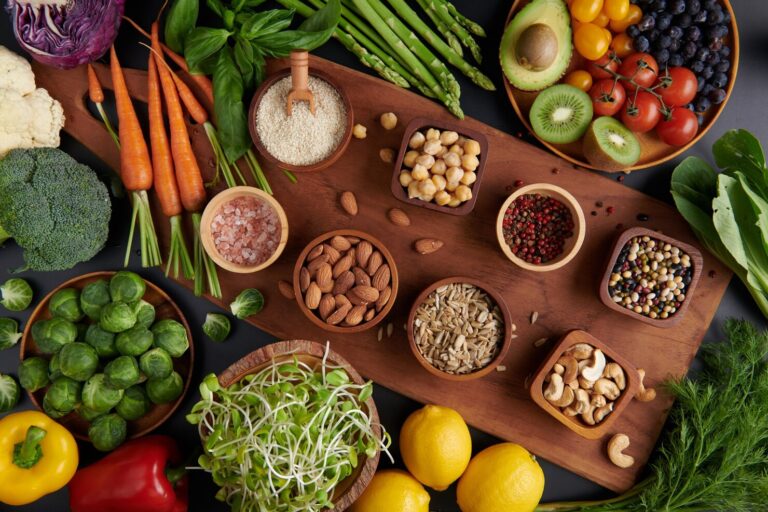
That’s why we organize everything by food group. Browse fruits, vegetables, grains, legumes, nuts and seeds, dairy and alternatives, or proteins to see exactly how much fiber each delivers — with the standout picks in every category called out for you.

Not sure where to start? Begin with the highest-fiber foods, then explore the food group you eat most — small, consistent swaps are what move your daily total.

Browse Fiber by Food Group

The foods that pack the most fiber per serving, ranked and compared, with easy high-impact swaps.

Chia, flax, berries, avocado and more — nutrient-dense foods that deliver fiber and much more.

Cereals, breads, bars and snacks with added fiber — how they compare to whole foods, and the best picks.

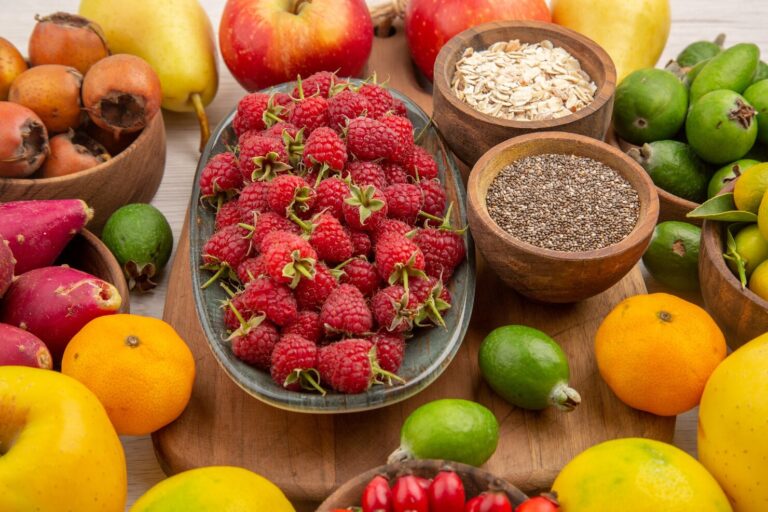
Berries, pears, apples with the skin, and more — the fruits that deliver the most fiber, plus how to work them into your day.

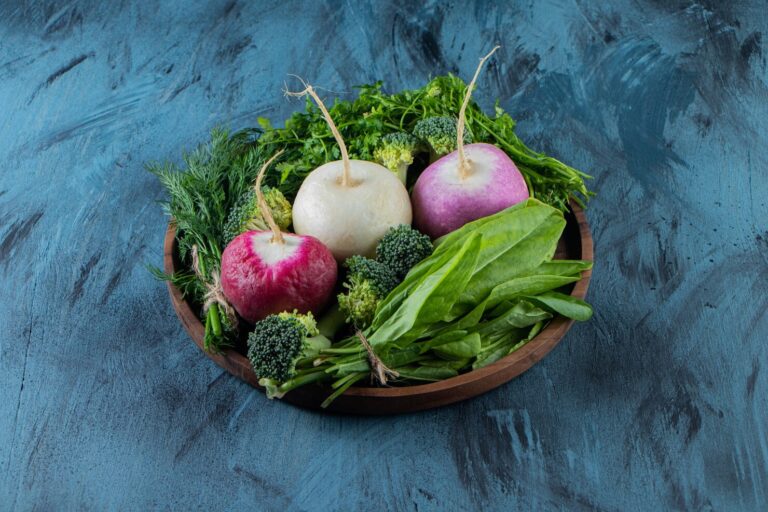
From artichokes to Brussels sprouts, the vegetables that pack the biggest fiber punch per serving.

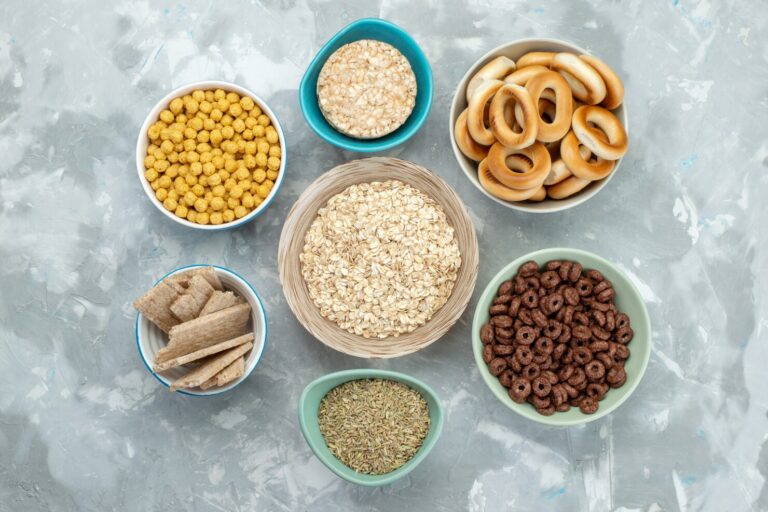
Oats, whole wheat, barley, and quinoa — how to choose carbs that add fiber instead of stripping it away.

The undisputed champions. Lentils, chickpeas, and black beans can cover half your daily fiber in a single cup.

Chia, flax, almonds, and more — small servings with big fiber returns, plus healthy fats and protein.

Dairy has none — so which plant milks, yogurts, and alternatives actually bring fiber to the table?

Animal proteins have zero fiber. Here’s how to build high-fiber meals around them with the right plant-based sides.

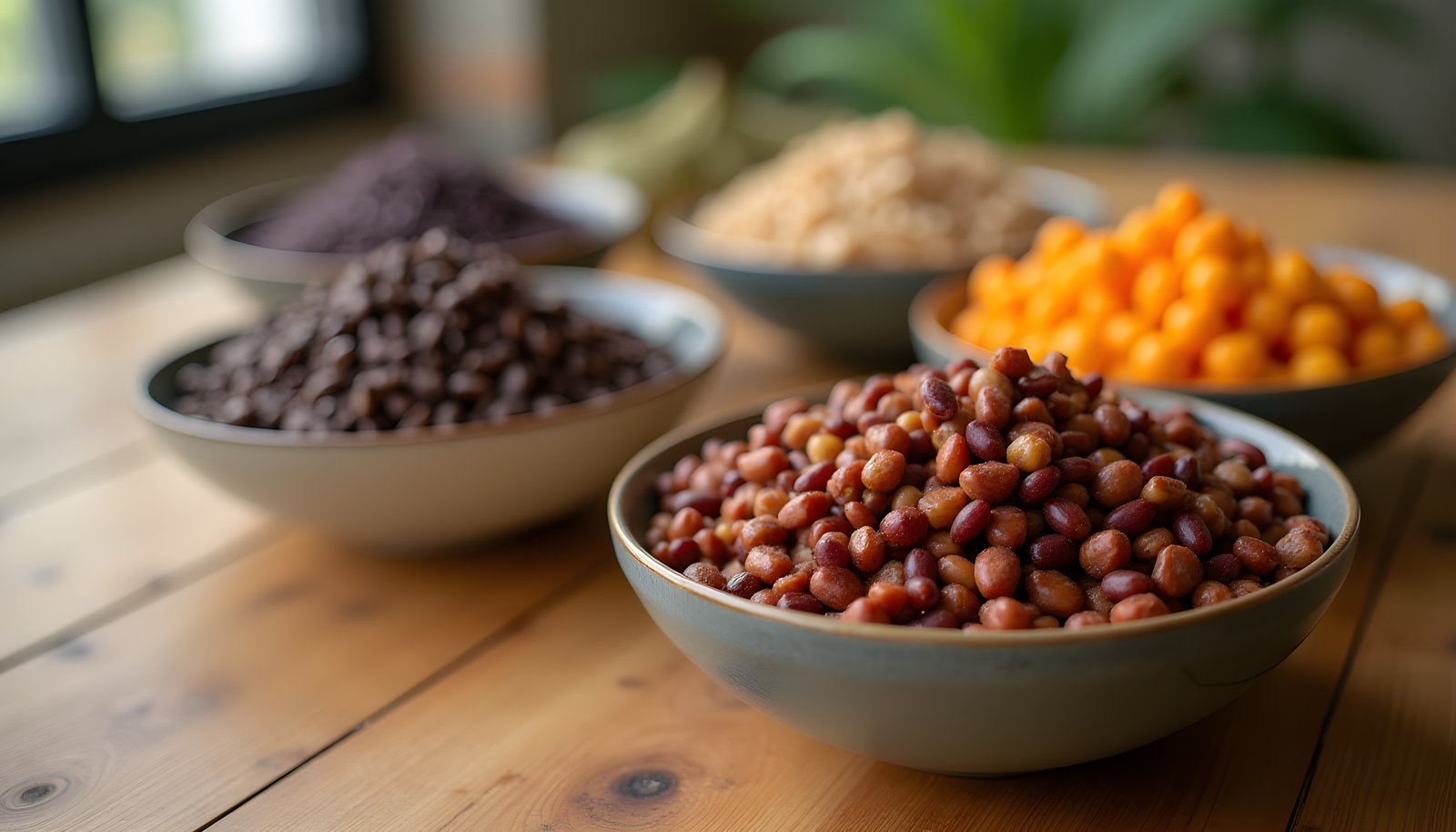
Foods high in fiber and protein in bowls on a wooden table: lentils, black beans, chickpeas, red beans and seeds
What foods are high in fiber and protein? Beans, split peas and lentils lead, with about 15 to 18 grams of each per cooked cup. Edamame, chia, whole pumpkin seeds, oats and quinoa follow, while meat, fish and eggs bring protein but no fiber at all.
Egg breakfast with fiber: two fried eggs on whole grain toast with fresh spinach leaves and sliced avocado on a plate
Do eggs have fiber? No: a large egg has 0 grams of fiber, because fiber only comes from plants. It does bring 6 grams of high quality protein for about 70 calories, so the fiber has to come from whatever you put next to it.
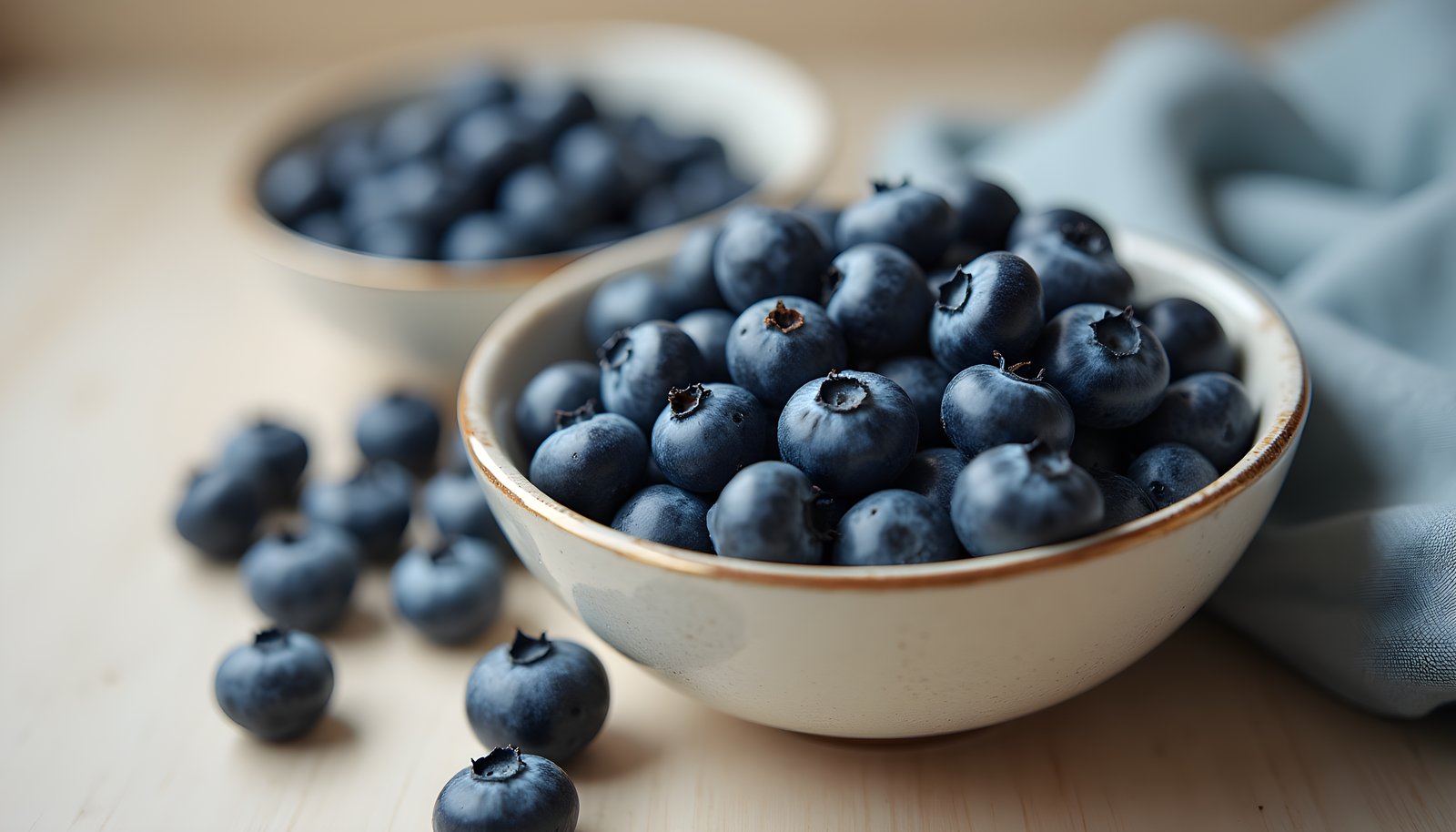
Blueberry fiber shown with a bowl of fresh blueberries, a second small bowl of berries and loose blueberries nearby
Do blueberries have fiber? Yes: a cup of fresh blueberries has about 3.6 grams for 84 calories. That’s less than raspberries or blackberries, but frozen wild blueberries carry more fiber by weight, and the berries’ anthocyanins bring benefits of their own.
Popcorn fiber shown with a white bowl heaped with fluffy air-popped popcorn and a few loose pieces on a light table
Does popcorn have fiber? Yes: 3 cups of air popped popcorn have about 3.5 grams, more than a slice of whole wheat bread, for under 100 calories. How you pop it and what you pour on top decide whether it stays a smart snack.
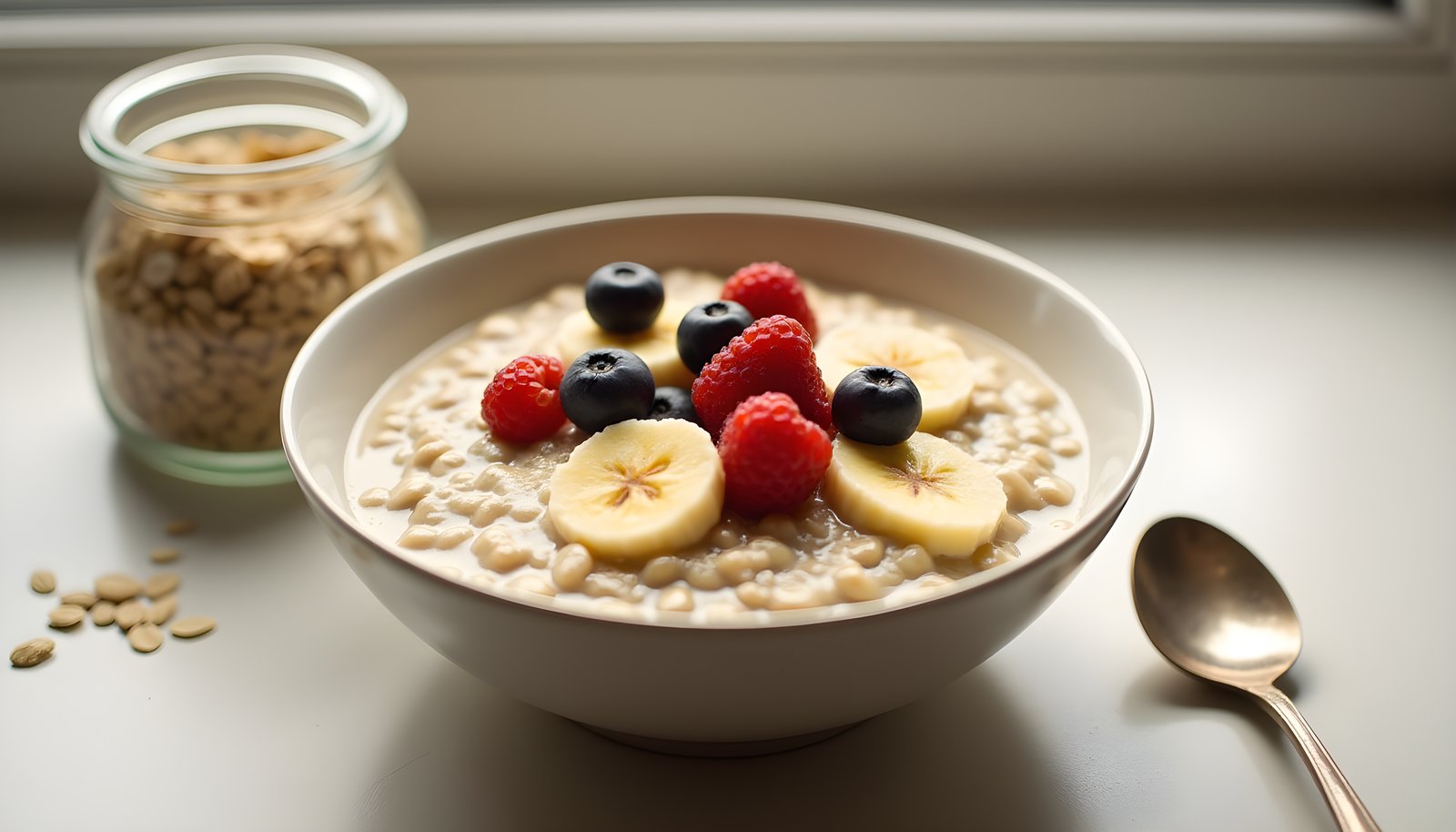
Oatmeal fiber shown in a bowl of creamy oatmeal topped with banana slices and berries beside a glass jar of rolled oats
Does oatmeal have fiber? Yes: a cup of cooked oatmeal has about 4 grams, and much of it is beta-glucan, the soluble fiber linked to lower cholesterol. Steel cut, rolled and instant oats carry similar fiber, but they don’t treat your blood sugar the same way.
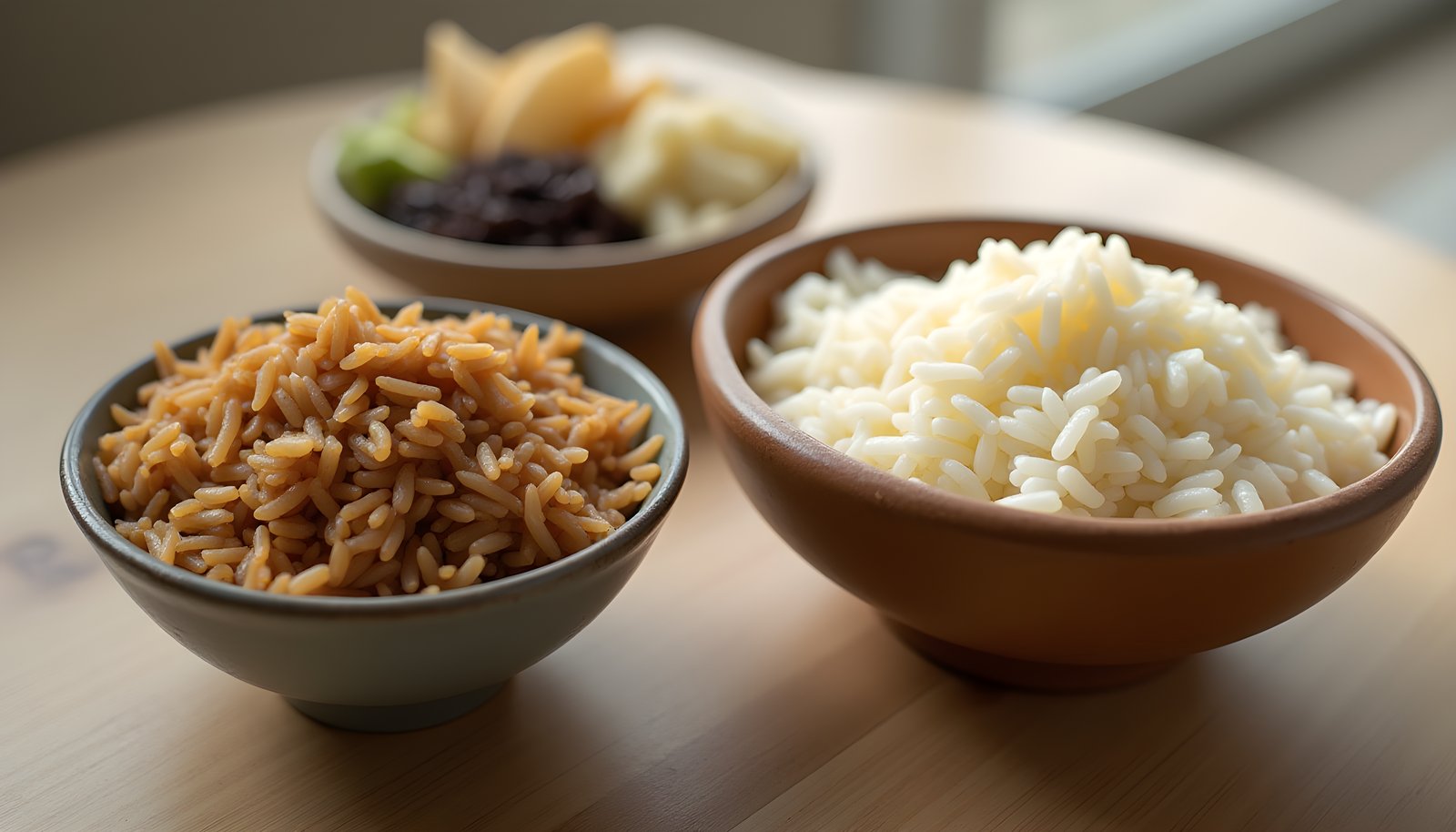
Rice fiber shown with a bowl of cooked brown rice, a bowl of fluffy white rice and a small dish of dark wild rice behind
Does rice have fiber? Only a little if it’s white: a cup of cooked white rice has about 0.6 grams, while a cup of brown rice has about 3 to 3.5 grams. Wild, black and red rice keep their bran too, so the type you pick decides almost everything.
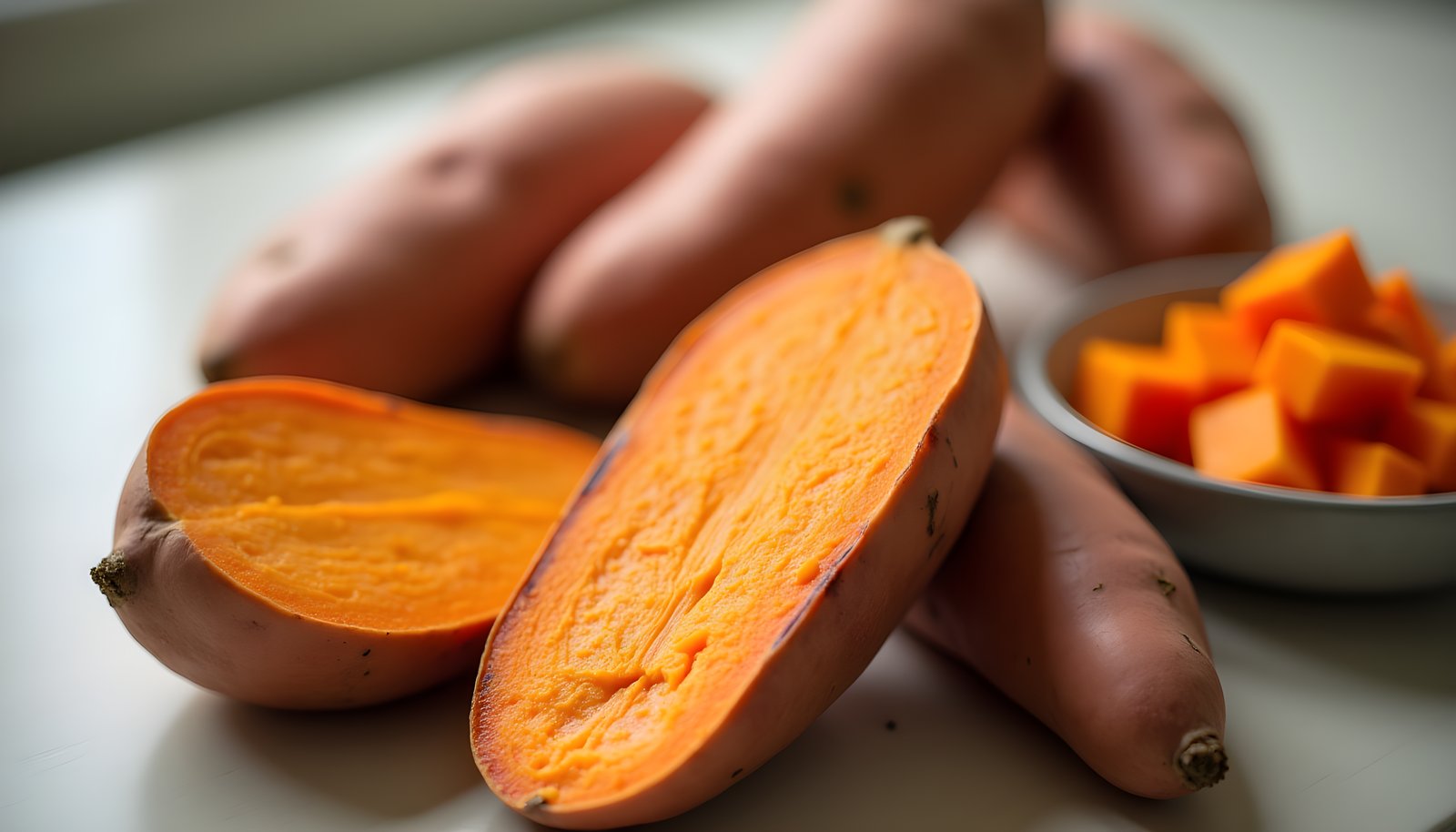
Sweet potato fiber shown with a halved roasted sweet potato, whole raw sweet potatoes and a small bowl of orange cubes
Do sweet potatoes have fiber? Yes: a cup of cooked sweet potato has 6.3 grams, and a medium raw one has about 4 grams. How you cook it matters even more for your blood sugar than for the fiber count.
Potato fiber shown with a baked russet potato split open in its skin, whole raw potatoes and small dishes of wedges
Do potatoes have fiber? Yes: a medium baked potato with the skin on has about 3.9 grams, and most of that sits in the peel. How you cook it, and whether you let it cool, also changes how its starch behaves in your gut.
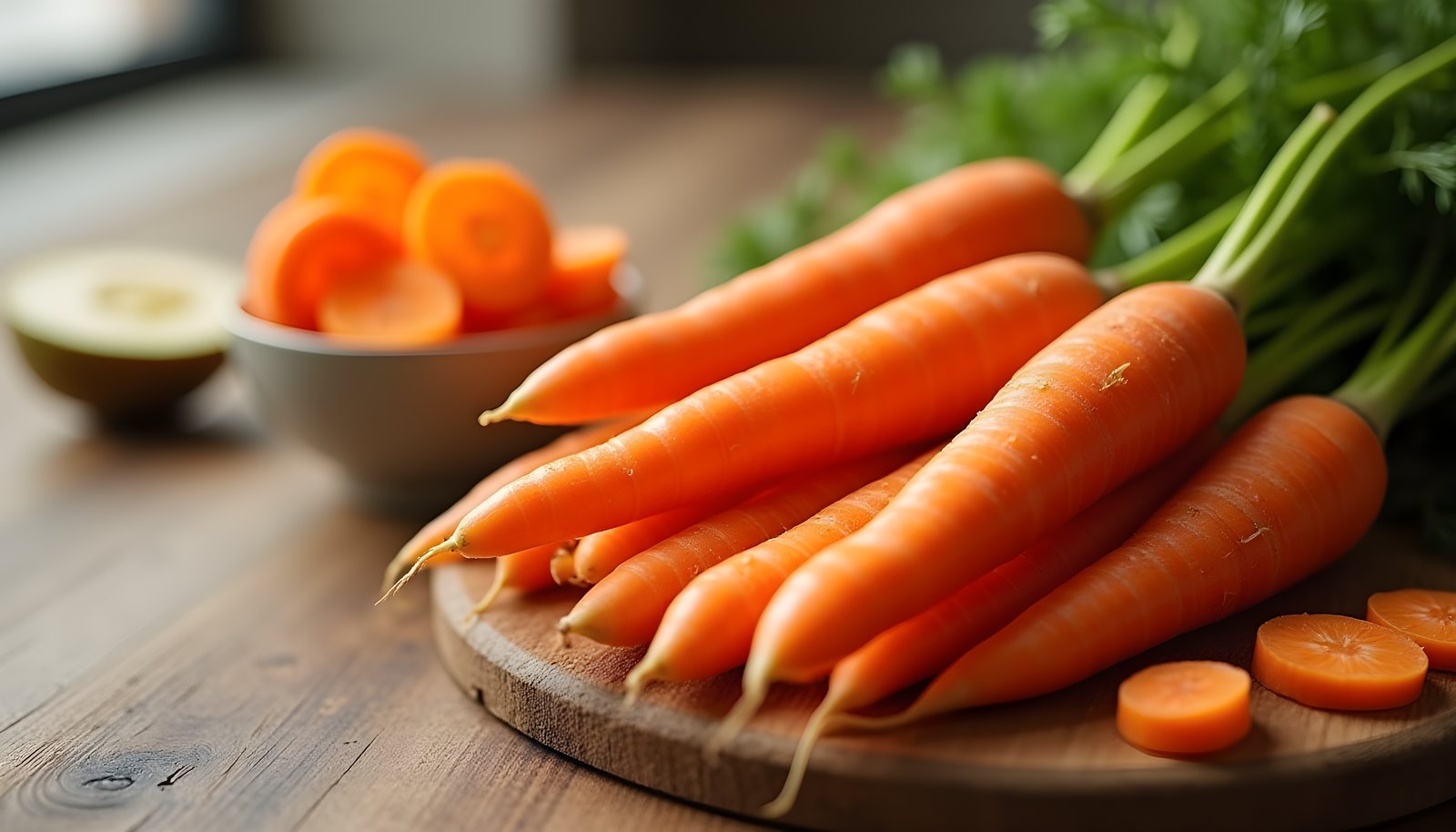
Carrot fiber shown with fresh orange carrots and green tops on a board, a bowl of cooked carrot coins and loose slices
Do carrots have fiber? Yes: one medium carrot has about 2 grams, a cup of chopped raw carrots has 3.6 grams, and a cup of cooked carrots has 4.8 grams. Cooking doesn’t strip that fiber away, and your gut bacteria ferment nearly all of it.
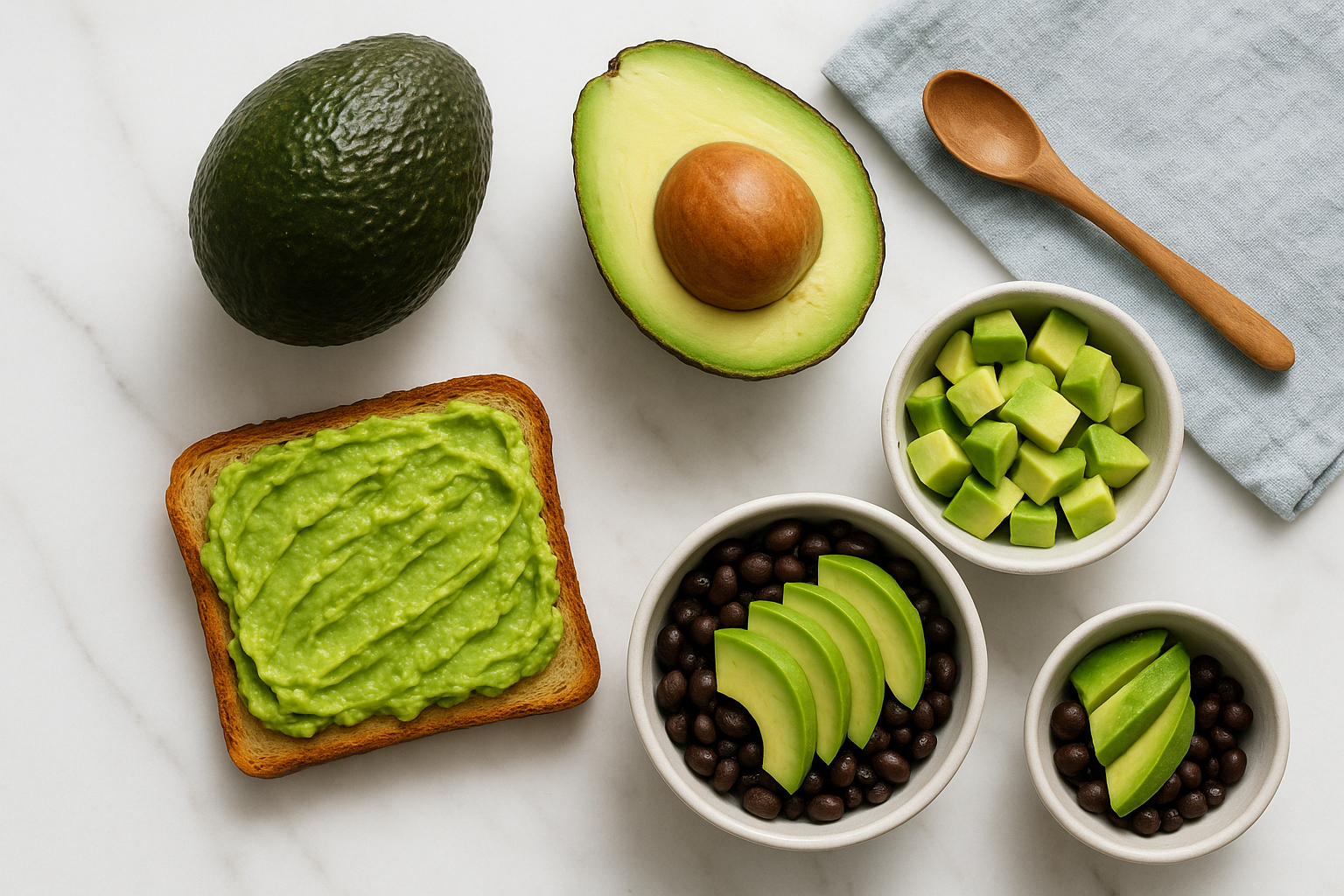
Avocado fiber guide with a whole and halved Hass avocado, diced avocado, avocado toast and black beans topped with slices
Does avocado have fiber? Yes: half a cup of avocado has 5 grams, and a whole medium avocado has roughly 13 grams. That makes avocado one of the most fiber rich fruits you can eat, with almost no sugar.

ADVERTISEMENT
728 × 90

Guides & Recipe Books

Go deeper with our evidence-based ebooks and high-fiber recipe collections.
VOLUME ONE

High-Fiber Recipes

60 Recipes · 8g+ Per Serving
Recipe Book

60 High-Fiber Recipes Vol. 1

THE LIST

Top 100 Fiber Foods

Ranked · Grams Per Serving
Ebook

The Top 100 High-Fiber Foods

MEAL PREP

7-Day Fiber Plan

Whole Foods · 30g+ Daily
Ebook

The 7-Day High-Fiber Meal Plan

ADVERTISEMENT
728 × 90

Get the Weekly Fiber Digest

New research, food swaps, and exclusive discounts — every Thursday.
No spam, ever. Unsubscribe anytime.