
Our 7 Picks for the Best Resistant Starch Fiber Supplements
We kept products that list resistant starch, green banana flour or resistant potato starch. We left out a soluble corn fiber powder, an inulin powder and a wheat dextrin powder.
Sponsored
MANUBOLU Green Banana Powder
Single-ingredient green banana flour, lab tested at 39 g RS2 per 100 g.
$$$$
- 39% resistant starch: Lab tested at 39 grams of RS2 resistant starch per 100 grams.
- High in fiber: 76 grams of dietary fiber per 100 grams, with both soluble and insoluble fiber.
- One ingredient: Unsweetened green banana flour with no fillers, gums or additives.
- Keep it cold: RS2 breaks down with heat, so stir it into cold foods or after cooking.
- Diet friendly: Gluten free, vegan and paleo friendly.
MRM Organic Green Banana Powder
Organic green banana powder with resistant starch, 40 servings.
$$$$
- Green banana: Made from unripe bananas, a natural source of resistant starch.
- Prebiotic fiber: Resistant starch feeds the helpful bacteria in your gut.
- Minerals: Also supplies magnesium and manganese.
- Flour swap: Works as a gluten-free flour substitute in pancakes and bread.
- Certified: USDA Organic, non-GMO and vegan.
Dr. Christianson RS Complete
Resistant starch powder with green banana flour and potato starch.
$$$$
- Resistant starch blend: Organic green banana flour, organic potato starch and larch tree powder.
- RS2 starch: A type 2 resistant starch that passes to the colon to feed gut bacteria.
- Doctor-formulated: Created by naturopathic physician Dr. Alan Christianson.
- Clean label: Non-GMO, gluten free and dairy free, with no additives or fillers.
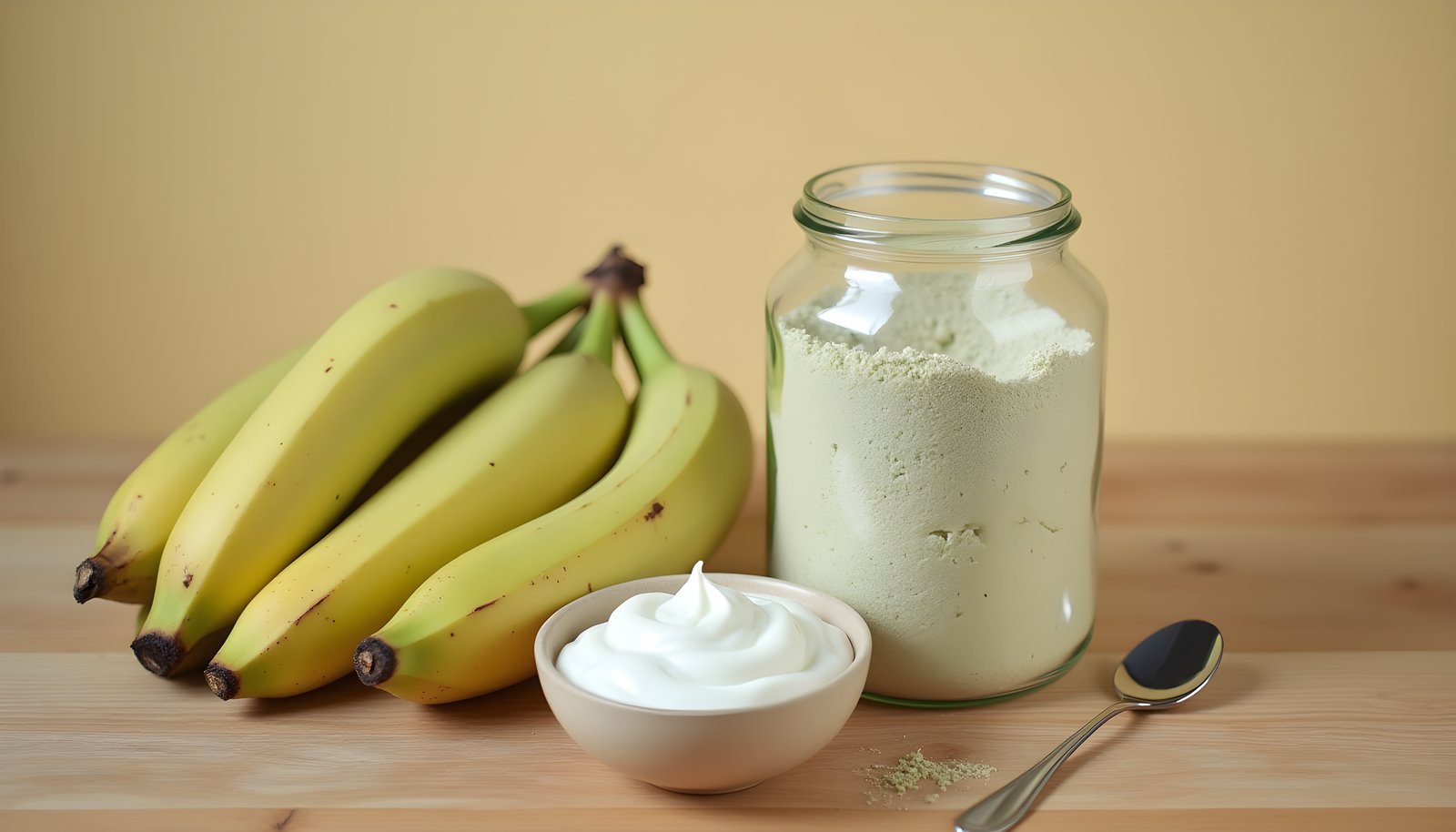
- Flavorless: Blends into water, smoothies or yogurt with no taste or grit.
Designs for Health Fiber Prebiotic Complete RS
Two RS2 sources: organic green banana flour and organic potato starch.
$$$$
- Two RS2 sources: Organic green banana flour and organic potato starch powder.
- Short-chain fatty acids: Resistant starch is fermented in the colon into short-chain fatty acids.
- Start low: The label suggests starting with a smaller dose and building up.
- Mixing: Best mixed with a blender or shaker bottle, or into yogurt.
- Diet friendly: Gluten free and dairy free.
Momentous Fiber+ Cinnamon
Cinnamon psyllium, resistant potato starch and rice bran blend, 6 g.
$$$$
- Multi-source blend: Psyllium husk, resistant potato starch and rice bran, with 6 grams of fiber per serving.
- Resistant starch: Solnul resistant potato starch ferments in the colon into short-chain fatty acids like butyrate.
- Post-meal support: Soluble fiber helps slow carbohydrate absorption after meals.
- Regularity: Psyllium and rice bran support stool hydration and comfortable, regular digestion.
- Flexible timing: Take it whenever you can be most consistent, such as with breakfast or in a protein shake.
BioTrust Ageless Multi-Fiber
Six-fiber blend with Solnul resistant potato starch, PHGG, oat fiber and citrus pectin.
$$$$
- Six fiber sources: Solnul resistant potato starch, PHGG, acacia, oat fiber, baobab and citrus pectin.
- 6 g per serving: One scoop gives 6 grams of fiber.
- Citrus flavor: Naturally sweetened, with no artificial sweeteners.
- Keep it cool: Don’t add it to hot liquids, which helps preserve the resistant starch.
- Tested: Made in the USA in a GMP-certified facility and third-party lab tested.
Bio.me Daily Prebiotic Fiber Powder
Unflavored resistant potato starch and PHGG powder, 7 g per serving.
$$$$
- Two prebiotics: A blend of resistant potato starch and partially hydrolyzed guar gum (PHGG).
- 7 g soluble fiber: Each serving gives 7 grams of soluble fiber.
- Slow fermenting: Fibers that ferment slowly, which tends to mean less gas and bloating.
- Unflavored: Mixes into water, coffee, smoothies or food without changing the taste.
- Gut lining support: Feeds the bacteria that make butyrate, a fuel for the cells lining your colon.
What Is Resistant Starch?
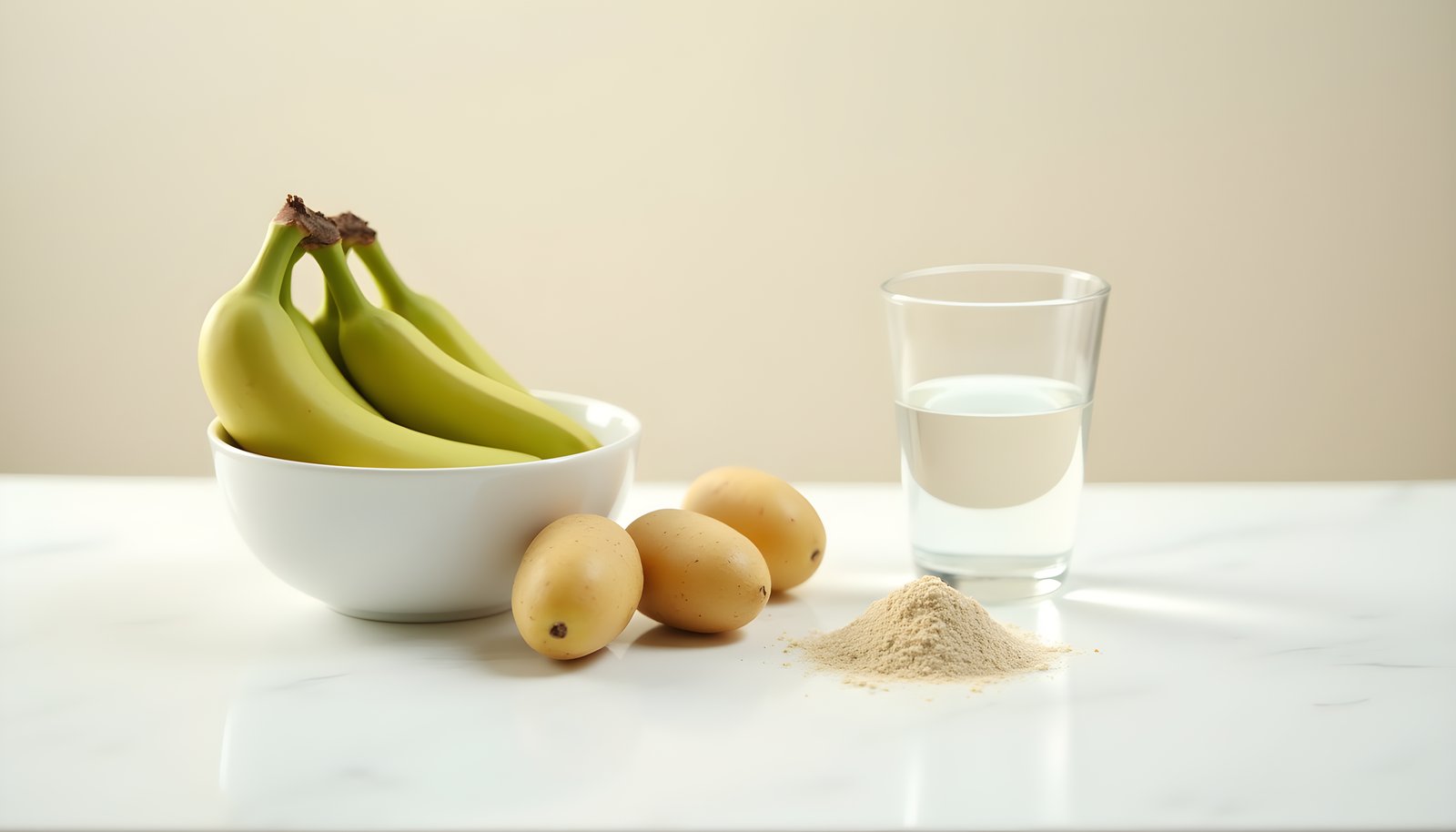
The best resistant starch fiber supplements use green banana flour, raw potato starch or a blend of both. Resistant starch is a type of starch that your small intestine can’t digest, so it acts like fiber.
Most starch breaks down into sugar quickly. Resistant starch passes through to the large intestine, where gut bacteria ferment it into short-chain fatty acids, mainly butyrate.
There are several types. The supplements here mostly use RS2, the kind found in raw potato starch and unripe bananas. RS2 loses its resistance when heated, so it has to be taken cold or at room temperature.
You also get resistant starch from food. Cooked and cooled rice, potatoes and pasta, beans, lentils and slightly green bananas all contain some.
Most people eat only a few grams of resistant starch a day. Diets built around beans, lentils and whole grains tend to supply much more, which is one reason researchers became interested in it.
The picks fall into two groups. Single-source powders, like the green banana flours, give mostly resistant starch. Multi-fiber blends add resistant potato starch alongside psyllium, PHGG or other fibers.
We don’t show star ratings or live prices, since both change often. The dollar signs in the table show each pick’s rough price tier.
What the Research Shows
Resistant starch has a growing body of research, though much of it is small or short term.
A 2013 review by Birt and colleagues summed up the evidence. It found that resistant starch is fermented into short-chain fatty acids, and that some human studies showed better blood sugar and insulin response after meals.
In 2018, the FDA added high-amylose starch (a form of RS2) to its list of fibers with a proven health benefit, based on evidence for lower insulin response after meals.
Results vary from person to person. Studies have found that people’s gut bacteria respond differently, so one person may see a big rise in butyrate while another sees little change.
Green banana flour and potato starch haven’t been studied as much as purified forms like high-amylose maize. The evidence for these exact products is thinner than for the ingredient class as a whole.
Butyrate is the main fuel for the cells that line the colon. That’s why researchers are interested in fibers that raise it, though more human trials are needed.
Claims about gut lining support and the microbiome are promising but early. Most of that research is in animals or lab models.
The bottom line is that resistant starch is a reasonable fiber to try for gut health and steadier blood sugar after meals, with modest but real evidence.
How the Picks Compare
- Green banana flour: #1 MANUBOLU and #2 MRM.
- RS2 blends: #3 Dr. Christianson RS Complete and #4 Designs for Health, both with green banana flour and potato starch.
- Multi-fiber blends with resistant potato starch: #5 Momentous, #6 BioTrust and #7 Bio.me.
MANUBOLU lists its resistant starch content, lab tested at 39 grams per 100 grams. That’s useful, since many green banana flours don’t say how much RS2 they hold.
MRM is the budget pick and works well as a gluten-free flour swap in cold recipes.
Dr. Christianson and Designs for Health combine two RS2 sources, which may feed a wider range of gut bacteria.
Check whether a product tells you how much resistant starch is in each serving. Without that number, it’s hard to compare products or match the doses used in studies.
The blends add other fibers. Momentous pairs it with psyllium for regularity, BioTrust uses six fibers, and Bio.me pairs it with PHGG. Each scoop has less resistant starch than a pure powder, but you get a broader mix.
How to Take Resistant Starch
- Start very small: Begin with a teaspoon a day and build up over two to four weeks.
- Keep it cool: Mix it into cold or room-temperature drinks and foods. Heat breaks down RS2.
- Blend it well: A shaker bottle or blender helps, since starch can clump.
- Space out medicines: Take other medicines at least two hours before or after.
Gas and bloating are common when you start. That’s a sign the bacteria are fermenting it, and it usually eases as your gut adjusts.
Many studies used 15 to 30 grams of resistant starch a day. That’s more than most people need to start with, so build up slowly.
Take it at the same time each day, such as with breakfast. A steady routine makes it easier to notice how your body responds.
Stir it into yogurt, overnight oats, smoothies or a glass of water. Avoid hot coffee or soup.
Want to know how much fiber you already get from food? Our fiber calculator gives you a personal estimate, so you can see how much more you might need.
Who Should Be Careful
Resistant starch is safe for most adults, but check with a doctor or pharmacist first if any of these apply.
- IBS or SIBO: Fermentable fibers can make symptoms worse for some people.
- Diabetes medicines: Resistant starch can change blood sugar after meals, so ask your doctor.
- Medicines: Fiber can slow how some medicines are absorbed.
- Latex or banana allergy: Avoid green banana flour if you react to bananas.
Blends with psyllium need plenty of water, since psyllium can swell and cause a blockage if taken dry.
Pregnant or breastfeeding? Ask your doctor before starting any new supplement.
Stop and see a doctor if you have belly pain, vomiting or a sudden change in bowel habits.
Which Resistant Starch Pick Fits You?
- A lab-tested RS2 amount: #1 MANUBOLU.
- Budget green banana flour: #2 MRM.
- Two RS2 sources: #3 Dr. Christianson or #4 Designs for Health.
- Resistant starch plus psyllium: #5 Momentous.
- A broad multi-fiber blend: #6 BioTrust.
- Resistant starch plus PHGG: #7 Bio.me.
Pure green banana flour has a mild banana taste. Potato starch is nearly tasteless, which makes blends that use it easier to hide in drinks.
If you’re new to fermentable fibers, a blend may be easier to tolerate than a pure resistant starch powder.
Whichever you pick, take it with plenty of water and pair it with fiber-rich foods. Supplements work best as a backup to a good diet.
Resistant Starch: Common Questions
What is resistant starch?
It's starch that your small intestine can't digest. It reaches the colon, where gut bacteria ferment it like fiber.
Is green banana flour a good source of resistant starch?
Yes. Unripe bananas are rich in RS2. The amount varies by product, so look for one that lists its resistant starch content.
Can I cook with resistant starch powder?
Heat breaks down RS2, so it's best in cold or room-temperature foods. Cooking with it adds fiber but less resistant starch.
Does resistant starch cause gas?
It often does at first, because gut bacteria ferment it. Starting with a small dose and building up slowly helps.
How much of my daily fiber does a serving cover?
It varies by product. A serving gives a modest share of what most adults need. Our fiber calculator works out your personal target.
What foods have resistant starch?
Cooked and cooled potatoes, rice and pasta, beans, lentils, oats and slightly green bananas all contain some.
Sources
- Birt DF, Boylston T, Hendrich S, et al. “Resistant starch: promise for improving human health.” Advances in Nutrition, 2013. pubmed.ncbi.nlm.nih.gov
- US Food and Drug Administration. “Questions and Answers on Dietary Fiber.” fda.gov
- National Institutes of Health, Office of Dietary Supplements. “Dietary Supplements: What You Need to Know.” ods.od.nih.gov