
6 Top Rated Resistant Starch Supplements to Consider
We kept products built around green banana flour or resistant potato starch. We left out a soluble corn fiber powder, a wheat dextrin stick pack, a general fiber blend with no resistant starch listed and a PHGG powder.
Sponsored
Designs for Health Fiber Prebiotic Complete RS
Two RS2 sources: organic green banana flour and organic potato starch.
$$$$
- Two RS2 sources: Organic green banana flour and organic potato starch powder.
- Short-chain fatty acids: Resistant starch is fermented in the colon into short-chain fatty acids.
- Start low: The label suggests starting with a smaller dose and building up.
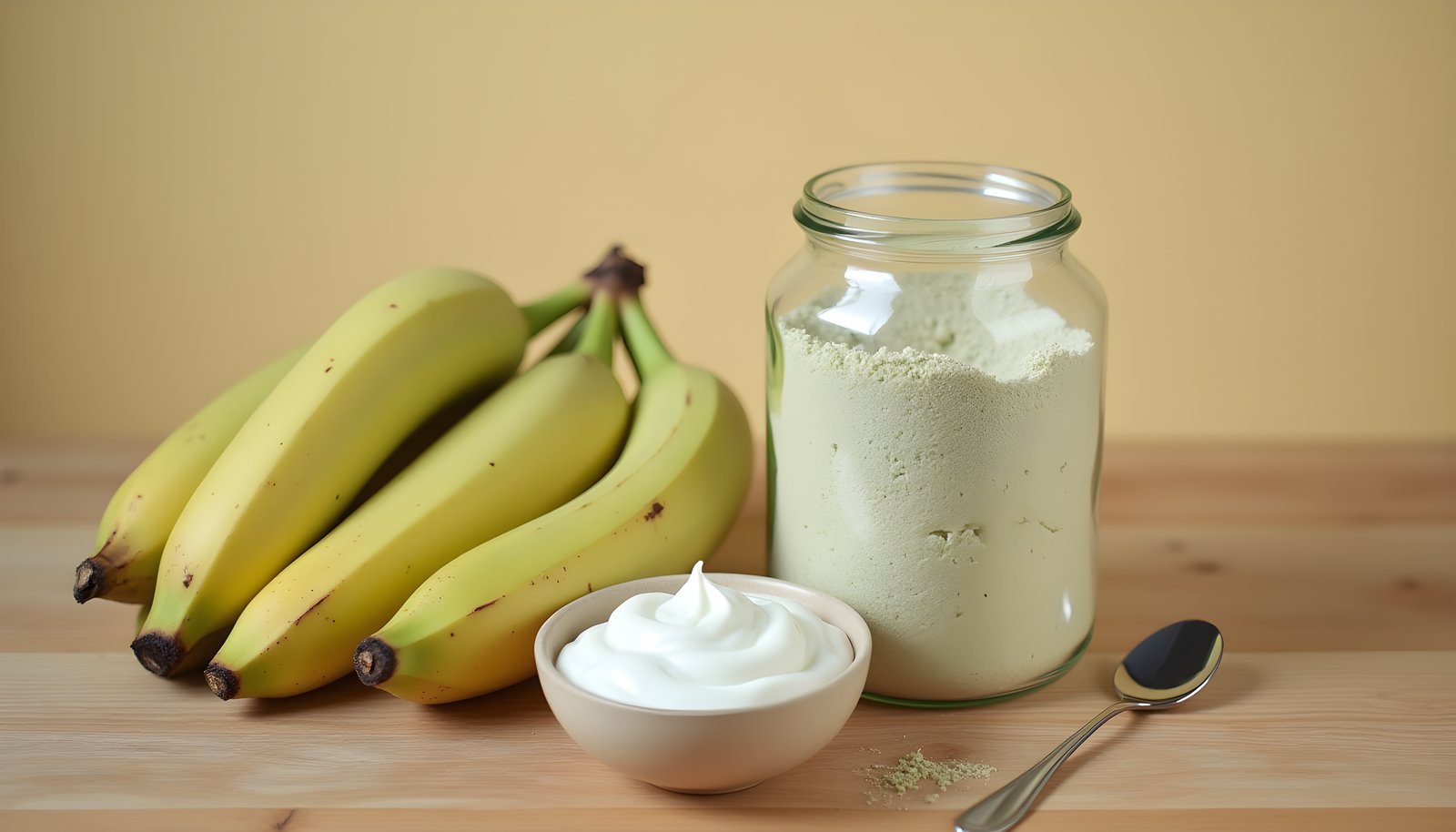
- Mixing: Best mixed with a blender or shaker bottle, or into yogurt.
- Diet friendly: Gluten free and dairy free.
MRM Organic Green Banana Powder
Organic green banana powder with resistant starch, 40 servings.
$$$$
- Green banana: Made from unripe bananas, a natural source of resistant starch.
- Prebiotic fiber: Resistant starch feeds the helpful bacteria in your gut.
- Minerals: Also supplies magnesium and manganese.
- Flour swap: Works as a gluten-free flour substitute in pancakes and bread.
- Certified: USDA Organic, non-GMO and vegan.
MANUBOLU Green Banana Powder
Single-ingredient green banana flour, lab tested at 39 g RS2 per 100 g.
$$$$
- 39% resistant starch: Lab tested at 39 grams of RS2 resistant starch per 100 grams.
- High in fiber: 76 grams of dietary fiber per 100 grams, with both soluble and insoluble fiber.
- One ingredient: Unsweetened green banana flour with no fillers, gums or additives.
- Keep it cold: RS2 breaks down with heat, so stir it into cold foods or after cooking.
- Diet friendly: Gluten free, vegan and paleo friendly.
Dr. Christianson RS Complete
Resistant starch powder with green banana flour and potato starch.
$$$$
- Resistant starch blend: Organic green banana flour, organic potato starch and larch tree powder.
- RS2 starch: A type 2 resistant starch that passes to the colon to feed gut bacteria.
- Doctor-formulated: Created by naturopathic physician Dr. Alan Christianson.
- Clean label: Non-GMO, gluten free and dairy free, with no additives or fillers.
- Flavorless: Blends into water, smoothies or yogurt with no taste or grit.
Bio.me Daily Prebiotic Fiber Powder
Unflavored resistant potato starch and PHGG powder, 7 g per serving.
$$$$
- Two prebiotics: A blend of resistant potato starch and partially hydrolyzed guar gum (PHGG).
- 7 g soluble fiber: Each serving gives 7 grams of soluble fiber.
- Slow fermenting: Fibers that ferment slowly, which tends to mean less gas and bloating.
- Unflavored: Mixes into water, coffee, smoothies or food without changing the taste.
- Gut lining support: Feeds the bacteria that make butyrate, a fuel for the cells lining your colon.
Momentous Fiber+ Cinnamon
Cinnamon psyllium, resistant potato starch and rice bran blend, 6 g.
$$$$
- Multi-source blend: Psyllium husk, resistant potato starch and rice bran, with 6 grams of fiber per serving.
- Resistant starch: Solnul resistant potato starch ferments in the colon into short-chain fatty acids like butyrate.
- Post-meal support: Soluble fiber helps slow carbohydrate absorption after meals.
- Regularity: Psyllium and rice bran support stool hydration and comfortable, regular digestion.
- Flexible timing: Take it whenever you can be most consistent, such as with breakfast or in a protein shake.
How We Chose These Picks
These top rated resistant starch supplements were chosen from products that shoppers buy and review often, then narrowed down to ones that clearly list a resistant starch source on the label.
“Top rated” here means well reviewed by buyers. We don’t copy star ratings or prices into this page, because both change from week to week. The dollar signs in the table show a rough price tier instead.
We also looked at three things buyers tend to care about:
- The source: green banana flour, raw potato starch or a blend.
- Label detail: whether the brand says how much resistant starch is in a serving.
- Format: a pure powder or a mix with other fibers.
Products that didn’t list resistant starch at all were left out, even when they were popular fiber supplements.
The list keeps the order in which these products showed up in our shopping research. Position in the list isn’t a score, and each pick suits a different kind of buyer.
Resistant Starch in Plain Terms
Resistant starch is starch that slips past digestion in the small intestine. It reaches the colon mostly intact, and there it behaves much like a fermentable fiber.
Gut bacteria break it down and make short-chain fatty acids. The one researchers talk about most is butyrate, which the cells lining the colon use for energy.
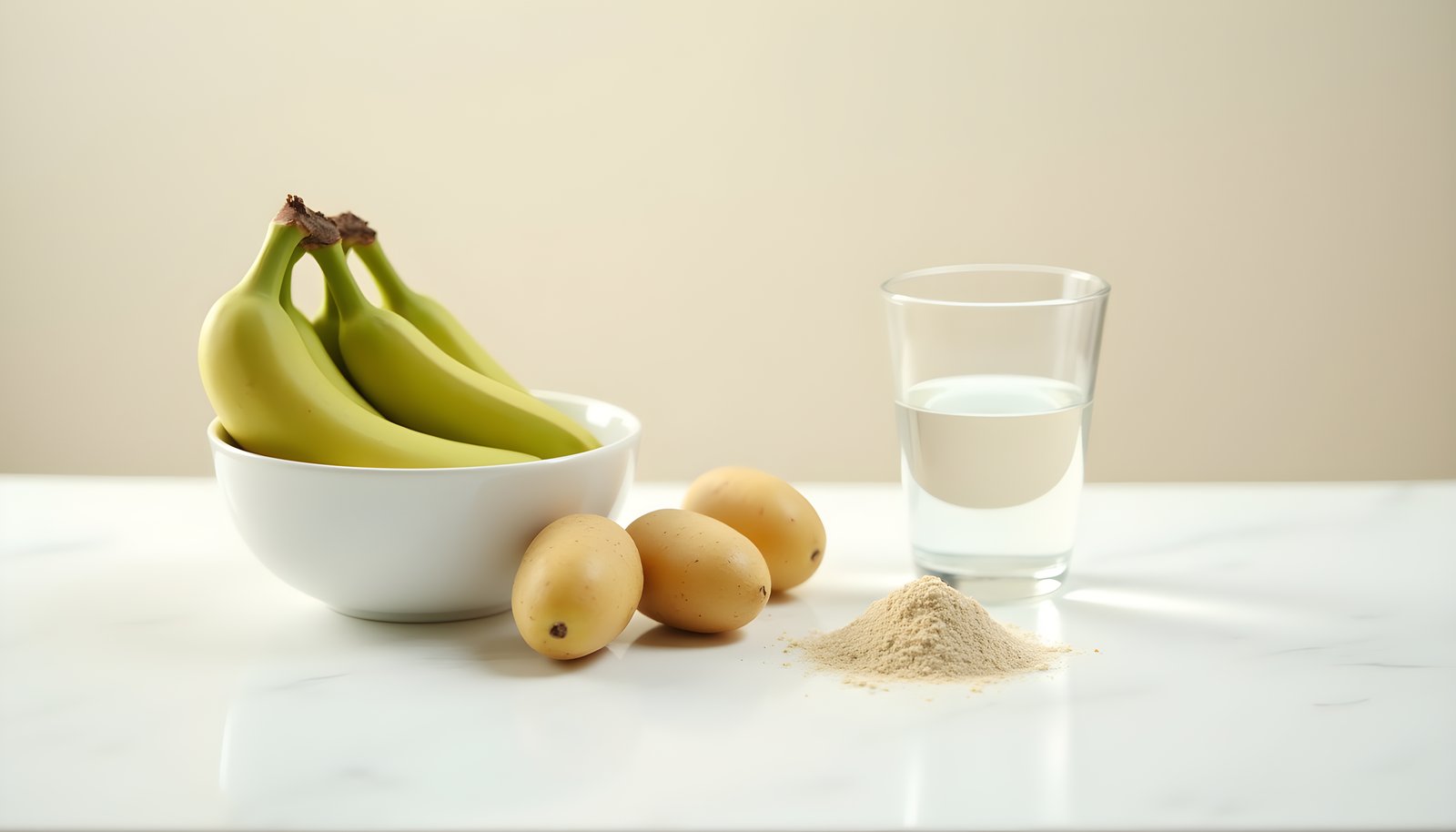
Scientists sort resistant starch into a few types. Supplements mostly rely on RS2, the raw, granular starch in unripe bananas and uncooked potatoes. Heat changes its structure, so RS2 powders belong in cold or lukewarm food.
Another type, RS3, forms when starchy foods are cooked and then cooled. That’s why leftover rice or a cold potato salad has more resistant starch than the same dish served hot.
You don’t need a supplement to get it. Beans, lentils, oats, cooled grains and slightly green bananas all add some. A powder is simply an easy way to add more on a busy day.
Typical Western diets supply only a few grams of resistant starch a day. Traditional diets that lean on beans, root vegetables and whole grains often supply several times that, which is part of why researchers started paying attention to it.
What the Evidence Says So Far
The research on resistant starch is encouraging but not settled.
A 2013 review in Advances in Nutrition by Birt and colleagues pulled together human and animal studies. It reported that resistant starch is fermented in the colon and that some trials found a gentler rise in blood sugar and insulin after meals.
The FDA has accepted high-amylose starch, a purified RS2, as a dietary fiber with a health benefit, based on lower insulin response after eating.
Most of the studied forms are purified starches, not the green banana flour or potato starch found in many retail powders. So the evidence for any single product here is weaker than the evidence for resistant starch in general.
People also respond differently. Trials have shown that the same dose can raise butyrate a lot in one person and barely at all in another, likely because of differences in gut bacteria.
Claims about gut lining repair or major weight changes go beyond what the human data show. Treat resistant starch as one useful fiber, not a fix for everything.
Longer and larger trials using the exact powders sold in stores would help answer what these products can and can’t do. Until then, it’s fair to call the evidence modest.
Reading the Picks
- RS2 blends: #1 Designs for Health and #4 Dr. Christianson combine green banana flour with potato starch.
- Green banana flour: #2 MRM and #3 MANUBOLU are single-source powders.
- Mixed fiber formulas: #5 Bio.me pairs resistant potato starch with PHGG, and #6 Momentous adds psyllium.
MANUBOLU states a lab-tested resistant starch amount on its listing, which makes it easier to know what you’re getting.
MRM sits in the lowest price tier and doubles as a gluten-free flour for no-bake recipes.
The two RS2 blends use more than one starch source. Some people like that approach for variety, though there’s little direct research comparing blends with single sources.
Bio.me and Momentous suit people who want resistant starch as part of a wider fiber routine. A scoop of either holds less resistant starch than a pure powder.
Taste matters too if you plan to use it daily. Green banana flour has a light, earthy banana flavor. Potato starch is close to neutral, so blends that lean on it disappear more easily into water or juice.
Check the serving size before you buy. A large tub can still run out fast if the suggested scoop is big.
Tips for Getting Started
- Go slow: A teaspoon a day is plenty in the first week. Add a little more every few days.
- Skip the heat: Stir it into cool drinks, yogurt, overnight oats or smoothies.
- Mix well: Starch settles and clumps, so shake or blend it.
- Drink water: This matters most with blends that contain psyllium.
- Time your medicines: Keep other medicines two hours apart from fiber.
Some gas or a full feeling in the first couple of weeks is normal. It tends to settle as gut bacteria adapt.
Research doses often sit between 15 and 30 grams a day. You don’t have to reach that, and many people do well on less.
Curious how much fiber your meals already provide? Our fiber calculator gives you a quick personal estimate.
A supplement works best alongside fiber-rich meals, not in place of them. Cooled potatoes, beans and oats add resistant starch along with other nutrients a powder can’t give you.
Safety Notes
Resistant starch is generally well tolerated, but talk with a doctor or pharmacist first if you:
- Have IBS, SIBO or another gut condition, since fermentable fiber can worsen symptoms.
- Take medicine for blood sugar, because resistant starch can affect after-meal levels.
- Take any daily prescription, as fiber can change how some drugs are absorbed.
- Are allergic to bananas or latex, which rules out green banana flour.
- Are pregnant or breastfeeding.
Stop taking it and get medical advice if you have strong belly pain, vomiting or a sudden change in bowel habits.
Questions About Resistant Starch Supplements
What does top rated mean on this page?
It means the product is widely bought and well reviewed by shoppers. We don't show star ratings because they change often.
Is potato starch the same as resistant starch?
Raw, unmodified potato starch is rich in RS2. Once it's cooked, most of that resistant starch is lost.
Can I bake with green banana flour?
You can, but baking breaks down much of the RS2. It still adds some fiber, just less resistant starch.
How long before I notice a difference?
Many people give it a few weeks at a steady dose. Gas in the first week or two is common and usually fades.
How much of my daily fiber does one scoop add?
It depends on the product. Most servings cover a modest fraction of what adults need. Use our fiber calculator to see your own target.
Is resistant starch a prebiotic?
Yes. Gut bacteria ferment it and make short-chain fatty acids, which is the main reason it's called a prebiotic fiber.
Sources
- Birt DF, Boylston T, Hendrich S, et al. “Resistant starch: promise for improving human health.” Advances in Nutrition, 2013. pubmed.ncbi.nlm.nih.gov
- US Food and Drug Administration. “Questions and Answers on Dietary Fiber.” fda.gov
- National Institutes of Health, Office of Dietary Supplements. “Dietary Supplements: What You Need to Know.” ods.od.nih.gov